
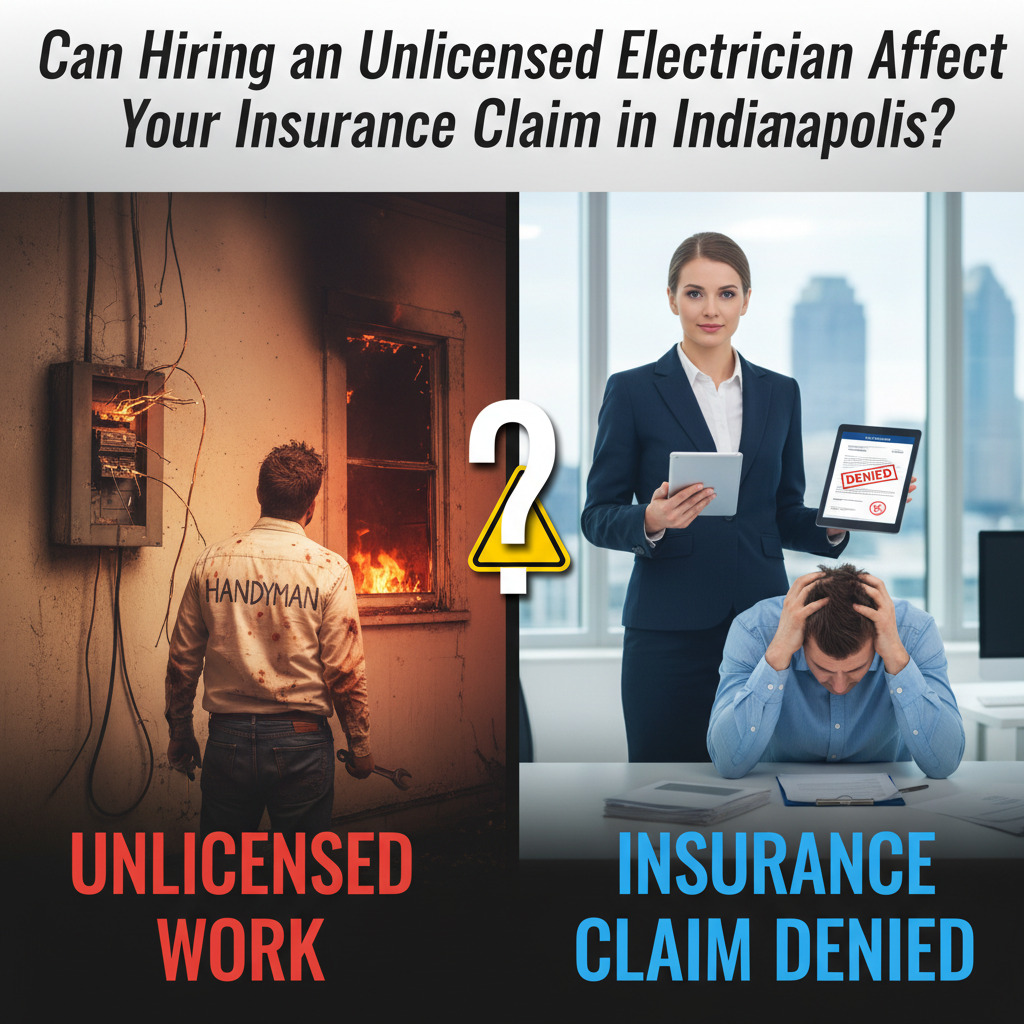
“Can Hiring an Unlicensed Electrician Affect Your Insurance Claim in Indianapolis?”
Key Takeaways
- Insurance companies sometimes deny or reduce claims tied to code violations, unpermitted work, or negligence.
- Improper installations can increase the risk of fires, shocks, and expensive repairs.
- Keep permits, invoices, and inspection records for future insurance disputes.
Electrical work is one of the most important maintenance jobs, and the most intricate. Done incorrectly, homeowners risk fires and irreparable damage to their property. But yes, it can get pretty pricey, especially for larger overhauls and upgrades.
In this economy, it can be tempting to hire the most affordable service provider, and in many cases, it works out just fine.
But sometimes, it doesn’t go as planned.
Electrical issues can lead to property damage, and if you don't use a licensed professional, your insurance provider may not cover the claim. They will investigate who performed the work, whether permits were obtained, and whether the installation complied with local building codes.
However, that does not automatically mean your homeowners' insurance policy becomes void. But unlicensed or unpermitted electrical work can absolutely affect how your insurance claim is handled, especially if the work in question is what may have contributed to the damage.
Across the country, insurers have become increasingly cautious about property risks related to electrical systems.
Several factors contribute to this trend:
- rising construction costs,
- increased fire losses,
- aging housing inventory,
- and growing electrical demands from modern technology.
Insurers may request:
- updated panels,
- professional inspections,
- or electrical upgrades before renewing policies in some cases.
This makes professional electrical work even more important for homeowners trying to protect both safety and insurability.
Here is what Indianapolis homeowners need to consider before hiring someone to perform electrical work on their property.
Why does my Electrical Contractor need to be Licensed?
Electrical licensing standards were implemented to protect homeowners and ensure that local contractors meet minimum safety and competency standards.
Licensed electricians in Indiana typically must:
- Complete required training and apprenticeships.
- Pass examinations
- Understand electrical code requirements.
- Carry appropriate insurance coverage.
- Follow permit and inspection regulations.
This is a safety mechanism to prevent the use of service providers without proper training or knowledge of relevant stat codes. Licensed workers are also protected by liability insurance and other workers’ protections.
You want to hire someone with real, evaluated experience handling complex residential systems.
How Insurance Companies Investigate Electrical Damage
When homeowners file claims for electrical fires, surge damage, or structural damage linked to wiring, insurance companies often carefully investigate the source of the issue.
This investigation may include:
- Reviewing inspection reports
- Examining permits
- Looking at repair records
- Determining whether the installation met code requirements
- Identifying who completed the work
Insurance companies are trying to determine whether the damage resulted from:
- Sudden accidental events
- Negligence
- Faulty workmanship
- Improper installations
- Long-term maintenance problems
If investigators discover that unlicensed electrical work contributed to the incident, it can complicate coverage decisions.
For example, if a homeowner hires someone to replace an electrical panel without permits and the panel later causes a fire, the insurer may argue that:
- The installation was improperly completed,
- local requirements were ignored,
- or the damage resulted from faulty workmanship rather than a covered event.
This can potentially reduce payouts or lead to the denial of portions of the claim.
Common Electrical Problems That Trigger Insurance Disputes
Insurance issues often arise when electrical work directly contributes to property damage.
Some common examples include:
Faulty Panel Installations
Electrical panels must be installed correctly to safely handle household power demands.
Improper installations can lead to:
- overheating,
- breaker failures,
- arc faults,
- and electrical fires.
If an insurer determines the panel was installed incorrectly or without required permits, the claim investigation may become more aggressive.
Improper Wiring
Incorrect wiring methods are a major fire hazard.
Common problems include:
- overloaded circuits,
- loose connections,
- undersized wiring,
- exposed conductors,
- and unsafe junctions.
These mistakes may not become obvious immediately. Some homeowners only discover problems years later during inspections or after damage occurs.
DIY Electrical Modifications
This isn’t only a risk for hiring services. Sometimes, homeowners attempt DIY electrical repairs to save money. This often creates hidden risks inside walls, attics, crawl spaces, or breaker panels.
DIY work becomes especially problematic when:
- permits were skipped,
- Code requirements were ignored,
- Or installations were never inspected.
If that work later causes damage, insurers may scrutinize the claim more heavily.
Does Hiring an Unlicensed Electrician Automatically Void Coverage?
Not necessarily.
Most insurance companies do not automatically cancel an entire policy simply because an unlicensed contractor performed work on the property.
However, insurers may deny claims connected specifically to:
- faulty workmanship,
- code violations,
- illegal installations,
- or negligence.
The key issue is usually whether the unlicensed work contributed to the loss.
For example:
- If an unlicensed electrician improperly installs wiring that later causes a fire, the insurer may dispute the claim.
- If unrelated storm damage occurs, the electrical work may not affect coverage.
Every policy contains different language regarding exclusions, negligence, maintenance responsibilities, and improper construction.
The Role of Permits and Inspections in Indianapolis
Permits in Indianapolis play a major role in protecting both homeowners and insurers.
Many electrical projects in Indianapolis require permits and inspections, particularly:
- panel replacements,
- service upgrades,
- rewiring projects,
- generator connections,
- and EV charger installations.
Permits help verify that:
- work follows local codes,
- installations meet safety requirements,
- and systems are inspected before being approved.
Skipping permits may create several problems:
- failed home inspections,
- delayed home sales,
- code enforcement penalties,
- and insurance complications.
If an insurer discovers major electrical work was completed without permits, it may raise questions about whether the installation was safe or compliant.
Even buyers increasingly request permit histories before purchasing homes in competitive markets.
Older Indianapolis Homes Face Higher Electrical Risks
Many Indianapolis neighborhoods contain older homes built decades before modern electrical demands were in place.
Some older homes still rely on:
- outdated breaker panels,
- aluminum wiring,
- knob-and-tube systems,
- or undersized service capacities.
Modern households now place much heavier demands on electrical systems because of:
- home offices,
- smart devices,
- electric vehicles,
- HVAC systems,
- and large appliances.
Improper upgrades in older homes can become especially dangerous if performed by inexperienced contractors.
Insurance companies already view aging electrical systems as higher risk in many cases. Unlicensed modifications can add even more scrutiny during claims investigations.
What Homeowners Should Ask Before Hiring an Electrician
Are You Licensed?
Request the electrician’s license information and verify it with appropriate state or local resources.
Will Permits Be Pulled?
Qualified electricians typically understand which projects require permits and inspections.
If a contractor discourages permits, that is often a warning sign.
Are You Insured?
Electrical contractors should carry liability insurance and workers' compensation insurance.
Without proper coverage, homeowners could face additional financial exposure in the event of an accident.
Can You Provide References?
Experienced electricians should be able to provide references or examples of previous work.
Will the Work Meet Current Code Requirements?
Electrical codes change over time. Licensed professionals are more likely to stay up to date on current standards.
Documentation
Good documentation can help homeowners protect themselves later.
Keep records of:
- invoices,
- permits,
- inspection approvals,
- warranties,
- and contractor information.
Without documentation, disputes become much harder to resolve.
Insurance Companies Are Paying Closer Attention to Electrical Risks
Electrical systems are simply too important to treat casually.
Working with licensed professionals, obtaining proper permits, and keeping detailed documentation can help homeowners reduce risk and avoid costly insurance complications later.
Using My Licensed Contractor helps homeowners connect with vetted, qualified professionals they can trust. Instead of taking chances on unlicensed work, you can create a profile, describe your project, and get matched with contractors in your area who are properly credentialed and ready to help.
FAQ
Can Indiana homeowners' insurance deny claims because of unlicensed electrical work?
Yes, insurers may deny or reduce claims if faulty or unlicensed electrical work contributed to the damage. Coverage decisions usually depend on the specific policy and circumstances involved.
Is unpermitted electrical work illegal in Indianapolis?
Certain electrical projects require permits and inspections under local regulations. Skipping permits can create code violations and insurance complications.
Will my entire insurance policy become void?
Not usually. Insurance companies generally evaluate whether the unlicensed work directly contributed to the loss rather than automatically canceling all coverage.
Why do insurers care about electrical permits?
Permits and inspections help confirm that installations were completed safely and in accordance with code requirements.
Are older homes more vulnerable to electrical problems?
Yes. Older homes often have outdated systems that may struggle to meet modern electrical demands, underscoring the importance of qualified electrical work.
Find a Licensed Contractor
Connect with pre-screened, licensed contractors in your area.
Submit Your Project
Find Local Contractors
Connect with licensed, verified contractors in your area for your next project.
Submit Your Project