
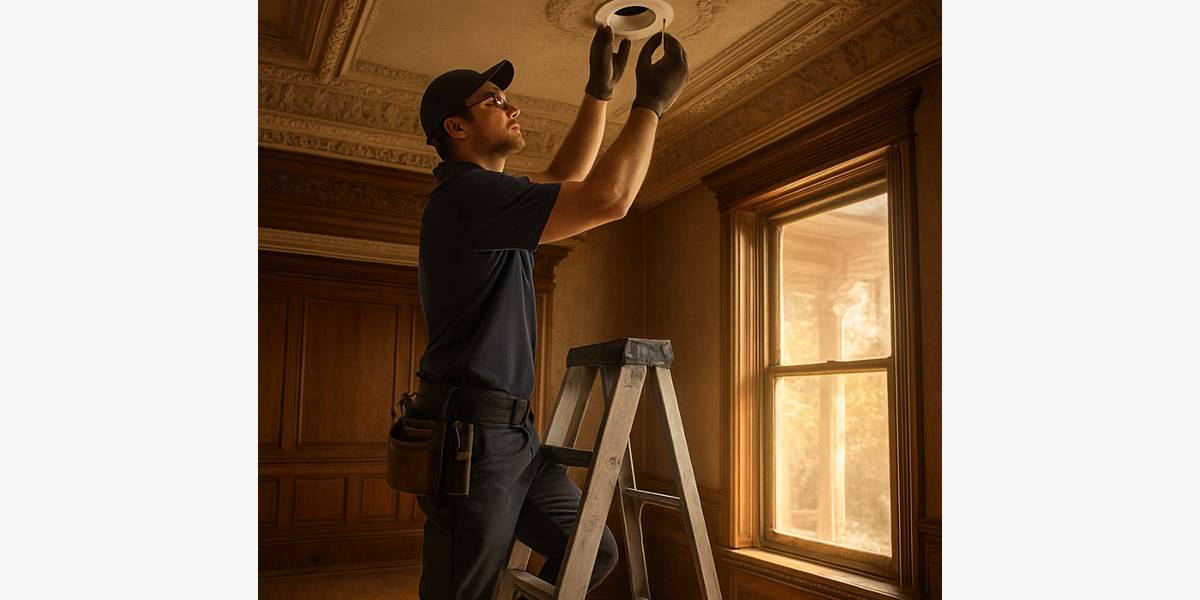
Home Lighting Upgrade Costs: Recessed, Under-Cabinet, Smart Lighting & Outdoor Lighting
Key takeaways:
- Most single-fixture lighting upgrades cost between $150 and $500 installed. Whole-room projects usually run from $1,000 to $4,000.
- Recessed lights cost about $200 to $500 each in an existing ceiling. The price drops when the attic is open and easy to reach.
- New wiring, new circuits, and ceiling repairs add the most to the final bill.
- LED bulbs cut lighting energy use and last far longer than incandescent bulbs, so they pay for themselves over time.
- Bulb swaps and plug-in lights are DIY jobs. Anything hardwired belongs to a licensed electrician.
Why Lighting Is One of the Easiest Upgrades to Plan
A lighting upgrade changes how a room looks and works without a full remodel. You can upgrade one room at a time, set your own budget, and see the result the same day the electrician leaves.
The hard part is cost. Prices online vary widely, and a quote for "six recessed lights" can differ by hundreds of dollars from one electrician to the next. This guide breaks down typical costs for each type of upgrade, explains what moves the price up or down, and shows you how to plan each room so you get the most from your budget.
The figures in this guide are typical installed ranges for labor and standard fixtures. Your price will depend on your home, your local labor rates, and the fixtures you choose.
Lighting Upgrade Costs at a Glance
| Upgrade | Typical installed cost | What the price includes |
|---|---|---|
| Replace an existing light fixture | $150 to $400 per fixture | Removal of the old fixture, install of a standard new fixture on existing wiring |
| Recessed lights in an existing ceiling | $200 to $500 per light | Remodel cans or canless LED wafers, wiring between lights, one switch |
| Recessed lights in new construction or an open ceiling | $125 to $300 per light | Housings and wiring with easy access before drywall |
| Under-cabinet lighting (kitchen) | $300 to $1,200 | Hardwired LED strips or puck lights and a switch |
| Pendant lights over an island | $200 to $600 per pendant | New ceiling box, wiring, and install |
| Dimmer switch | $100 to $200 each | LED-compatible dimmer and install |
| Smart switch | $125 to $250 each | Smart switch, neutral wire check, and install |
| Ceiling fan with light | $200 to $600 | Fan-rated box, mounting, and wiring |
| Exterior or security light | $200 to $600 per fixture | Weather-rated fixture, motion sensor if needed |
| Landscape lighting system | $2,000 to $7,000 | Transformer, low-voltage cable, and 10 to 20 fixtures |
| New dedicated circuit | $300 to $1,000 | Breaker, wire run, and permit in many areas |
Fixture prices sit on top of labor. A basic flush-mount ceiling light may cost $40, while a designer chandelier can cost $1,500 or more. Ask your electrician whether a quote includes fixtures or only labor.
What Affects the Cost of a Lighting Upgrade
Two homes can get the same upgrade and pay very different prices. These are the factors that move the number the most.
Ceiling access
Access is the biggest factor for recessed lights. If your attic sits above the room and the electrician can walk to each spot, the job goes fast. A first-floor ceiling with a finished room above means the electrician has to fish wire through joists, which takes more time and sometimes requires small holes and drywall patches.
Existing wiring
Swapping a fixture on an existing box costs the least. Adding a light where none exists means a new box, a new wire run, and often a new switch. Older homes may also have wiring that cannot safely carry new loads, which adds repair work.
Circuit capacity
LED lights use little power, so most lighting upgrades fit on existing circuits. Large projects, such as a full basement or a long run of landscape lighting, may need a new circuit. If your panel is full or outdated, you may need panel work first. Our guide to electrical panel replacement explains when that becomes necessary.
Ceiling height and type
Vaulted ceilings, ceilings above stairwells, and plaster ceilings take more time and equipment. Expect a higher price per fixture for these spots.
Number of lights
The cost per light usually drops as the number of lights rises. The electrician sets up once, runs wire in one path, and installs one switch for the group. Six recessed lights in one room cost less per light than two lights in two different rooms.
Permits
Many cities require a permit for new circuits, new fixtures in new locations, and outdoor electrical work. Permit fees vary by city and usually add $50 to $300 to the project. A licensed electrician should know the local rules and pull the permit for you.
Drywall and paint repair
Some electricians patch small holes but leave painting to you. Others include it. Ask about this before you sign so you are not surprised by a second bill from a painter.
The Three Layers of Lighting
A well-lit room uses more than one type of light. Planning by layer helps you spend money where it makes the biggest difference.
| Layer | What it does | Common fixtures |
|---|---|---|
| Ambient | Lights the whole room | Recessed lights, flush-mount ceiling lights, ceiling fans with lights |
| Task | Lights a work area | Under-cabinet lights, pendants over an island, vanity lights |
| Accent | Draws attention to a feature | Wall sconces, picture lights, landscape spotlights |
Most rooms need ambient light first. Task lighting matters most in kitchens, bathrooms, and home offices. Accent lighting is the last layer and the easiest to skip if the budget is tight.
Room-by-Room Lighting Plans and Costs
Kitchen
The kitchen gets the most use and usually the biggest lighting budget. A typical kitchen plan includes four to eight recessed lights for ambient light, under-cabinet lights for counters, and two or three pendants over an island.
Typical cost: $1,500 to $4,000 for the full plan, depending on ceiling access and fixture choice.
- Put recessed lights in front of the upper cabinets so you do not stand in your own shadow at the counter.
- Choose under-cabinet lights on a separate switch or dimmer.
- Hang island pendants about 30 to 36 inches above the countertop.
Living room
Living rooms work best with dimmable light that can go from bright to soft. Recessed lights on a dimmer, a ceiling fan with a light kit, or a few wall sconces all work.
Typical cost: $800 to $2,500.
- Space recessed lights about 4 to 6 feet apart in a standard 8-foot ceiling.
- Put lights on two switches so you can light the seating area alone.
Bathroom
Bathroom lighting needs to be bright and even at the mirror. A vanity light above the mirror, or sconces on each side, gives better light for grooming than a single ceiling fixture. Lights in a shower need a wet-rated fixture.
Typical cost: $300 to $1,200.
- Choose damp- or wet-rated fixtures for spots near the tub or shower.
- Consider a combination exhaust fan and light to solve two problems at once.
Bedroom
Bedrooms need softer light. A ceiling fan with a light kit is a common choice, and bedside wall sconces free up nightstand space.
Typical cost: $300 to $1,000.
Home office
A home office needs steady, glare-free light. Recessed lights or a flush-mount fixture for the room, plus a task light at the desk, works well. Place lights so they do not reflect off your computer screen.
Typical cost: $300 to $1,200.
Basement
Basements often have the lowest light and the most room for improvement. LED recessed lights work well with low ceilings because they sit nearly flush. A finished basement may need a new circuit, which raises the cost.
Typical cost: $1,500 to $5,000 for a full basement.
Garage
Many garages have a single bulb. Bright LED shop lights or linear fixtures make a garage safer and easier to work in.
Typical cost: $300 to $1,200.
Exterior
Exterior lights cover safety at doors, steps, and driveways. Motion-sensor floodlights help with security, and low-voltage landscape lights light paths and plantings.
Typical cost: $200 to $600 per fixture for wired exterior lights, and $2,000 to $7,000 for a landscape lighting system.
Switching to LED
LED bulbs are the easiest lighting upgrade and the one with the fastest payback. The U.S. Department of Energy says that lighting accounts for around 15% of an average home's electricity use, and the average household saves about $225 a year in energy costs with LED lighting.
Two terms help you choose the right LED bulbs:
- Lumens measure brightness. A bulb that replaces a 60-watt incandescent gives about 800 lumens.
- Color temperature measures warmth, in Kelvin. 2700K gives a warm, yellow light for living rooms and bedrooms. 3000K to 3500K works well in kitchens and bathrooms. 4000K and above gives a cool, white light for garages and work areas.
Use one color temperature throughout a room. Mixed bulbs make a room look uneven.
If you install dimmers, buy LED bulbs labeled as dimmable and use a dimmer rated for LED loads. A mismatch causes flicker and buzzing.
Smart Lighting Options
Smart lighting lets you control lights from your phone, set schedules, and use voice commands. You have two main options.
| Option | Typical cost | Best for |
|---|---|---|
| Smart bulbs | $10 to $50 per bulb, no install | Lamps and a few fixtures, renters, color-changing light |
| Smart switches | $125 to $250 per switch installed | Rooms with several fixtures on one switch, recessed lights |
Smart switches usually make more sense for whole rooms. A single smart switch controls every light on that circuit, and the lights still work when someone flips the switch on the wall. Many smart switches need a neutral wire in the switch box. Older homes sometimes lack one, so ask your electrician to check before you buy.
When a Lighting Upgrade Becomes an Electrical Project
Some lighting problems point to wiring issues. Call an electrician if you notice any of these signs:
- Lights that flicker or dim when a large appliance turns on
- Switches or fixtures that feel warm to the touch
- A burning smell near a light or switch
- Breakers that trip when you turn on certain lights
- Bulbs that burn out much faster than they should
The U.S. Fire Administration lists electrical malfunction as a leading cause of home fires and recommends that only a qualified electrician do electrical work. Older homes with original wiring may need repairs before new lights go in. If your home has wiring problems, those repairs come first.
DIY vs. Hiring an Electrician
| Job | DIY or electrician? |
|---|---|
| Swap bulbs for LED | DIY |
| Add plug-in lamps or plug-in under-cabinet strips | DIY |
| Install smart bulbs | DIY |
| Replace a fixture on an existing box | Electrician recommended |
| Install dimmers or smart switches | Electrician recommended |
| Add recessed lights or new fixture locations | Electrician |
| Install a ceiling fan on a new box | Electrician |
| Add exterior or landscape lighting with a new circuit | Electrician |
Electrical mistakes can cause shocks, fires, and failed home inspections. Our guide to which electrical jobs you can actually DIY covers where to draw the line.
How to Save Money on a Lighting Upgrade
- Group the work. Do several rooms or several fixtures in one visit. Most electricians charge less per fixture for a larger job.
- Plan around access. Upgrade rooms below an open attic first, since those jobs cost the least.
- Choose canless LED recessed lights. They often install faster than traditional cans, which lowers labor time.
- Buy fixtures yourself, with care. Some electricians allow homeowner-supplied fixtures. Confirm that the fixtures are rated for the location and that the electrician will install them.
- Get more than one quote. Compare what each quote includes, such as fixtures, permits, and drywall repair, before you compare totals.
For more ideas on brighter, safer rooms, read Lighting Upgrades for Your Home.
Questions to Ask an Electrician Before You Hire
- Are you licensed and insured in my state?
- Does your quote include fixtures, or only labor?
- Will this job need a permit, and will you pull it?
- Do you patch and paint ceiling holes, or should I plan for that separately?
- Will my existing circuit handle the new lights?
- What warranty do you offer on your work?
Get Matched With a Licensed Electrician
A clear plan and a fair quote start with the right electrician. My Licensed Contractor matches homeowners with screened, licensed pros in their area. Tell us about your project, whether that is recessed lights in the kitchen or a full basement lighting plan, and get connected with an electrician who can quote it and do the work.
Submit your lighting project request on My Licensed Contractor to get started.
Frequently Asked Questions
How much does it cost to add recessed lights?
Recessed lights usually cost $200 to $500 each in an existing ceiling, including labor and a standard fixture. The price drops to about $125 to $300 per light when the attic is open or the ceiling has no drywall yet.
Can I put LED bulbs in old fixtures?
Yes, in most cases. Choose an LED bulb with the same base and a brightness that matches the old bulb. For enclosed fixtures, use a bulb rated for enclosed use. For dimmers, use a dimmable bulb and an LED-rated dimmer.
Do I need a permit for new lighting?
Replacing a fixture on an existing box usually does not need a permit. New circuits, new fixture locations, and outdoor wiring often do. Rules vary by city, so ask your electrician to confirm.
Are smart switches worth it?
Smart switches work well for rooms with several lights on one switch, such as recessed lights in a kitchen. They cost more than smart bulbs to install but control every light on the circuit and still work from the wall.
How many recessed lights does a room need?
A common rule is one light for every 4 to 6 feet of ceiling in a room with an 8-foot ceiling. A 12-by-12 room often needs four to six lights. Kitchens and work areas may need more.
How long does a lighting upgrade take?
A single fixture swap takes about an hour. Six recessed lights in an accessible ceiling usually take half a day to a full day. Whole-house projects can take several days.
Find a Licensed Contractor
Connect with pre-screened, licensed contractors in your area.
Submit Your Project
Find Local Contractors
Connect with licensed, verified contractors in your area for your next project.
Submit Your Project