Guide to Electrical Panel Replacement: When To Upgrade, What It Costs, and Why It Matters
Key Takeaways
- Frequent breaker trips, flickering lights, warm panels, buzzing sounds, and limited capacity are common signs that a panel may need repair or replacement.
- Homes with 60-amp or 100-amp service often benefit from upgrading to a 200-amp electrical panel, especially when adding EV charging, heat pumps, major appliances, or a home addition.
- Some older panels have known safety concerns or recalls, including certain Federal Pacific, Zinsco, and Challenger panels.
- A panel replacement is a job for a licensed electrician, who should handle permitting, load calculations, utility coordination, and installation.
- If you are unsure whether your panel needs repair or replacement, start with a professional electrical inspection.
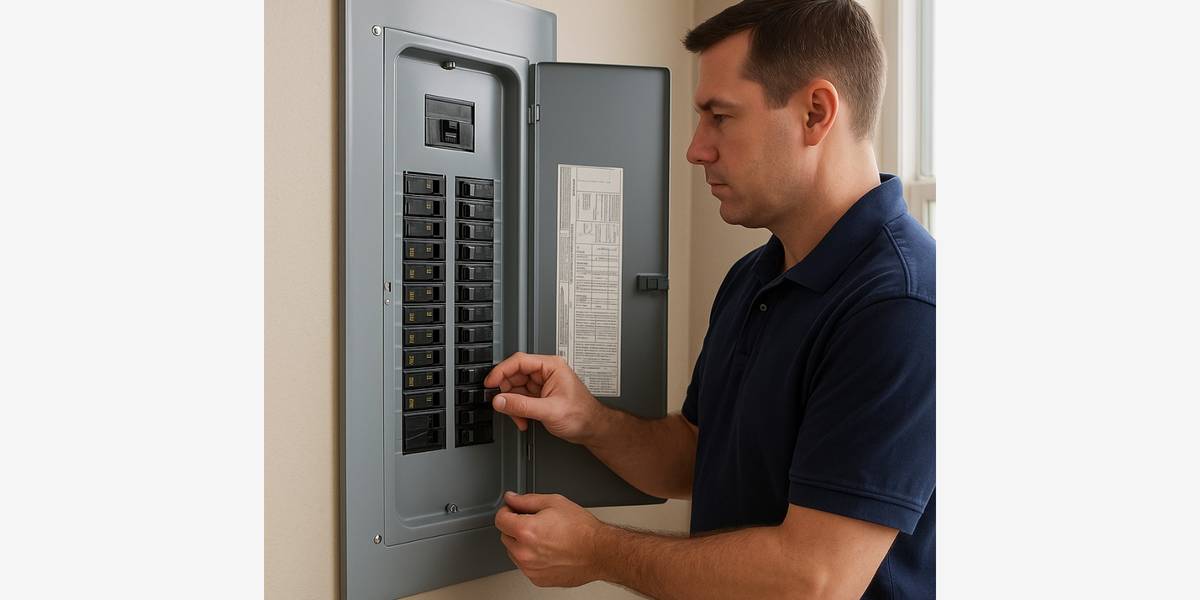
Your electrical panel takes electricity from the utility, sends it to every circuit in your house, and protects those circuits from overloads. When the panel is old, undersized, damaged, or recalled, it can create safety risks and limit the modern upgrades you want to make. That is why electric panel replacement is worth understanding before a small problem turns into a big one.
This guide walks you through the signs you may need a replacement, panel recalls and safety issues, amperage options, costs, the replacement process, and how to hire a qualified electrician. Use the quick checklist below to scan the main warning signs, then read on for the details.
Understand What Your Electrical Panel Does
Before you decide whether to upgrade, it helps to know what the panel actually does. People call it a few different names, including the breaker box, the load center, or the service panel. No matter what you call it, the job is the same.
Your panel handles a handful of key tasks. It receives electricity from the utility, distributes that power across the circuits in your home, and protects your wiring with breakers or fuses. If a circuit draws too much current or a short circuit happens, the panel shuts off power to stop damage and reduce fire risk.
Inside the enclosure, you will find several main parts. There is a main breaker or main lug that controls power to the whole panel. There are individual circuit breakers for each part of your home. There are neutral and ground bars that keep the system balanced and safe. The service entrance conductors bring power in from the utility, and the metal enclosure holds it all together.
Panel capacity matters more today than it did decades ago. Homes now add high-demand equipment such as EV chargers, heat pumps, tankless water heaters, and electric ranges. Each of these pulls a lot of power. It also helps to understand three terms that sound alike but mean different things. Panel capacity is the total amount of power your panel is rated to handle. Available service capacity is how much room you have left after your current circuits. Actual electrical load is how much power your home uses at a given moment. A good electrician looks at all three before making a recommendation.
Know When It Is Time To Replace an Old Panel
Your panel often gives you clear signals when it struggles. Watch for these common warning signs:
- Breakers trip over and over, even with normal use
- Lights flicker or dim when large appliances start
- Outlets or switches feel warm to the touch
- The panel buzzes, crackles, or hums
- Breakers fail to reset after they trip
- You notice a burning plastic smell near the panel
- You see rust, corrosion, or water damage
- The panel itself feels warm
- Your home still uses fuses instead of breakers
- There are too few circuits for your daily needs
Frequent overloads do not always point to a bad appliance. Many times they point to an undersized panel that cannot keep up with how you use electricity. If you keep resetting the same breaker, the panel may be the real issue.
Certain projects also push homeowners toward an upgrade even when nothing seems broken. You might plan to add an EV charger, install a heat pump or electric furnace, or add a tankless water heater. You might finish a basement, add a room, or set up a hot tub, pool equipment, or a workshop. Replacing an older kitchen with high-wattage appliances can also tip the scale. In short, a panel may need replacement even without obvious symptoms if it is outdated, damaged, recalled, or too small for what you want to do next.
For a broader look at improving your home's electrical system, read our guide to electrical upgrades for homeowners and small businesses.
Check for Panel Recalls and Known Safety Concerns
Some panels have known design or manufacturing concerns that make replacement worth discussing with an electrician. Age alone is not the only factor, but history matters.
A few brands and types come up often during inspections. These include Federal Pacific Electric panels, especially certain Stab-Lok models, along with Zinsco and Sylvania-Zinsco panels. Certain Challenger panels also raise concerns. Old fuse boxes and very old service equipment can be a problem too. In some homes, aluminum branch-circuit wiring adds another layer of risk that an electrician should review.
Brand name alone does not tell the whole story. Age, condition, and installation quality all matter. A panel from a flagged brand might still work, while a panel from a trusted brand might have corroded parts or poor wiring. For that reason, avoid relying only on the label. A licensed electrician should inspect the exact panel model, breaker condition, wiring, and installation before you make a decision.
You can gather basic information yourself without taking risks. Open the panel door and look for the manufacturer label inside. Take clear photos of the label, the model number, and the breaker layout. Leave the panel cover in place, since removing it exposes live parts. If your panel is more than 25 to 40 years old, shows damage, or carries an unfamiliar or outdated brand, schedule a professional inspection.
There is one more reason to take this seriously. Recalls and safety concerns can affect your homeowners insurance, a future home sale, and even financing conversations. Buyers and insurers often ask about panel brands, so good records help. The Consumer Product Safety Commission provides homeowner safety guidance on electrical hazards, overloaded circuits, and warning signs that deserve professional attention.
Compare 60-Amp, 100-Amp, and 200-Amp Service
Amperage is a simple idea. It is the amount of electrical current your home's service can safely deliver at one time. More amps mean more room for the things that use power.
Here is how the common service levels compare and who they tend to suit:
| Service Level | Typical Use Case | Limitations |
|---|---|---|
| 60 amps | Older small homes, cottages, or homes with few electric appliances | Often too small for modern all-electric homes, EV charging, or major additions |
| 100 amps | Many older or mid-sized homes with gas heating and standard appliances | Can get tight with EV charging, heat pumps, or large additions |
| 200 amps | Modern single-family homes, electrified homes, and homes with high-demand equipment | Usually provides more flexibility for current and future upgrades |
| 400 amps | Large homes, major additions, or properties with unusual power demands | Less common and typically more expensive |
For most homeowners planning to add electric equipment, a 200-amp electrical panel is a common target. Still, the right size for your home depends on a professional load calculation, not a one-size-fits-all rule. Keep in mind that some homes can support an EV charger or heat pump without a full service upgrade. Load management devices, energy management systems, or circuit adjustments can sometimes make room for new equipment on your current service.
Understand the Benefits of Upgrading to 200 Amps
An upgrade does more than add numbers on a label. It changes what your home can safely do. Here are the main benefits.
Improved Safety
A larger, newer panel reduces the risk of overloaded circuits and overheating wiring. It also makes room for modern breaker protection, including AFCI and GFCI protection where code requires it. During the work, an electrician can replace aging equipment, corroded components, or unsafe wiring and set up proper grounding and bonding.
EV Charging
Level 2 EV chargers usually need a dedicated 240-volt circuit that pulls a significant amount of power. A 200-amp panel can make it easier to add that charger while you keep capacity for the rest of your home. If a full upgrade is not needed, an electrician may suggest a load management option that lets the charger share capacity safely.
If you are considering solar or an EV charger, our guide to solar and EV chargers for rental properties explains how these upgrades can support long-term value.
Heat Pumps and Electrification
Heat pumps, electric furnaces, electric water heaters, and induction ranges can raise your electrical demand significantly. A larger panel supports a move away from gas appliances and gives each new system the circuit it needs. Electrification can improve comfort, reduce reliance on fossil fuels, and prepare your home for future energy upgrades.
If you are thinking about a smart thermostat or other connected HVAC equipment, see our guide on why professional smart thermostat installation matters.
Home Additions and Modern Appliances
Additions, finished basements, workshops, pools, and hot tubs all increase your circuit needs. Extra breaker spaces make future projects easier and less expensive, since you avoid another upgrade later. This matters for high-demand appliances such as electric dryers, ranges, tankless water heaters, and HVAC systems.
Planning a tankless water heater? Our water heater replacement guide covers what to consider before upgrading.
Better Home Value and Marketability
An updated electrical system can appeal to buyers, especially those who want EV charging or smart-home technology. Keep your documentation, permits, and inspection records, since they show buyers that the work met code and passed inspection.
Learn What Electrical Panel Replacement Involves
Knowing the process helps you plan and ask better questions. A typical replacement follows a clear path:
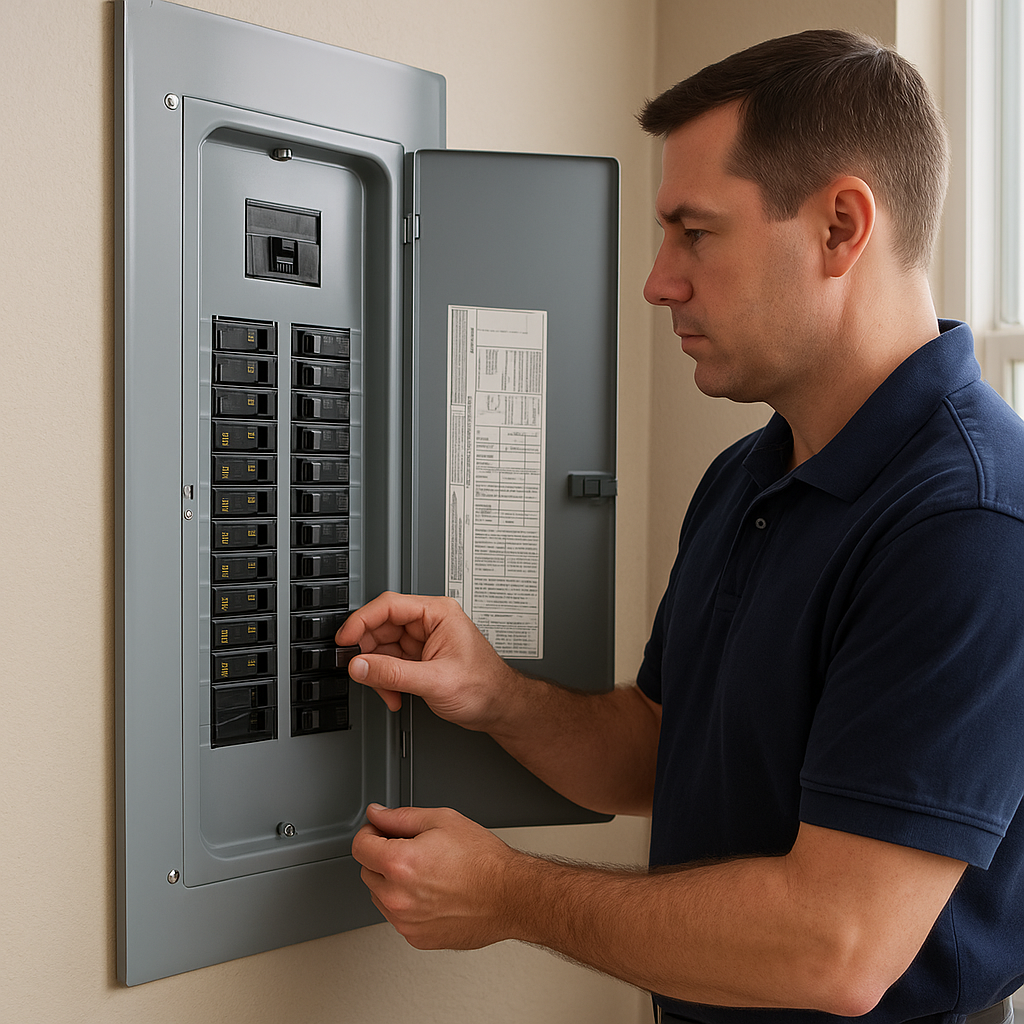
- Schedule an electrical inspection and load calculation
- Choose the right panel size and equipment
- Obtain the required permits
- Coordinate with the utility for service disconnection and restoration, if needed
- Shut off power and remove the old panel
- Install the new panel, breakers, grounding, and bonding
- Reconnect the circuits and label the panel clearly
- Schedule the inspection and restore power
Many replacements take about one day. Service upgrades or jobs that need utility coordination can stretch the timeline a bit longer. Your electrician can give you a clearer schedule once they see the home.
Some jobs call for extra work along the way. That can include a meter base replacement, service entrance cable upgrades, or a new ground rod. It may also include bonding repairs, AFCI or GFCI breaker upgrades, and careful circuit labeling and cleanup. Permits and inspections protect you as the homeowner and confirm that the finished work meets code. For more on why this matters, read our guide to permits and contractors.
Understand the Cost of Electric Panel Replacement
Cost is one of the first questions homeowners ask, and the honest answer is that it depends. Several factors shape the final price:
- Panel amperage and the size of the upgrade
- Panel brand and breaker type
- Labor and local electrician rates
- Permit and inspection fees
- Utility coordination
- Meter base or service entrance upgrades
- Length of wire runs and how easy the panel is to reach
- Any outdated or unsafe wiring that needs repair
Here is a general sense of the range, though these are not fixed quotes. A like-for-like panel replacement usually sits at the lower end. An upgrade from 100 amps to 200 amps usually costs more because of the added service and utility work. A complex upgrade that includes meter work, grounding, or wiring repairs tends to land at the highest range.
Always request an itemized quote so you can see what you are paying for. Compare at least three licensed electricians, and ask each one whether permits, inspection, utility fees, and cleanup are part of the price. A clear quote helps you compare fairly instead of guessing. For help preparing, read our guide to requesting contractor quotes online.
Know When To Repair Versus Replace
Replacement is not always the answer. Sometimes a repair solves the problem for a fraction of the cost.
Repair may be the right call for a single faulty breaker, a loose connection, or minor corrosion. It can also work when a breaker trips because of one specific appliance, or when your panel has enough capacity and no safety concerns.
Replacement is usually the better choice in other cases. These include recalled or high-risk panel equipment, visible corrosion, water damage, or a burning smell. Repeated breaker problems, too little capacity for planned upgrades, and the need to convert from a fuse box all point toward replacement. Damaged bus bars or other unsafe internal parts do the same. In the end, let a licensed electrician make the final recommendation after a hands-on inspection.
Some minor electrical tasks are safe for homeowners, but panel work is not one of them. Our guide explains which electrical jobs you can actually DIY.
Hire a Licensed Electrician
Panel work is serious work. It involves high-voltage safety risks, permit and code requirements, and coordination with your utility. It also calls for proper load calculations, plus the right insurance and warranty coverage. A licensed professional protects you on all of these fronts.
Before you hire anyone, ask a few direct questions:
- Are you licensed and insured?
- Will you pull the permit?
- Do you recommend a repair or a replacement, and why?
- What panel size do you recommend based on a load calculation?
- Is utility coordination included in the price?
- What exactly is included in the quote?
- Will the work pass inspection, and do you provide a warranty?
When you compare quotes, look at the full scope rather than the bottom line alone. One low bid may leave out permits or utility fees, which makes it look cheaper than it really is. A fair comparison lines up the same work across each estimate. Our guide to when a low bid is actually more expensive explains what to watch for.
Hiring an unlicensed electrician can also create problems with insurance claims and code compliance. Learn more in our guide to how hiring an unlicensed electrician can affect an insurance claim.
Work With My Licensed Contractor
At My Licensed Contractor, we help homeowners take the guesswork out of panel upgrades. Submit a quick and easy project request, and we will match you with vetted, licensed local electricians who handle load calculations, permitting, utility coordination, and installation the right way.
If you have seen warning signs, want to add an EV charger or heat pump, or simply want peace of mind about an older panel, start with an inspection. An electrician can determine whether your panel needs a repair, a replacement, or simply more capacity for a planned upgrade.
Submit your project request through My Licensed Contractor today to get matched with trusted local electricians in your area.
FAQ
How do I know if my electrical panel needs to be replaced?
Common signs include frequent breaker trips, flickering lights, warm outlets or panel surfaces, buzzing sounds, burning smells, rust or water damage, and too few circuits for your needs. A licensed electrician can determine whether repair or replacement is the right move.
Is a 100-amp panel enough for a modern home?
It can be enough for some homes, especially those with gas heating and standard appliances. However, 100 amps can get tight when you add an EV charger, heat pump, tankless water heater, electric range, or major addition. A load calculation shows whether an upgrade is necessary.
Should I upgrade from 100 amps to 200 amps?
Many homeowners upgrade to 200 amps when they plan EV charging, heat pumps, major appliances, home additions, or future electrification. The upgrade gives you more capacity and flexibility, but the right choice depends on your home's actual electrical load and your plans.
Can I install an EV charger without upgrading my panel?
Sometimes. An electrician may be able to install a charger using available capacity, a lower-amperage circuit, or a load-management device. A professional load calculation is the best way to know whether your panel can support the charger safely.
Are old electrical panels dangerous?
Some older panels can be dangerous, especially if they are damaged, corroded, overloaded, or associated with known safety concerns. Certain Federal Pacific, Zinsco, and Challenger panels are often flagged for inspection. A licensed electrician should evaluate the specific panel and installation.
How long does electrical panel replacement take?
Many panel replacements take about one day. Upgrades that require utility coordination, meter replacement, service entrance work, or repairs to outdated wiring can take longer.
Do I need a permit to replace my electrical panel?
In most areas, yes. Panel replacement and service upgrades usually require a permit and inspection. A licensed electrician can typically handle the permitting process and coordinate any required utility work.
How much does it cost to upgrade to a 200-amp panel?
Costs vary based on location, panel type, labor, permits, utility fees, and whether the meter base or service entrance also needs upgrading. Request itemized quotes from at least three licensed electricians to compare the full scope of work.
Can I replace my electrical panel myself?
Panel replacement is not a DIY project. It involves high-voltage electricity, permitting, grounding requirements, and utility coordination. Hire a licensed and insured electrician for safety and code compliance.
Will a panel upgrade increase my home value?
It can. An updated electrical system may appeal to buyers, particularly those interested in EV charging, modern appliances, heat pumps, or smart-home upgrades. Keep permits, inspection records, and warranty information for future buyers.
What is the difference between a panel repair and a panel replacement?
A repair addresses a specific issue, such as a faulty breaker, loose connection, or minor corrosion. A replacement removes the existing panel and installs new equipment. An electrician may recommend replacement when the panel is unsafe, undersized, recalled, or unable to support your home's electrical needs.
What should I do if my panel feels warm or smells like burning plastic?
Treat those signs as urgent. Turn off the main breaker if you can do so safely, avoid touching the panel, and contact a licensed electrician right away. A warm panel, burning smell, buzzing sound, or visible scorching can indicate a serious electrical hazard.
How do I find out what brand and model my electrical panel is?
Open the panel door and look for the manufacturer label inside. Take a photo of the brand, model number, and breaker layout. Leave the cover closed and contact a licensed electrician for an inspection if the label is missing, unreadable, or shows a brand with known safety concerns.
Does a panel upgrade help with heat pumps?
It can. Heat pumps and electric backup heat can add significant electrical demand. A larger panel provides room for the needed circuits and helps support other electrification upgrades, such as an electric water heater, induction range, or EV charger.
Will my insurance company care about my electrical panel?
Many insurers ask about the age, type, and condition of electrical systems, especially for older homes. A panel with known safety concerns, visible damage, or an outdated fuse box can affect coverage or claims. Keep inspection records and hire a licensed electrician for any panel work.
How do I choose the right electrician for a panel replacement?
Choose a licensed and insured electrician who will pull the permit, perform a load calculation, explain whether repair or replacement makes sense, and provide an itemized quote. Ask whether utility coordination, inspection, cleanup, and warranty coverage are included.
Find a Licensed Contractor
Connect with pre-screened, licensed contractors in your area.
Submit Your Project
Find Local Contractors
Connect with licensed, verified contractors in your area for your next project.
Submit Your Project