
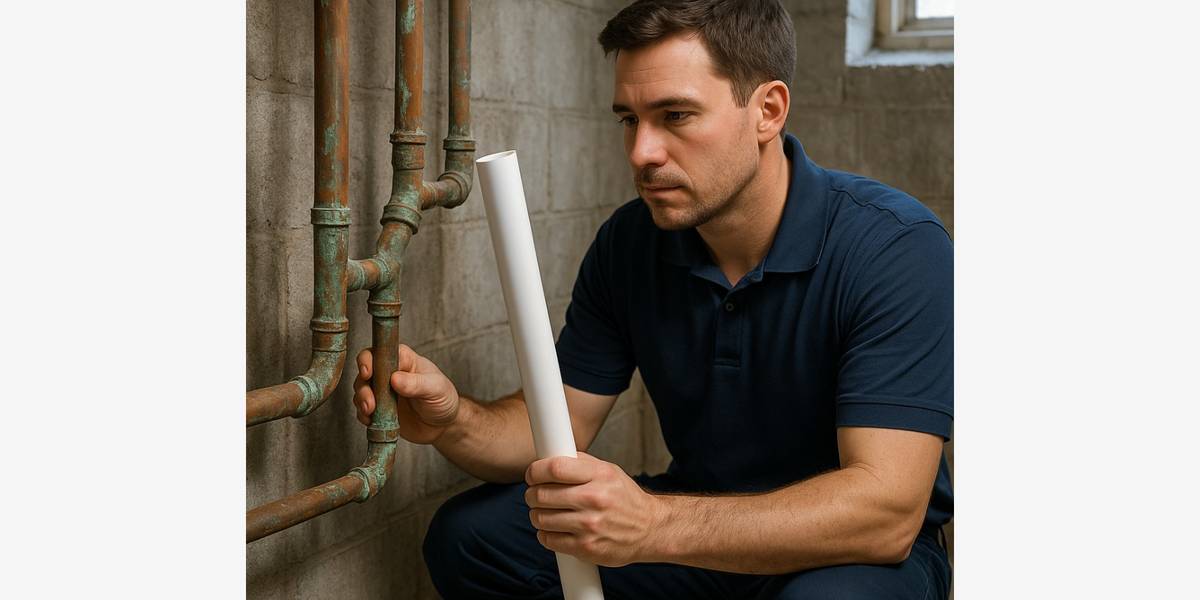
Old Copper Pipes? Here's Why PVC Pipe Replacement Could Be Your Best Option
Key Takeaways
- Old metal pipes corrode, rust, scale, and restrict water flow as they age.
- PVC and CPVC resist corrosion and work well for drain, waste, vent, and some supply applications, while PEX flexible piping is popular for water supply lines.
- Modern piping can improve water pressure, water quality, and long-term reliability.
- A licensed plumber should inspect your existing pipes, local code requirements, and water chemistry before recommending a repiping plan.
Many older homes still run on galvanized steel, copper, or cast iron pipes that have quietly deteriorated for decades. The good news is that modern PVC plumbing pipes, along with CPVC and flexible PEX, give you reliable options for replacing that old metal. This guide walks you through why old pipes fail, the benefits of upgrading, how materials compare, what repiping costs, and when to call a licensed plumber.
Understand Why Old Metal Pipes Fail
Before you decide what to install, it helps to know what goes wrong with the old material. Older homes commonly use a few types of metal plumbing:
- Galvanized steel supply pipes, which were common in homes built before the 1960s
- Copper plumbing pipes used for water supply lines in many mid-century and later homes
- Cast iron drain and sewer pipes that carry waste away from the house
- Lead or lead-soldered plumbing found in some very old systems
Galvanized steel corrodes from the inside out. The protective zinc coating wears away, and rust forms on the inner walls. Over time, rust, scale, and mineral buildup narrow the inside diameter of the pipe. A pipe that once carried a strong flow now pushes water through an opening closer to the size of a straw.
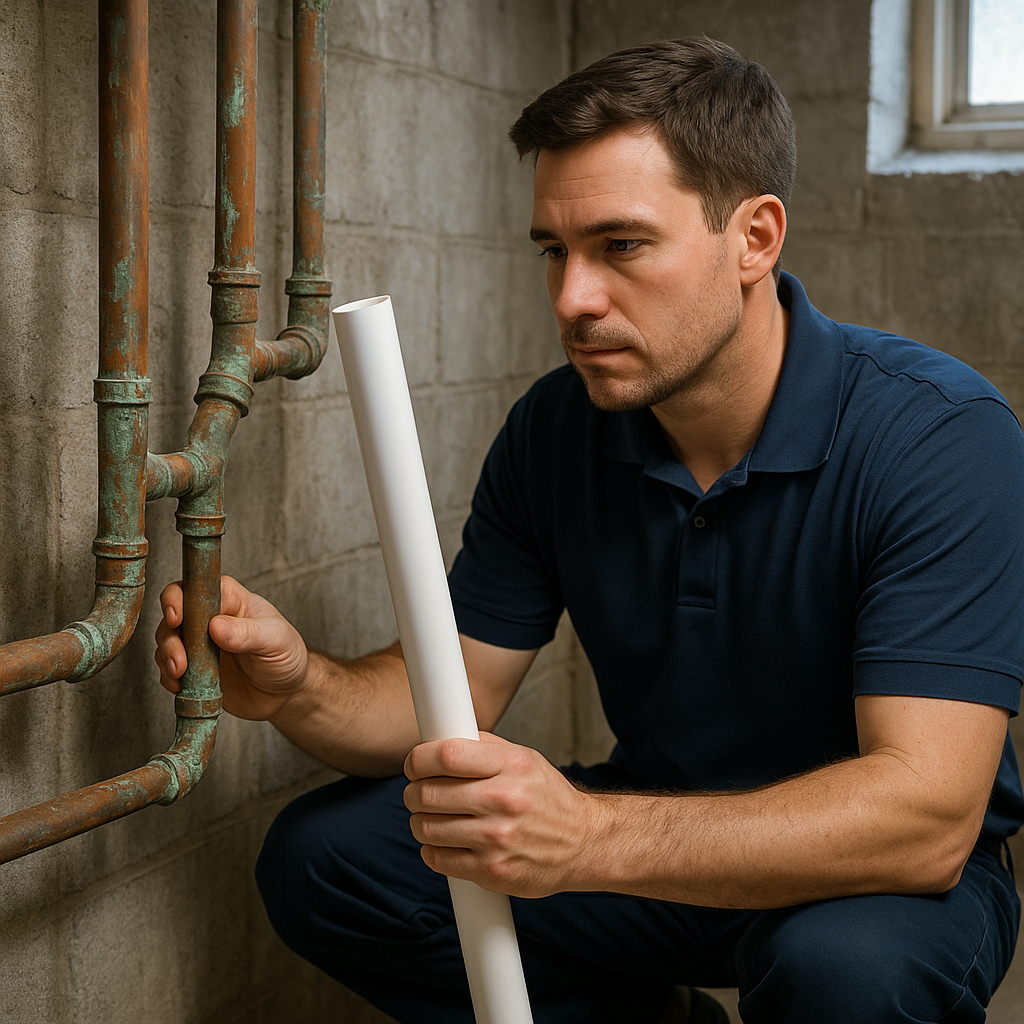
Copper plumbing pipes last a long time, but certain water conditions can still cause pinhole leaks and corrosion. The EPA's Lead and Copper Rule resources explain why corrosion and aging plumbing materials can affect drinking water quality.
You can usually spot aging metal pipes by their warning signs. Watch for low water pressure, discolored or rusty water, a metallic taste or odor, and frequent leaks. Noisy pipes, banging sounds, slow drains, and recurring clogs also point to trouble. If you can see exposed pipes in a basement or crawl space, visible corrosion is a clear red flag.
One small leak in a wall often signals a bigger problem. If the metal has corroded in one spot, the same wear may be spreading through the rest of the system. How fast your pipes break down depends on the pipe material, its age, your water chemistry, and how well you have maintained the system.
Learn the Benefits of Modern Piping
Upgrading to modern materials solves many of the problems that come with old metal. Here is what you gain across a few areas.
Corrosion Resistance
PVC, CPVC, and PEX resist rust and corrosion. Because they do not rust from the inside, the interior walls stay smoother over the years. That smoother surface helps keep your water cleaner, which can reduce the discoloration and metallic taste that come from corroded metal pipes.
Better Water Flow
Smooth interior walls and the right pipe size support stronger, steadier water pressure. When you replace scaled-up galvanized pipes, you often notice better flow at showers, faucets, and appliances right away. Correct pipe sizing matters as much as the material you choose. The wrong size can limit flow even with a modern product.
Fewer Leaks and Joints
PEX can bend around corners, so a plumber can run long sections with fewer fittings. Fewer connections usually mean fewer spots where a leak can start. Good results still depend on proper fittings, correct supports, and a pressure test after installation.
Faster, Less Invasive Installation
Flexible PEX often threads through walls, ceilings, and crawl spaces with less demolition than rigid pipe. Manifold systems can simplify how water reaches each fixture and make future repairs easier. Even so, most repiping jobs still require opening some walls or finding access to the plumbing routes.
Improved Long-Term Reliability
Modern materials can cut down on repeat leaks and emergency repairs. The results depend on professional installation, quality fittings, and work that meets local code. In a home with widespread corrosion, a full repipe can serve as a long-term investment that pays off through fewer problems down the road.
Compare PVC, CPVC, PEX, Copper, and Galvanized Steel
Each material has its place. The table below gives you a clear look at where each one fits and what to watch for.
| Material | Common Uses | Main Benefits | Important Considerations |
|---|---|---|---|
| PVC | Drain, waste, and vent lines | Affordable, corrosion resistant, lightweight, and easy to install | Not typically used for hot water supply lines |
| CPVC | Hot and cold water supply lines in some homes | Handles higher temperatures than PVC and resists corrosion | Can become brittle over time in some conditions, so follow manufacturer and code requirements |
| PEX | Hot and cold water supply lines | Flexible, uses fewer fittings, resists scale, and installs faster in many homes | Requires proper fittings, protection from UV exposure, and code-approved installation |
| Copper | Water supply lines | Durable, long-lasting, heat resistant, and proven | Higher material cost and can corrode in certain water conditions |
| Galvanized steel | Older water supply lines | Strong and was common in older construction | Prone to rust, scale, reduced flow, and leaks as it ages |
PVC and CPVC sound alike, but they are different materials with different jobs. PVC handles drains and venting, while CPVC can handle the heat of hot water supply in systems where code allows it. PEX is the flexible pipe many homeowners picture when they say "flex plumbing pipes."
Local plumbing codes decide where you can use each material, so always confirm the rules in your area before choosing. The International Plumbing Code is a useful reference for understanding approved plumbing materials and installation standards.
Know When Repiping Makes Sense
Not every plumbing problem calls for a full repipe. Still, some situations make repiping the smarter long-term choice:
- Repeated leaks showing up in different areas of the home
- Widespread corrosion or rust-colored water from multiple fixtures
- A major loss of water pressure throughout the house
- Old galvanized supply pipes or failing cast iron drain lines
- A major renovation, such as a bathroom or kitchen remodel
- Frequent drain backups or sewer line problems
- Insurance or buyer concerns during a home sale
A repair may be enough in simpler cases. One isolated leak, a single damaged section of pipe, a problem at just one fixture, or a newer system with limited wear can often be fixed without a full repipe.
Because corrosion in old metal tends to spread, a plumber should inspect the whole system before suggesting a partial repipe or a whole-home repipe. That inspection helps you avoid paying to fix one section only to see the next section fail a few months later.
Understand the Repiping Process
Knowing what to expect makes the project easier to plan. A typical repipe follows a clear set of steps:
- Schedule a plumbing inspection
- Identify pipe materials, age, and problem areas
- Check water pressure, drainage, and visible corrosion
- Review repair, partial repipe, and whole-home repipe options
- Choose approved materials and obtain permits
- Protect floors and furniture and create access points
- Remove or bypass the old piping
- Install new PVC, CPVC, or PEX piping
- Pressure test the system and inspect the work
- Restore access points and clean the work area
The timeline depends on the home's size, the number of bathrooms, how easy the pipes are to reach, and whether the job includes drains or sewer lines. You may need to plan for temporary water shutoffs, small openings in drywall or ceilings, and moving furniture away from work areas. If you have pets or family members who need quiet, plan for the work hours too.
Permits and inspections protect you by confirming the work meets local code, which matters if you ever sell the home. Learn more in our guide to permits and contractors.
Consider Costs and Long-Term Value
Several factors affect what a repipe costs. Home size and the number of bathrooms play a big role. The type of pipe you replace, and whether the project covers supply lines, drains, or both, also move the price. Hard-to-reach pipes raise labor time, and the amount of drywall or flooring repair adds to the total. Local labor rates and permit fees vary by area, and extra work on a water heater, fixtures, or sewer line will increase the job's size.
Repiping costs more upfront than a single repair. Over time, it can save you money by preventing repeated leak repairs and the water damage that comes with them. The long-term value shows up in fewer emergency calls, better water pressure, improved reliability, and easier future renovations. A modern system can also appeal to buyers if you decide to sell.
Before you commit, request itemized quotes from at least two or three licensed plumbers so you can compare the full scope of work rather than the bottom-line number. Our guide to requesting contractor quotes online can help you prepare.
Know When To Call a Licensed Plumber
Repiping takes real expertise. A licensed plumber handles correct pipe sizing and material selection, local code and permit requirements, and proper fittings, supports, and pressure testing. They also manage water shutoffs and drainage safely and can spot hidden leaks or corrosion that you might miss.
Some signs call for a prompt inspection. Reach out if you notice active leaks, water stains on walls or ceilings, a sudden drop in pressure, or rusty water. Sewage odors, recurring drain backups, and visible corrosion on exposed pipes also warrant a professional look. The sooner you act, the more options you have before a small problem turns into a big one.
If you are planning a water heater upgrade at the same time, our water heater replacement guide and water heater FAQs can help you understand your options.
Request a Project Through My Licensed Contractor
At My Licensed Contractor, we connect you with vetted local plumbers who can inspect your system, explain your options, and give you honest quotes. If your home shows any of the warning signs in this guide, submit a quick and easy project request through My Licensed Contractor.
If you are unsure whether your home needs pipe replacement, a licensed plumber can perform an inspection first. They can identify the pipe material, check for corrosion and leaks, test water pressure, and recommend the best repair or repiping plan for your home.
Submit your project request through My Licensed Contractor today to get matched with trusted local plumbers in your area.
Conclusion
Old metal pipes can keep working for years, but corrosion, scale, and leaks eventually catch up with them. Modern piping gives you corrosion resistance, better water flow, fewer potential leak points, faster installation in many cases, and stronger long-term reliability.
PVC, CPVC, and PEX each serve a different purpose, so the right choice depends on the application and your local code. Your next step is simple: schedule a plumbing inspection, review your repiping options, and request quotes from licensed local plumbers.
FAQ
Can I replace old metal pipes with PVC?
It depends on the application. PVC is commonly used for drain, waste, and vent lines, while CPVC or PEX is more commonly used for water supply lines. A licensed plumber can determine which material meets local code and fits your home's plumbing system.
What is flexible plumbing pipe called?
Most homeowners mean PEX when they refer to flexible plumbing pipe. PEX is commonly used for hot and cold water supply lines because it bends around corners and can reduce the number of fittings needed.
Is PEX better than copper?
PEX and copper both have advantages. PEX is flexible, often installs faster, and resists scale buildup. Copper is durable, heat resistant, and has a long track record. The best choice depends on your home, water conditions, budget, and local plumbing code.
Does replacing old pipes improve water pressure?
It often can. Galvanized pipes commonly develop rust and mineral buildup inside, which restricts flow. Replacing those pipes with properly sized modern piping can improve water pressure, especially at showers and faucets.
How long do PVC, CPVC, and PEX pipes last?
Lifespan depends on the material, installation quality, water conditions, and use. Properly installed modern piping can last for decades, but no plumbing material lasts forever. Regular inspections and prompt repairs help protect the system.
Is repiping messy?
Repiping can involve opening walls, ceilings, or floors to access pipes. A professional plumber will protect the work area, make necessary access points, and restore openings after the new piping is installed and tested.
How long does it take to repipe a house?
Many whole-home repiping projects take several days, while smaller partial repipes may take less time. The timeline depends on the home's size, number of bathrooms, pipe accessibility, and whether drains or sewer lines are included.
How much does it cost to replace old metal pipes?
Costs vary based on home size, pipe material, accessibility, permit fees, and whether the project includes supply lines, drains, or sewer lines. Request itemized quotes from multiple licensed plumbers to compare the full scope of work.
Can I repipe only part of my house?
Yes. A partial repipe may make sense when corrosion or leaks are limited to one area. A plumber should inspect the entire system first, because widespread corrosion in older metal pipes can mean additional sections will fail soon.
Do I need a permit to repipe my home?
In most areas, yes. Repiping usually requires a permit and inspection because it affects the home's water supply or drainage system. A licensed plumber can handle the permitting process and ensure the work meets local code.
Why does my water look brown or rusty?
Brown or rusty water can come from corroded galvanized pipes, disturbed sediment, or a problem with the water main. If the discoloration continues after running the water for several minutes, contact a licensed plumber to inspect the system.
Are old copper pipes dangerous?
Copper pipes are generally durable, but aging copper can develop pinhole leaks and corrosion in certain water conditions. Corrosion can also affect water quality. A plumber can test the system, inspect exposed piping, and recommend repair or replacement where needed.
Should I replace cast iron drain pipes?
Cast iron drain pipes can last a long time, but they eventually rust, crack, scale, or collapse. Frequent backups, slow drains, sewage odors, or recurring clogs can signal that the drain lines need attention. A plumber can use a camera inspection to assess their condition.
How do I choose the right plumber for a repipe?
Choose a licensed and insured plumber who will inspect the full system, explain material options, pull the required permit, provide an itemized quote, and pressure test the finished work. Ask whether wall repair, cleanup, permits, and inspection are included in the price.
Find a Licensed Contractor
Connect with pre-screened, licensed contractors in your area.
Submit Your Project
Find Local Contractors
Connect with licensed, verified contractors in your area for your next project.
Submit Your Project