
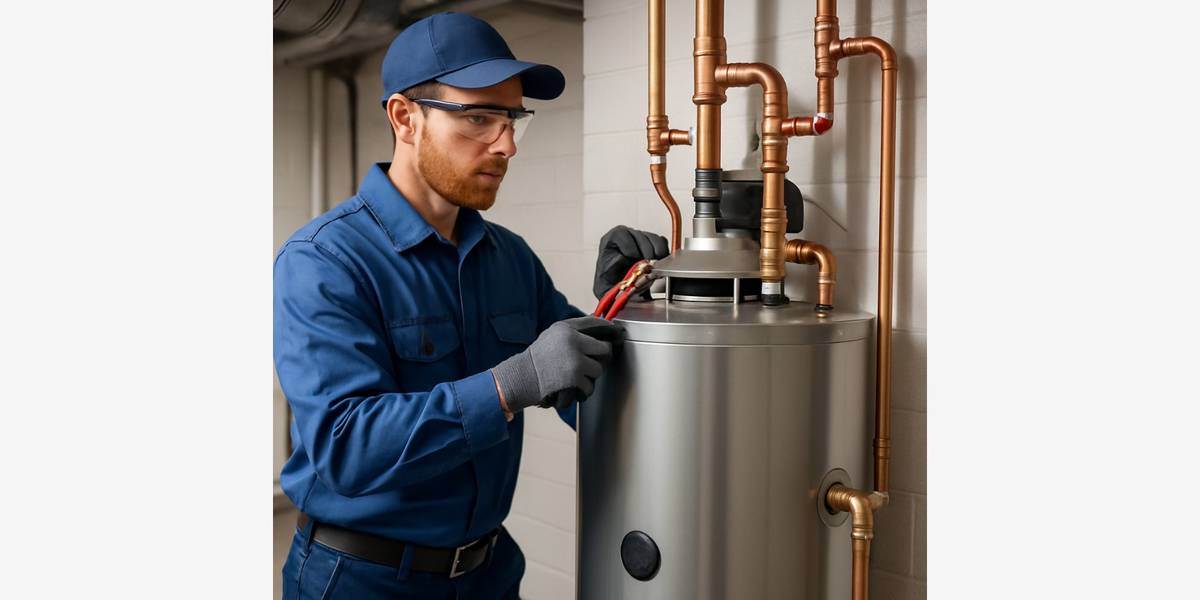
Water Heater Replacement: Signs It's Time, Costs, and Your Best Options
- Most tank water heaters last about 8 to 12 years, so it is smart to plan ahead as your system ages.
- Leaks, rusty water, strange noises, inconsistent hot water, and rising energy bills can signal it is time for replacement.
- The best water heater for your home depends on fuel source, available space, hot-water demand, efficiency goals, and budget.
- A qualified plumber can properly size the system, handle required connections and permits, and help ensure the installation is safe and code-compliant.
Few things are worse than starting your day with a cold shower or finding water pooled around your water heater. If your unit is leaking, running out of hot water, or nearing the end of its lifespan, replacement can help prevent a larger breakdown. Through My Licensed Contractor, homeowners can request quotes for water heater replacement and get matched with a vetted, licensed plumber in their area.
How Do You Know It's Time to Replace Your Water Heater?
Some water heater problems can be repaired, but aging, leaking, or repeatedly failing equipment may make replacement the better long-term choice. Here are common warning signs to watch for.
Your Water Heater Is Getting Older
Traditional tank-style water heaters commonly last about 8 to 12 years. Maintenance history, water quality, and household use can all affect that timeline. If your system is getting close to or beyond that age, it is wise to start considering replacement before it fails unexpectedly.
To check the age of your water heater, look for the manufacturer label and serial number on the side of the tank. The first characters in the serial number often identify the month and year it was made. If you cannot interpret the label, take a photo and show it to a licensed plumber.
There Is Water Around the Tank
Water around the base of the tank is a warning sign. It may indicate a loose connection, failed valve, fitting issue, or internal tank corrosion. While some external leaks can be repaired, a tank that has rusted through cannot be fixed and typically needs to be replaced.
If you notice active leaking, shut off the water supply to the unit if you can do so safely, move belongings away from the area, and contact a plumbing professional promptly.
Hot Water Runs Out Too Quickly
If showers turn cold faster than they used to, sediment buildup, failing heating elements, burner issues, or an undersized tank may be to blame. It may also mean your household's hot-water demand has changed since the last water heater was installed.
For example, a family that has added another bathroom, welcomed new household members, or begun running multiple appliances at the same time may need a larger-capacity system or a properly sized tankless water heater.
The Water Is Rusty, Cloudy, or Discolored
Rust-colored water can point to corrosion inside the water heater tank or within your plumbing system. If discoloration appears only when using hot water, the water heater is more likely to be the source. A licensed plumber can inspect the system and identify where the problem is coming from.
You Hear Popping, Rumbling, or Banging Noises
Sediment can settle and harden at the bottom of a tank over time. This buildup may make the heating system work harder, reduce efficiency, and create popping or rumbling noises. Flushing the tank may help in some cases, but recurring noises in an older water heater can indicate that replacement is the more practical option.
Your Energy Bills Are Rising
An older water heater may use more energy to provide the same amount of hot water. According to the U.S. Department of Energy, water heating accounts for a significant share of household energy use, which makes efficiency an important consideration when replacing an aging system. You can learn more about water-heating efficiency and ways to lower energy use through the U.S. Department of Energy's water heating guidance.
Repair vs. Replacement: Which Makes More Sense?
The decision between water heater repair and replacement usually comes down to the unit's age, the specific problem, repair history, and overall performance.
- Unit age: Repair may make sense for a newer system, while replacement may be more cost-effective for an older unit nearing the end of its expected service life.
- Problem type: A faulty valve, heating element, thermostat, or ignition component may be repairable. A leaking tank, internal corrosion, or major structural issue usually points to replacement.
- Repair history: A single repair may be worthwhile, but repeated breakdowns can become expensive and inconvenient.
- Performance: Frequent hot-water shortages, inconsistent temperatures, and higher operating costs may indicate that the system no longer meets your household's needs.
A professional evaluation can help you make the right call. If the issue is isolated and the system is relatively new, a repair may restore reliable performance. If the tank is leaking, corrosion is present, or the unit has become unreliable, replacement can help you avoid repeat repair costs and sudden water damage.
Choosing the Right Type of Water Heater
Once you decide to replace your water heater, you have several options. The right choice depends on your home's layout, fuel source, budget, hot-water needs, and efficiency priorities.
Conventional Storage-Tank Water Heaters
Conventional water heaters store heated water in a tank, often ranging from 40 to 80 gallons. They are a familiar choice for many homeowners and typically have a lower upfront equipment cost than tankless systems.
- Available in gas and electric models
- Often less expensive to purchase and install than tankless units
- Reliable for households with predictable hot-water needs
- Require enough tank capacity to serve peak demand
- Can experience standby heat loss because stored water must be reheated
Storage-tank water heaters are often a strong fit for homeowners who want a straightforward, dependable replacement without major system changes.
Tankless Water Heaters
Tankless water heaters heat water on demand rather than storing it in a tank. When properly sized, they can provide a continuous supply of hot water and take up significantly less space than a conventional tank unit.
- Provides hot water on demand
- Can be a good option for homes with limited mechanical-room space
- May offer long-term energy savings, depending on household use and fuel type
- Often costs more upfront than a standard tank replacement
- May require gas-line, venting, plumbing, or electrical upgrades
A tankless system can be a good fit for homeowners who want longer showers, have frequent hot-water demand, or want to free up space. Proper sizing is especially important because the unit must support the number of fixtures likely to run at the same time.
Heat Pump Water Heaters
Heat pump water heaters use electricity to move heat from the surrounding air into the water rather than relying only on electric resistance heating. This can make them substantially more efficient than standard electric tank water heaters.
ENERGY STAR states that certified heat pump water heaters can use about 70% less energy than standard electric water heaters. Depending on household size, electric rates, climate, and water usage, some households may see meaningful annual energy savings. Learn more about available models and efficiency considerations through ENERGY STAR's water heater resources.
- Highly efficient electric option
- May reduce water-heating energy costs
- Requires adequate installation space and surrounding air volume
- Needs condensate drainage
- May produce some operating noise
- May qualify for local utility incentives or other energy-efficiency programs
Before choosing a heat pump water heater, ask a licensed professional about installation space, electrical requirements, drainage, local climate conditions, and available incentives.
Gas vs. Electric Water Heaters
There is no single best fuel type for every household. Your ideal choice depends on whether natural gas is available, your existing equipment, electrical-panel capacity, venting requirements, local utility costs, and how much hot water your household uses.
Gas water heaters may be a practical choice if your home already has gas service and suitable venting. Electric water heaters can be simpler to install in some homes, while heat pump water heaters may offer a high-efficiency electric alternative when the space is appropriate.
What Size Water Heater Does Your Home Need?
Choosing the right water heater size is one of the most important parts of the replacement process. A unit that is too small can leave your household short on hot water, while an oversized system can cost more to buy and operate than necessary.
Sizing a Tank Water Heater
Tank water heater sizing should account for more than the number printed on the tank. A plumber will consider your household size, number of bathrooms, morning and evening demand, and how many fixtures or appliances may use hot water at once.
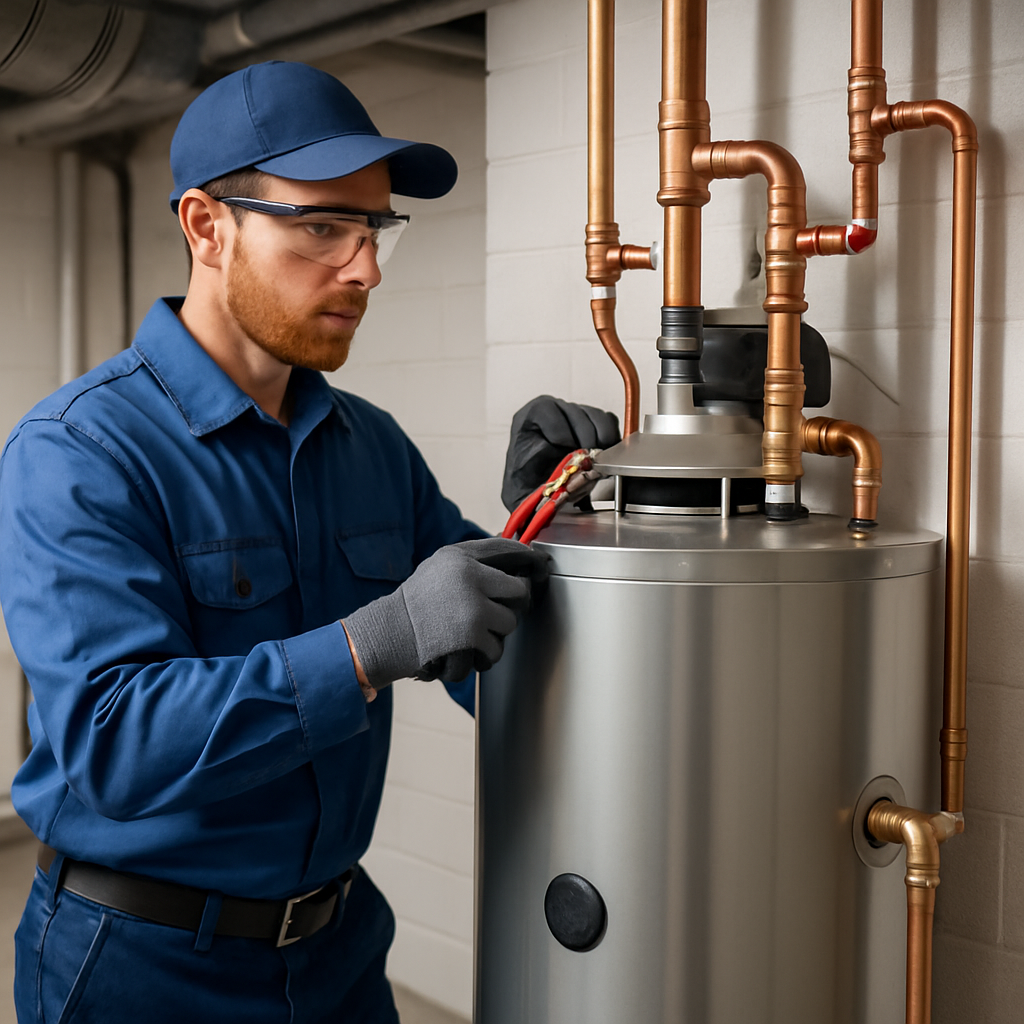
The first-hour rating is particularly important. It estimates how much hot water the system can supply during a high-demand hour. In many cases, this measurement is more useful than tank capacity alone.
Sizing a Tankless Water Heater
Tankless water heaters are sized by flow rate and temperature rise. A licensed plumber will calculate how many gallons per minute your household needs when multiple fixtures run at once. They will also consider the incoming groundwater temperature, which can vary by season and location.
For example, a tankless system that works well for one shower may not be large enough to run two showers, a dishwasher, and a washing machine at the same time. Correct sizing helps prevent performance problems after installation.
What Affects Water Heater Replacement Cost?
Water heater replacement costs vary widely because every home and installation is different. Instead of relying on one broad price range, consider the factors that can influence your project total.
- Water heater type, including tank, tankless, heat pump, gas, or electric
- Tank capacity or required tankless flow rate
- Energy-efficiency features and equipment rating
- Whether you are changing fuel sources
- Gas-line, venting, plumbing, or electrical upgrades
- Permit and local code requirements
- Accessibility of the existing installation area
- Removal and disposal of the old water heater
- Emergency service needs
- Water damage cleanup or related plumbing repairs
- Manufacturer and labor warranty options
The lowest upfront price is not always the best value. Proper sizing, safe installation, energy performance, code compliance, and long-term reliability can all affect the true cost of ownership.
What Happens During Professional Water Heater Replacement?
Knowing what to expect can make a water heater replacement feel less overwhelming. While the exact process varies by home and equipment type, a professional installation often follows these steps.
- In-home assessment: The plumber reviews the old water heater, household needs, fuel source, venting, electrical setup, and available installation space.
- Equipment recommendation: The contractor recommends properly sized options based on your budget, performance needs, efficiency preferences, and home infrastructure.
- Safe removal: The existing unit is disconnected, drained, removed, and disposed of appropriately.
- Connection and code updates: The installer addresses water lines, gas connections, electrical components, venting, shutoff valves, drain pans, expansion tanks, and other required items as needed.
- New system installation: The new water heater is installed and connected according to manufacturer specifications and applicable local requirements.
- Testing and walkthrough: The contractor checks for leaks, confirms water temperature and system operation, and explains basic maintenance and warranty information.
Water heater replacement can involve water, electricity, natural gas, combustion venting, and local permitting requirements. The International Code Council develops model plumbing and building codes that many jurisdictions use or adapt. A qualified local plumber can help ensure your installation follows the requirements that apply where you live.
How to Prepare for Water Heater Replacement
A little preparation can help your installation day go more smoothly.
- Clear a path from the entrance to the water heater.
- Move boxes, shelves, cleaning supplies, and stored belongings away from the unit.
- Write down symptoms such as short showers, fluctuating temperatures, leaks, noises, or rusty water.
- Tell the plumber about past repairs and any recent changes in household size or hot-water use.
- Ask about permits, installation timing, warranty coverage, maintenance, and disposal of the old unit.
- Consider future needs, especially if you are remodeling or expect household hot-water use to increase.
How to Make Your New Water Heater Last Longer
Routine maintenance can help your new water heater operate reliably and may extend its useful life.
- Schedule periodic professional maintenance.
- Flush a tank-style water heater when recommended for your model and local water conditions.
- Check occasionally for moisture, corrosion, or visible leaks around the system.
- Keep the area around the water heater clear and accessible.
- Address small performance problems before they turn into emergency failures.
- Follow manufacturer guidance for water-temperature settings and safety devices.
The temperature-and-pressure relief valve is an important safety component. Homeowners should follow manufacturer instructions and seek professional help if they are unsure how to inspect or test it. The U.S. Consumer Product Safety Commission provides consumer safety information and recall resources that can be helpful when evaluating household equipment.
Find a Licensed Plumber for Water Heater Replacement
Replacing a water heater is not a one-size-fits-all project. The right system depends on your household's hot-water needs, existing fuel source, installation space, budget, and local code requirements. A licensed plumber can help you decide whether repair or replacement makes sense, select the right equipment, and complete the installation safely.
With My Licensed Contractor, you can submit your water heater replacement project, request quotes, and get matched with a vetted, licensed plumber in your area. Whether you need an emergency replacement, want to upgrade to tankless, or are considering a high-efficiency heat pump water heater, start your project today and connect with a professional who can help.
Frequently Asked Questions
How long does it take to replace a water heater?
A standard like-for-like replacement can often be completed in one visit. However, the timeline may be longer if the project requires permits, electrical upgrades, gas-line changes, venting work, plumbing modifications, or a change from a tank system to a tankless unit.
Can I replace my water heater before it fails?
Yes. Replacing an aging water heater proactively can help you avoid a no-hot-water emergency, reduce the risk of tank leaks, and give you more time to compare equipment options and quotes.
Should I replace my tank water heater with a tankless system?
It depends on your household's hot-water demand, fuel type, budget, venting, gas-line capacity, electrical setup, and available installation space. A licensed plumber can calculate whether a tankless water heater is the right size and fit for your home.
What should I do if my water heater is leaking?
If there is active leaking, turn off the water supply to the unit if you can do so safely, move belongings away from the area, and contact a plumbing professional. A leaking tank often needs replacement, while a leak from a valve, fitting, or connection may be repairable.
Do I need a permit to replace a water heater?
Permit requirements vary by city, county, and installation type. A licensed plumbing professional can help determine whether a permit is required and ensure the job follows local code requirements.
How long should a water heater last?
Many traditional tank water heaters last about 8 to 12 years. Tankless systems may last longer with proper maintenance, but actual lifespan depends on water quality, maintenance history, installation quality, usage patterns, and the specific model.
Is it safe to use a water heater that is leaking?
It is not wise to ignore a leaking water heater. Even a small leak can worsen, damage nearby floors or belongings, and indicate a failing component. If the tank itself is leaking, replacement is usually necessary.
Can a water heater be repaired if it has rust inside?
It depends on the source and extent of the corrosion. Some rust-related issues may involve replaceable parts, such as the anode rod. But if internal tank corrosion has caused a leak or structural failure, the tank itself cannot be repaired.
What is the difference between a 40-gallon and 50-gallon water heater?
The main difference is how much hot water is available during peak use. A 50-gallon tank may better serve a larger household or a home where multiple people shower, run appliances, or use hot water at the same time. A plumber can compare first-hour ratings to determine the best fit.
Will a new water heater lower my energy bills?
It may. Savings depend on the age and condition of your old system, the type of replacement unit, household hot-water use, local utility rates, and whether you choose an energy-efficient model. ENERGY STAR-certified heat pump water heaters can be particularly efficient compared with standard electric units.
Are heat pump water heaters worth the cost?
They can be worthwhile for homeowners with adequate installation space and suitable conditions. Heat pump water heaters typically cost more upfront than standard electric models, but their lower energy use may offset some of that difference over time. Ask a licensed installer to evaluate whether your home is a good fit.
Can I install a water heater myself?
Water heater installation may involve high-voltage electricity, gas connections, combustion venting, water lines, pressure-relief safety devices, and permit requirements. Professional installation is generally the safer option and can help protect manufacturer warranty coverage and code compliance.
Find a Licensed Contractor
Connect with pre-screened, licensed contractors in your area.
Submit Your Project
Find Local Contractors
Connect with licensed, verified contractors in your area for your next project.
Submit Your Project