
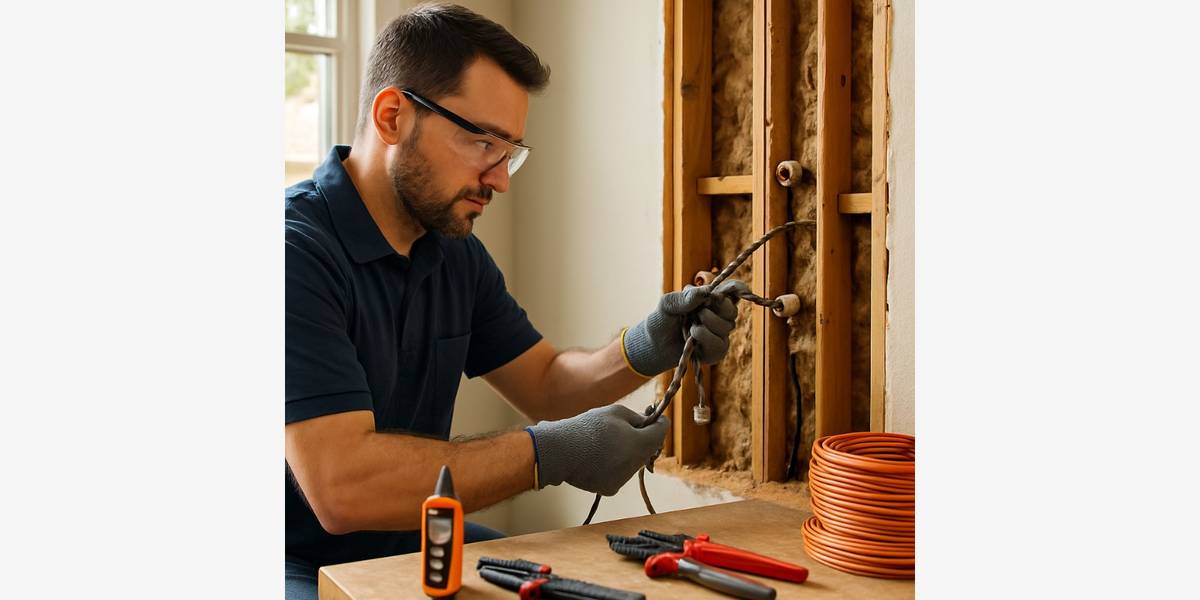
Home Rewiring: When You Need It and What the Project Involves
Key Takeaways
- Homes need rewiring when the wiring is old, damaged, or too small for today's power use. Warning signs include warm outlets, flickering lights, and breakers that trip often.
- Knob-and-tube wiring and older aluminum branch wiring are the most common reasons for a rewire in older homes.
- A rewire needs a permit and a licensed electrician, and the work can take a few days to a few weeks.
Your home's wiring sits behind the walls where you never see it. That makes it easy to forget until something goes wrong. A breaker trips every time the microwave and the toaster run together. An outlet feels warm. A light in the hallway flickers for no clear reason.
Some of these problems have simple fixes. Others point to wiring that has reached the end of its life. This guide explains when a home needs rewiring, what the different types of rewiring jobs look like, how the process works from the first walkthrough to the final inspection, and how to plan for the cost and the mess.
What Rewiring Means
Rewiring means an electrician replaces the old electrical cables in your home with new ones. The new cable runs from the electrical panel to your outlets, switches, light fixtures, and hardwired appliances.
A rewire can cover the whole house or only part of it. Electricians usually break the work into three categories:
- Full rewire: The electrician replaces every branch circuit in the home. This job often includes a new panel, new outlets and switches, and updated grounding.
- Partial rewire: The electrician replaces wiring in one area, such as an addition, a basement, or a kitchen. Homeowners often choose this option during a remodel when the walls are already open.
- Circuit additions and upgrades: The electrician adds dedicated circuits for appliances like an electric range, a heat pump, or an EV charger. This work does not replace the old wiring, but it often shows whether the rest of the system can handle the load.
Rewiring is different from a panel upgrade. A panel upgrade replaces the box that distributes power to your circuits. The two jobs often go together, though. If your home needs a rewire, the electrician will likely look at the panel too. Our guide to electrical panel replacement covers that side of the system in more detail.
Signs Your Home May Need Rewiring
No single sign proves that a house needs a full rewire. A licensed electrician has to inspect the system to know for sure. Still, the signs below tell you it is time to call one.
Breakers Trip or Fuses Blow Often
A breaker trips when a circuit carries more current than it can safely handle. An occasional trip is normal. If the same breaker trips every week, the circuit may be overloaded, or the wiring may have a fault. Homes from the 1950s and 1960s often have too few circuits for modern kitchens and home offices.
Lights Flicker or Dim
Lights that dim when the air conditioner kicks on can point to an overloaded circuit. Flickering that happens at random can point to a loose connection. Loose connections create heat, and heat can start a fire.
Outlets or Switch Plates Feel Warm
An outlet should never feel warm to the touch. Heat at an outlet or switch means resistance somewhere in the connection. Stop using that outlet and call an electrician.
You Smell Burning or See Scorch Marks
A burning plastic smell with no clear source is an emergency. So are brown or black marks around an outlet. Turn off the breaker for that area if you can do it safely, and call an electrician right away. If you see smoke or flames, leave the house and call 911.
Your Outlets Have Two Prongs
Two-prong outlets usually mean the circuit has no ground wire. A ground wire gives stray current a safe path. Without it, a fault can travel through an appliance or through a person. Some homeowners swap two-prong outlets for three-prong ones without adding a ground. That swap hides the problem and does not fix it.
Your Home Is More Than 40 Years Old and Has Never Had Electrical Updates
Age alone does not mean the wiring has failed. But insulation on older cable can dry out and crack over decades. Previous owners may also have added circuits or fixtures without permits. An electrician can tell you whether the old wiring still has life in it.
You Plan a Big Remodel or a New Major Appliance
A kitchen remodel, a finished basement, or a heat pump conversion all add load to your electrical system. Many homeowners find out during the planning stage that their wiring cannot support the new work.
Older Wiring Types That Often Call for a Rewire
The type of wiring in your home matters as much as its age. Electricians see a few older wiring types again and again.
Knob-and-Tube Wiring
Knob-and-tube wiring shows up in many homes built before the 1940s. It uses individual wires that run through ceramic knobs and tubes inside walls and ceilings. It has no ground wire. The wires also need air around them to release heat, so any insulation that later owners blew into the walls can cause the wires to overheat.
Many insurance companies will not write a new policy for a home with active knob-and-tube wiring, or they charge more for coverage. If you are buying an older home, ask the home inspector to check for it.
Aluminum Branch Circuit Wiring
Builders used aluminum wiring for branch circuits in some homes from about 1965 to the early 1970s. Aluminum expands and contracts more than copper. Over time, connections at outlets and switches can loosen and overheat. The U.S. Consumer Product Safety Commission found that homes with pre-1972 aluminum wiring were 55 times more likely to have connections reach fire hazard conditions than homes with copper wiring.
Aluminum wiring does not always require a full rewire. The CPSC recognizes specific repair methods for the connections. A full rewire with copper is the most permanent fix, but an electrician can explain both options. You can read the CPSC's guidance in its publication Repairing Aluminum Wiring.
Cloth-Sheathed Cable
Many homes from the 1940s through the 1960s have cable with a cloth or rubber outer jacket. This insulation can turn brittle and fall apart when someone moves the wire. These systems also often lack a ground.
Undersized or DIY Wiring
Some problems come from past owners rather than the original builder. Electricians often find extension cords stapled inside walls, splices with no junction box, or wire that is too thin for the breaker it connects to. These issues can show up in homes of any age.
Why Rewiring Matters for Safety
Electrical failure is one of the leading causes of home fires in the United States. The U.S. Fire Administration offers a free electrical fire safety guide with tips for homeowners. Its first piece of advice is simple: a qualified electrician should handle electrical work.
Old wiring raises the risk of fire in a few ways. Brittle insulation can expose bare copper. Loose connections can arc and create heat. Circuits with too much load can overheat inside the wall where no one can see them. A rewire removes these weak points and gives the electrician a chance to add modern protection like AFCI and GFCI breakers.
AFCI stands for arc-fault circuit interrupter. It shuts off a circuit when it detects the type of arcing that can start a fire. GFCI stands for ground-fault circuit interrupter. It shuts off a circuit when current leaks to ground, which protects people from shock in kitchens, bathrooms, garages, and outdoor areas. Current electrical codes require both types of protection in many parts of a home.
What Happens During a Rewiring Project
Every rewire looks a little different, but most follow the same basic steps.
1. Inspection and Assessment
The electrician walks through your home and looks at the panel, outlets, switches, and any exposed wiring in the basement or attic. They may open a few outlets or test circuits with a meter. Then they tell you whether the home needs a full rewire, a partial rewire, or a smaller set of repairs.
2. Quote and Scope of Work
A good quote lists each part of the job: the number of circuits, the type of cable, panel work, new devices, permit fees, and wall repair. Ask whether the price includes drywall patching and paint. Many electricians cut access holes and leave the patching to the homeowner or a separate contractor.
3. Permit
In most cities and counties, a rewire requires an electrical permit. The licensed electrician usually pulls it. The permit triggers inspections by the local building department, which check the work against the electrical code. Our article on permits and contractors explains why you should never skip this step.
4. Rough-In
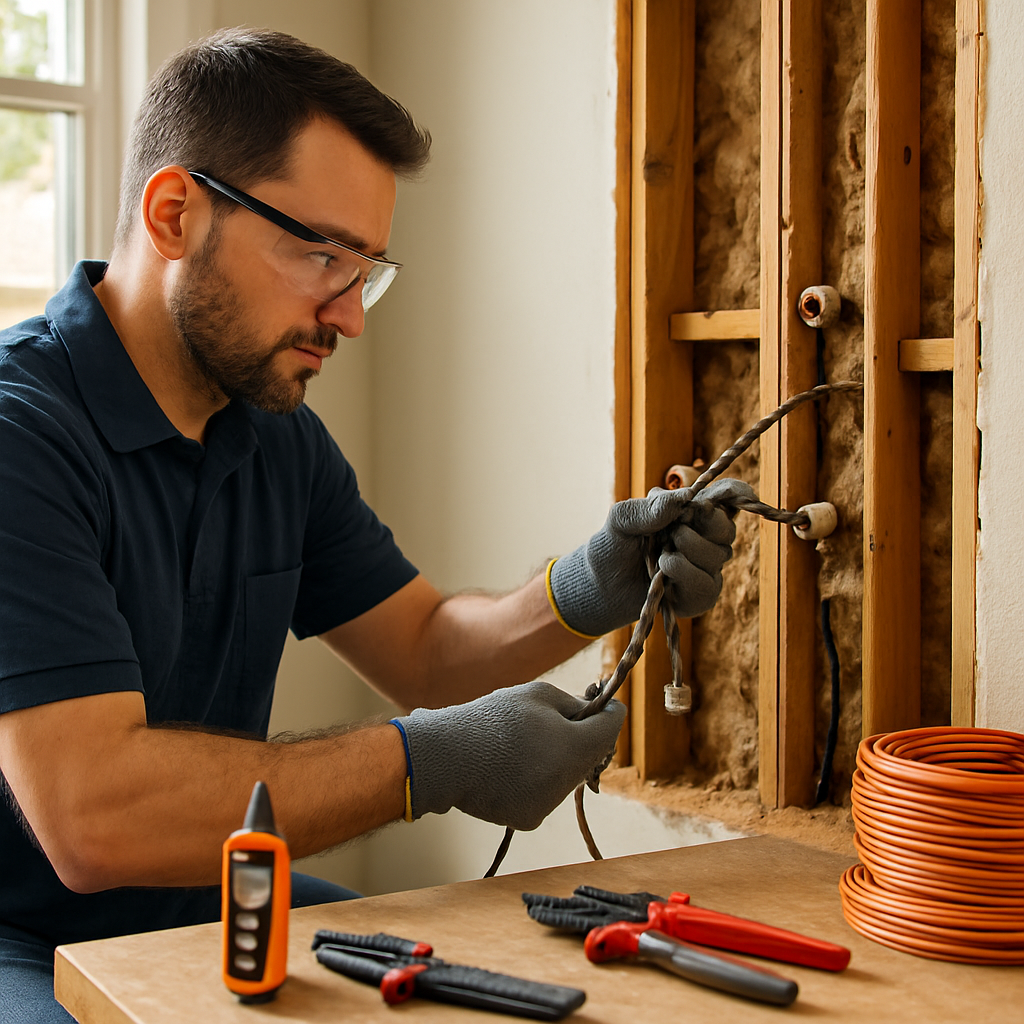
The electrician runs new cable through the walls, floors, and ceilings. In finished homes, they fish the cable through small holes and use the attic and basement wherever possible. This step creates the most dust and noise. Some homeowners stay with family for a few days during this phase, especially with a full rewire.
5. Rough-In Inspection
The inspector checks the new cable, boxes, and connections before anyone closes up the walls.
6. Devices and Finish Work
The electrician installs new outlets, switches, and fixtures, connects the circuits to the panel, and labels each breaker.
7. Final Inspection and Wall Repair
The inspector signs off on the finished job. After that, a drywall contractor or the electrician's crew patches the access holes.
How Long Rewiring Takes
A partial rewire of one or two rooms can take a day or two. A full rewire of an average single-family home often takes one to two weeks of electrical work. Inspection scheduling and wall repair can add more time.
Several factors change the timeline:
- The size of the home and the number of stories
- Access through the attic, basement, or crawl space
- Plaster walls, which take longer to open and patch than drywall
- Whether the panel needs replacement at the same time
- How quickly the local building department schedules inspections
What Rewiring Costs
Rewiring costs vary a lot by region, home size, and wall type. A full rewire of a typical home often runs into the thousands or low tens of thousands of dollars. Plaster walls, multiple stories, and a panel upgrade all push the price higher. A partial rewire of a single room or circuit costs far less.
Here are a few ways to keep the budget under control:
- Combine projects. If you already plan a kitchen or bathroom remodel, rewire those rooms while the walls are open.
- Get more than one quote. Compare the scope line by line and not only the total price.
- Ask about phasing. Some homeowners rewire the riskiest circuits first and finish the rest later.
The cheapest bid does not always save money. Missing permits, skipped circuits, and poor wall repair can cost more in the long run.
Why Rewiring Is Not a DIY Job
Some electrical tasks are reasonable for a careful homeowner, like replacing a light fixture on an existing circuit. Rewiring is not one of them. It involves work inside the panel, load calculations, and code requirements that change from one area to the next. Mistakes can stay hidden in the wall for years before they cause a fire.
Unpermitted electrical work can also cause trouble with your homeowners insurance and with the sale of your home later. If you want to know where the line falls, read our guide to electrical jobs you can actually DIY.
How to Choose an Electrician for a Rewire
Rewiring takes skill, planning, and patience. Look for an electrician who:
- Holds an active license in your state and carries liability insurance
- Pulls permits for the work and schedules the inspections
- Has experience with your home's age and wall type
- Gives a written quote with a clear scope
- Explains how they will protect your floors and furniture and handle dust
The Federal Trade Commission offers tips on how to avoid a home improvement scam, including red flags like cash-only payment and pressure to sign right away.
Get Matched With a Vetted Electrician
If you have noticed any of the warning signs in this guide, or you own an older home and do not know what is behind the walls, the next step is an inspection by a licensed electrician.
My Licensed Contractor makes that step easy. Tell us about your project, and we match you with a vetted local electrician who fits the job. Only contractors who pass our screening appear on the platform, so you can skip the guesswork. The request takes a few minutes.
Submit your rewiring project request on My Licensed Contractor
Rewiring FAQ
How Do I Know If My House Needs a Full Rewire or Only Repairs?
A licensed electrician has to inspect the system to answer this. Isolated problems, like one bad outlet, usually need a repair. Widespread issues, like knob-and-tube wiring or no grounding anywhere in the house, usually point to a full rewire.
Can I Live in My Home During a Rewire?
Most families stay home during a partial rewire. During a full rewire, you will lose power to some rooms for parts of the day, and the work creates dust and noise. Some homeowners stay elsewhere for the busiest few days.
Does Rewiring Increase Home Value?
Rewiring does not always raise the listed price, but it removes a problem that buyers, inspectors, and insurers look for. A home with updated wiring and permit records is usually easier to sell and insure.
Is Knob-and-Tube Wiring Illegal?
In most areas, existing knob-and-tube wiring is not illegal. Electricians cannot install it in new work, though, and many insurers limit coverage for homes that still have it. Check with your insurer and a local electrician.
Do I Need a Permit to Rewire My House?
Yes, in most places. A rewire usually requires an electrical permit and at least one inspection. Your electrician should pull the permit before work starts.
How Long Does Rewiring Last?
Modern copper wiring that an electrician installs to code can last many decades. The outlets, switches, and breakers may need replacement sooner, but the cable in the walls should serve the home for a long time.
Find a Licensed Contractor
Connect with pre-screened, licensed contractors in your area.
Submit Your Project
Find Local Contractors
Connect with licensed, verified contractors in your area for your next project.
Submit Your Project