
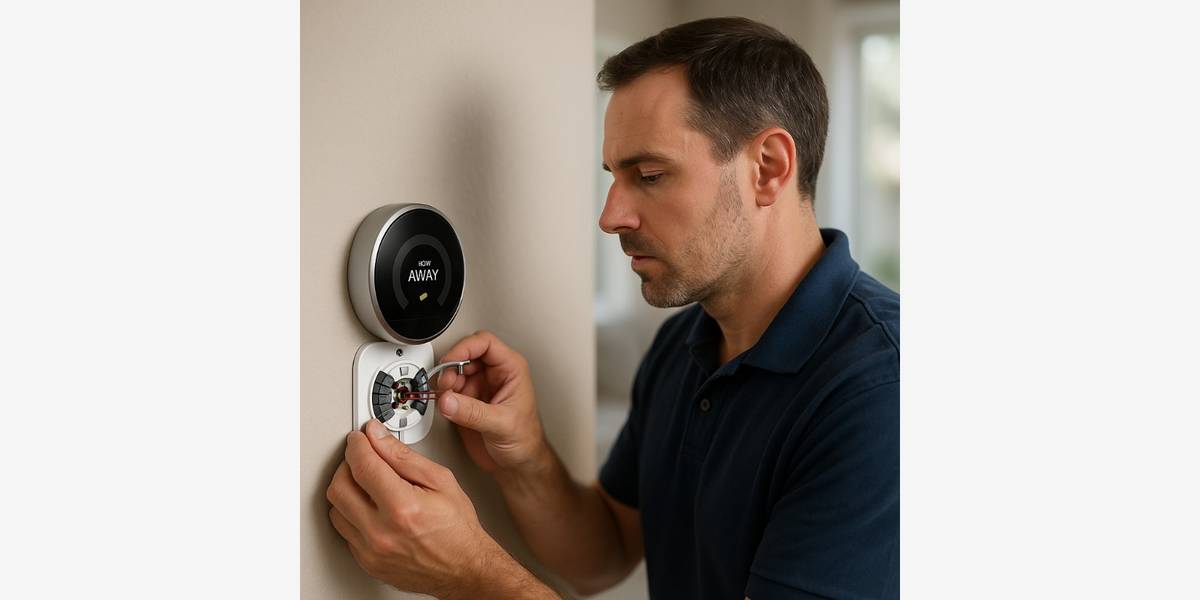
Thinking About a Smart Thermostat? Why Professional Installation Matters
Key Takeaways
- A smart thermostat is a simple home upgrade that can help reduce energy waste and lower heating and cooling costs.
- It gives you better control over indoor temperatures, helps maintain consistent comfort, and allows you to set schedules around your routine.
- Professional installation helps ensure the thermostat is set up correctly, safely, and for the best possible performance.
This winter, you could spend less on heating by installing a smart thermostat in your home. It is a relatively simple upgrade that can make a noticeable difference in comfort, control, and energy use.
A smart thermostat gives you more control over when and how your HVAC system runs. You can set schedules, adjust temperatures from your phone, and avoid heating an empty home all day. But to get those benefits, the thermostat needs to be compatible with your equipment and installed correctly.
That is why it is best to have a licensed HVAC professional handle the installation. A pro can verify compatibility, inspect the wiring, address C-wire issues, and configure the thermostat for your specific heating and cooling system.
What Does a Smart Thermostat Actually Do?
A smart thermostat works like the thermostat you already have, but it adds Wi-Fi connectivity and automated features that give you more control over your home’s heating and cooling.
It still tells your HVAC system when to turn on and off. The difference is that a smart thermostat can help manage those settings more efficiently based on your routine, preferences, and, depending on the model, whether anyone is home.
Most smart thermostats can:
- Control the temperature of your heating and cooling system like a traditional thermostat.
- Learn your daily routine and automatically adjust temperatures based on the time of day.
- Use occupancy sensors or geofencing to reduce heating or cooling when the home is empty.
- Let you adjust your home’s temperature from a phone, tablet, or computer anywhere you have an internet connection.
- Work with voice assistants, allowing you to change the temperature without getting up.
- Provide energy-use reports that show when your HVAC system runs and where you may be using more energy than necessary.
- Send reminders for filter changes, maintenance, or other system-related needs, depending on the thermostat model.
The biggest advantage is that a smart thermostat can do more than follow a fixed schedule. Many models can learn from your habits and help build a routine that reduces unnecessary HVAC use while keeping your home comfortable.
The U.S. Department of Energy explains that programmable and smart thermostat settings can reduce wasted heating and cooling when they are used to adjust temperatures during times when people are asleep or away from home.
The Real Benefits for Your Home
A smart thermostat can make daily comfort easier while helping you avoid unnecessary heating and cooling. The exact results depend on your system, schedule, insulation, local weather, and how you use the thermostat, but homeowners can see several meaningful benefits.
- Potential energy savings: ENERGY STAR reports that certified smart thermostats can save households about 8% on heating and cooling costs, or approximately $50 per year on average. Individual savings will vary based on your home, climate, HVAC equipment, and temperature settings.
- More consistent comfort: Instead of manually adjusting the thermostat throughout the day, you can create schedules that keep your home comfortable when you are there and reduce heating or cooling when you are sleeping, working, or away.
- Remote temperature control: Forgot to change the thermostat before a trip? You can adjust it from your phone without returning home.
- Better visibility into energy use: Many smart thermostats provide reports that help you understand when your HVAC system runs most often and where you may be able to make more efficient choices.
- Less unnecessary system runtime: When the thermostat is programmed around your schedule, your system may run less often when no one is home. That can reduce unnecessary operation and, in some cases, limit avoidable wear on your heating and cooling equipment.
- Maintenance reminders: Some models notify you when it may be time to change an air filter or schedule maintenance. Regular upkeep is still essential, so review these monthly HVAC maintenance tips for Indiana homeowners to help keep your system operating efficiently.
- Possible rebates: Some utilities offer rebates or demand-response incentives for qualifying smart thermostats. Check with your local utility before purchasing a model, since available programs and requirements vary by provider.
Why Compatibility With Your HVAC System Is Critical
Not every smart thermostat works with every heating and cooling system. Before you buy one, it is important to make sure the model is compatible with your equipment, existing thermostat wiring, and home comfort setup.
This matters even more if you have a:
- Heat pump
- Multi-stage furnace or air conditioner
- Variable-speed HVAC system
- Dual-fuel system
- Zoned heating and cooling system
- Older HVAC system with limited thermostat wiring
- Electric baseboard or other line-voltage heating system
A thermostat designed for a standard single-stage system may not properly control more advanced equipment. If it is not configured correctly, your system may not heat or cool as expected, may fail to use efficiency features correctly, or may cycle on and off more often than it should.
ENERGY STAR notes that the type of HVAC system in your home affects whether a smart thermostat will work and whether professional installation may be needed, especially for multi-stage, variable-speed, and zoned systems. See ENERGY STAR’s smart thermostat guidance to learn more.
The C-Wire Question
One of the most common smart thermostat installation issues is the C-wire, also called the common wire.
A C-wire provides continuous power to the thermostat. Many Wi-Fi-enabled smart thermostat models need that steady power to remain connected, operate their screen, and use all of their smart features reliably.
Older homes may not have a C-wire at the thermostat location. That does not automatically mean you cannot install a smart thermostat, but it does mean the installation may require a different solution.
A licensed HVAC professional can:
- Inspect your existing thermostat wiring.
- Determine whether your system has an available C-wire.
- Add a C-wire when appropriate.
- Recommend a compatible power adapter or alternative thermostat option.
- Confirm that the wiring and new thermostat will work safely with your HVAC equipment.
Trying to force a smart thermostat onto incompatible wiring can lead to connection issues, power loss, improper system operation, or an unnecessary service call later.
Why DIY Installation Can Create Problems
Some thermostat replacements are straightforward, and online videos can make the work appear simple. However, smart thermostat installation is not always a quick swap—especially when the home has older wiring, a heat pump, multiple HVAC stages, or a zoning system.
A DIY installation can create problems if you:
- Connect thermostat wires to the wrong terminals.
- Choose a thermostat that does not support your equipment.
- Fail to address a missing C-wire correctly.
- Configure heat-pump, fan, staging, or auxiliary-heat settings incorrectly.
- Damage the thermostat, control board, or low-voltage wiring.
- Miss an existing HVAC issue that is causing the old thermostat to perform poorly.
A thermostat issue can sometimes look like an HVAC problem, and an HVAC issue can sometimes look like a thermostat problem. A professional can help identify the real cause before replacing parts or rewiring equipment unnecessarily.
Electrical work also comes with safety considerations. If your project involves electrical upgrades beyond a thermostat replacement, it is important to understand which electrical jobs homeowners can safely DIY.
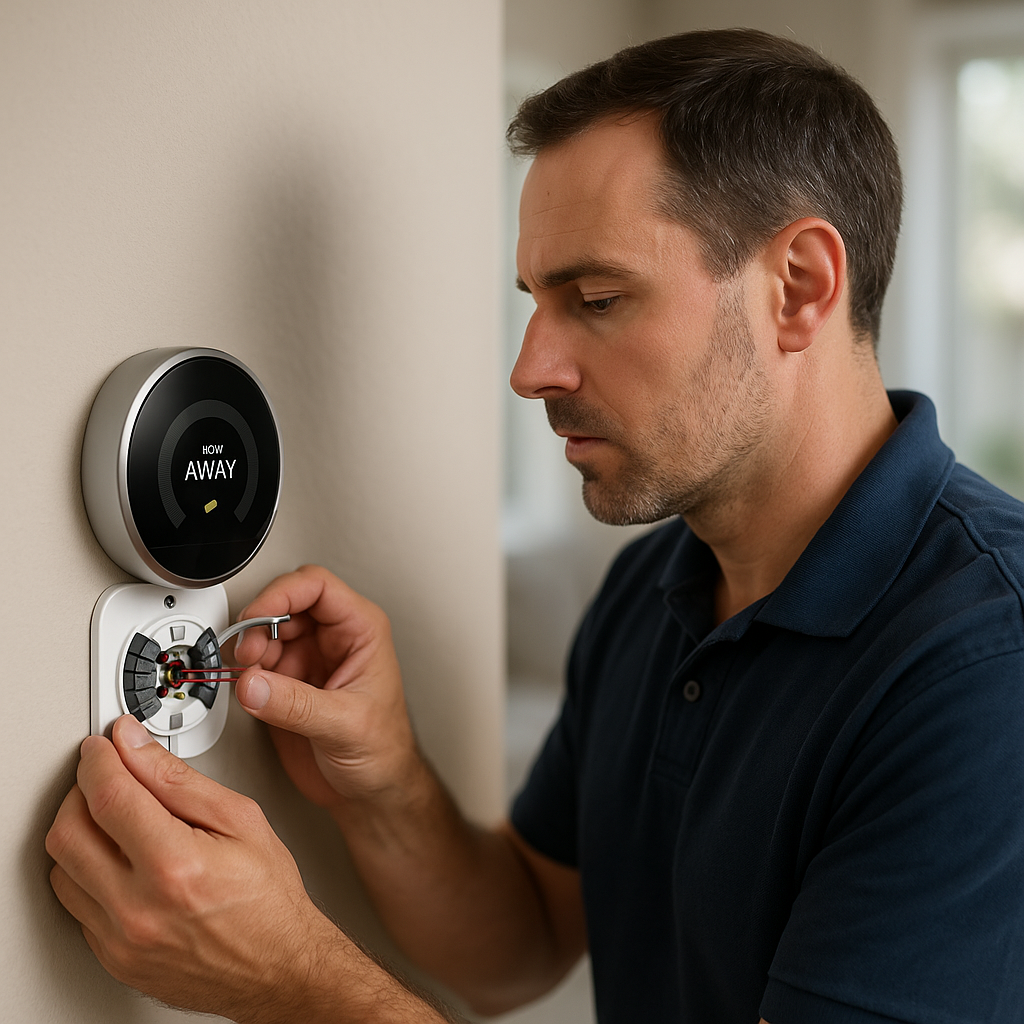
Why Professional Installation Is Worth It
A licensed HVAC professional does more than mount a new thermostat on the wall. They help make sure the thermostat and the HVAC system work together correctly.
During a smart thermostat installation, an HVAC professional can:
- Confirm that the thermostat is compatible with your furnace, air conditioner, heat pump, or zoning system.
- Inspect the existing control wiring and identify missing or damaged wires.
- Install or adapt a C-wire connection when needed.
- Configure the thermostat for the correct system type, number of stages, fan settings, and heat-pump controls.
- Test heating, cooling, fan operation, and other relevant functions before leaving.
- Connect the thermostat to Wi-Fi and help you understand the app, scheduling tools, and basic controls.
- Recommend settings that balance energy savings and day-to-day comfort.
Professional installation is particularly valuable when you are not sure what type of HVAC system you have, when your current thermostat wiring looks unusual, or when your existing system has been acting up.
If you are already experiencing a heating issue, it may be better to have the system checked before assuming a thermostat upgrade will solve it. For example, review these signs that it may be time to schedule a heating tune-up before winter.
What Happens During Smart Thermostat Installation?
Knowing what to expect can make the process feel more straightforward. A professional installation generally includes the following steps:
- System assessment and compatibility check: The technician identifies your HVAC equipment, reviews its control requirements, and confirms the thermostat is a suitable match.
- Existing wiring inspection: The technician safely shuts off power, removes the current thermostat, and checks the wiring behind the wall.
- C-wire or power solution: If the thermostat needs continuous power and no C-wire is available, the technician determines the most appropriate solution for your equipment.
- Thermostat installation: The new thermostat is mounted and wired according to the equipment and manufacturer requirements.
- System-specific configuration: The technician sets up the thermostat for your heating and cooling equipment, including options for heat pumps, auxiliary heat, multi-stage systems, and fan control where applicable.
- Testing and walkthrough: The technician tests the system’s operation, connects the thermostat to Wi-Fi if requested, and shows you how to use schedules, app controls, and other key features.
How to Use a Smart Thermostat to Cut Winter Heating Costs
A smart thermostat can help reduce winter heating costs, but the savings come from how you use it. The goal is not to keep the home uncomfortably cold. It is to avoid paying to heat your home at the same temperature when no one is there or when everyone is asleep.
Try these simple habits:
- Set a lower temperature while you sleep, then schedule the home to warm up before you wake.
- Use an “away” setting during workdays, school hours, vacations, or extended trips.
- Set realistic schedules that match your household’s actual routine rather than overriding the thermostat every day.
- Use geofencing if it fits your routine, especially if household members regularly leave and return at different times.
- Lower the setpoint by a degree or two when your household can remain comfortable.
- Review energy reports periodically to spot patterns and make small adjustments.
- Keep air filters clean and schedule regular maintenance so the system can operate efficiently.
For broader seasonal upkeep, use this home maintenance checklist to stay ahead of heating, cooling, and other home-system tasks.
The Department of Energy recommends using temperature setbacks during sleeping and away periods as a practical way to reduce energy use. The right setting depends on the home, climate, system type, and comfort needs, particularly for heat-pump systems that may respond differently to large temperature changes.
Choosing the Right Thermostat and Installer
The best smart thermostat is not necessarily the one with the longest list of features. It is the one that works properly with your HVAC system and fits the way your household lives.
Before purchasing a model, consider:
- Your HVAC system type and age.
- Whether you have a furnace and central AC, a heat pump, a zoned system, or multi-stage equipment.
- Whether the thermostat requires a C-wire.
- Which features you will actually use, such as app access, geofencing, voice controls, or energy reports.
- Whether your utility offers rebates for specific certified models.
- Whether you expect to replace or upgrade your HVAC system soon.
When selecting an installer, look for a licensed and insured HVAC professional with experience working on systems like yours. Ask whether the quote includes compatibility testing, wiring work, configuration, app setup, and system testing.
Find an HVAC Pro With My Licensed Contractor
At My Licensed Contractor, we can help connect you with a qualified HVAC professional for smart thermostat installation. A licensed pro can verify compatibility, inspect the wiring, address C-wire needs, and configure the thermostat to work with your heating and cooling equipment.
Whether you have already purchased a thermostat or want help choosing the right option first, getting professional guidance can help you avoid installation surprises and get more value from the upgrade.
Ready to improve your home’s comfort and energy control? Submit your project request on My Licensed Contractor and get matched with a local licensed HVAC pro.
Frequently Asked Questions
Can I install a smart thermostat myself?
Some basic thermostat replacements may be manageable for experienced homeowners, but professional installation is the better choice when you are unsure about compatibility, wiring, system configuration, or C-wire requirements. This is especially true for heat pumps, multi-stage systems, zoned equipment, and older homes.
What is a C-wire, and do I need one?
A C-wire, or common wire, provides continuous power to a thermostat. Many smart thermostat models require it to maintain Wi-Fi connectivity and operate all features reliably. A licensed HVAC professional can inspect your wiring and recommend the appropriate solution if a C-wire is not present.
Will a smart thermostat lower my energy bills?
It can help reduce energy use by automatically adjusting temperatures when you are asleep or away from home. ENERGY STAR estimates that certified smart thermostats save households about 8% on heating and cooling costs on average, or about $50 annually, although actual savings vary. ENERGY STAR provides more detail on those estimates.
Can a smart thermostat work with a heat pump?
Many smart thermostats work with heat pumps, but the model must support the system’s configuration and be set up correctly. Incorrect settings can affect heating, cooling, auxiliary heat, and energy use, so professional installation is recommended.
Can a smart thermostat reduce wear on my HVAC system?
A properly configured thermostat can reduce unnecessary runtime by avoiding heating or cooling an empty house. However, it cannot fix an underlying HVAC problem or replace routine maintenance. Clean filters, professional tune-ups, and timely repairs remain important for protecting your system.
Should I buy a thermostat before calling an HVAC professional?
You can, but it is often better to speak with a qualified HVAC professional first, especially if you have an older system, a heat pump, zoning, multiple stages, or uncertain thermostat wiring. They can help you avoid purchasing a model that is not compatible with your system.
Find a Licensed Contractor
Connect with pre-screened, licensed contractors in your area.
Submit Your Project
Find Local Contractors
Connect with licensed, verified contractors in your area for your next project.
Submit Your Project