
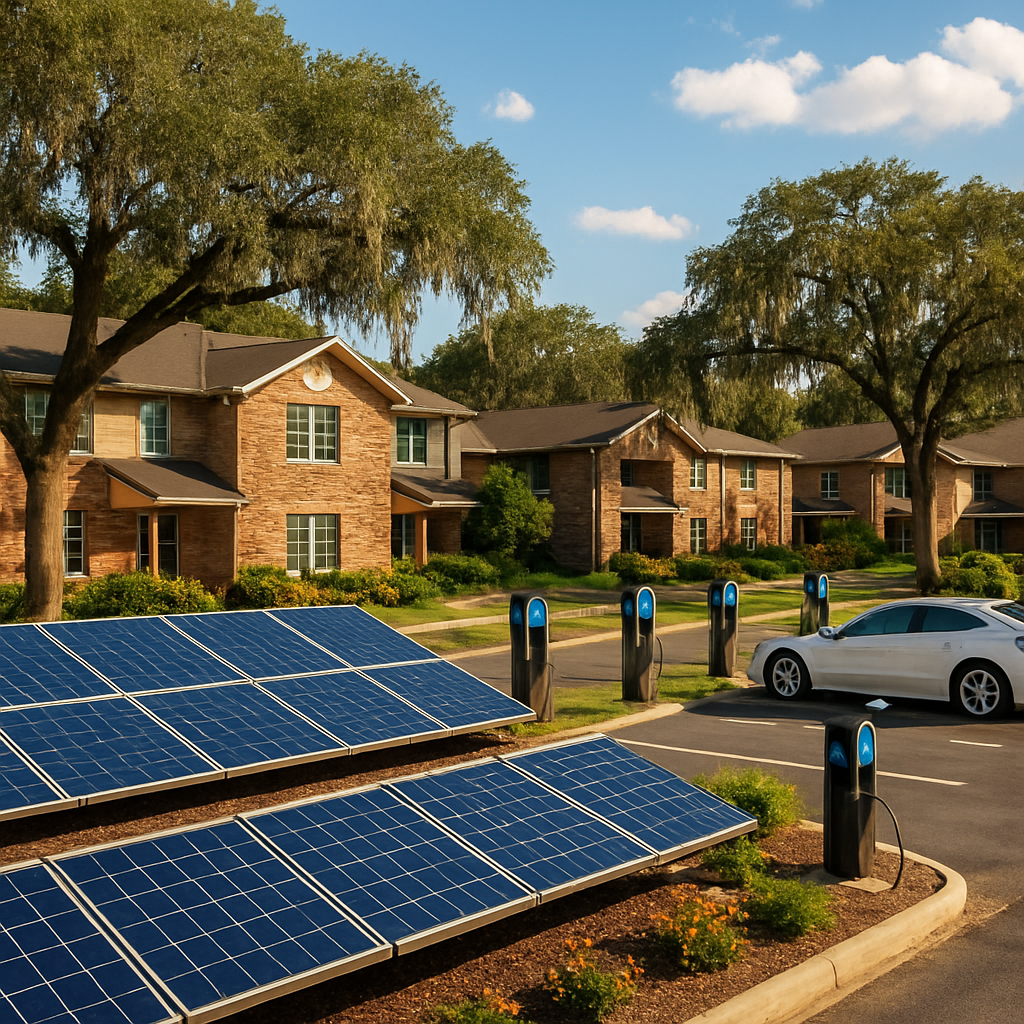
Solar & EV Chargers: Boost Rental Property NOI Today
FROM OPERATING COSTS TO REVENUE DRIVER: HOW YOU CAN TRANSFORM YOUR PROPERTY'S ELECTRICAL INFRASTRUCTURE INTO A PROFIT CENTER
INTRODUCTION
Your electrical infrastructure is quietly working against your bottom line, but Atlanta property managers are discovering a smarter approach. Solar panels, EV chargers, and battery backup systems are no longer sustainability gestures. They are legitimate revenue tools. Here is how you can turn your property's grid connection into a profit center.
WHY ATLANTA IS THE PERFECT MARKET FOR THIS SHIFT
If there is one city in the Southeast where transforming your electrical infrastructure makes financial sense right now, it is Atlanta. Favorable policy, abundant sunlight, rising utility costs, and shifting renter demographics have created an unusually strong environment for property managers ready to act.
Georgia averages more than 200 sunny days per year, meaning rooftop and carport solar systems generate strong, consistent output. That natural resource translates directly into offset costs and, in many cases, exportable energy. Georgia Power's net metering program allows eligible properties to send excess generation back to the grid, turning wasted electricity into a utility credit.
On the incentive side, the federal Investment Tax Credit lets you deduct 30 percent of qualifying solar installation costs from your federal tax liability. Stack that with Georgia-specific programs and accelerated depreciation, and the upfront financial barrier drops substantially, in many scenarios, to less than half the sticker price.
Meanwhile, Atlanta utility rates continue climbing, compressing margins for property managers who treat electricity as a passive expense. Every Georgia Power rate increase hits your common-area costs directly. If your electrical strategy has not changed in five years, you are absorbing those increases with no offset.
Finally, consider who is moving into Atlanta's most active submarkets. Buckhead, Midtown, and Inman Park are attracting higher-income renters who expect more from their housing, residents who are informed, often environmentally conscious, and willing to pay for amenities that match their priorities. Acting now positions your property ahead of the competition before these upgrades become the baseline expectation rather than a differentiator.
UNDERSTANDING NOI, AND WHY YOUR ELECTRICAL SYSTEM IS HOLDING IT BACK
Net operating income is the single most important metric for evaluating and valuing your property. The formula is simple: revenue minus operating expenses. Electricity costs sit firmly in the wrong column, and most property managers are letting that column grow unchecked.
The pain points are familiar. Shared-area lighting, parking structures, elevators, lobby amenities, and pool equipment all draw from the same utility account. When rates spike in summer, your operating budget absorbs the hit. When aging infrastructure requires emergency repairs, that unplanned expense lands directly on your income statement. These are not small line items.
The deeper problem is mindset. Most property managers treat the electrical system as fixed overhead, something to minimize, never leverage. That framing is costing you real money and real asset value.
Reframing your electrical infrastructure as a revenue-generating asset changes how you evaluate it. Instead of asking how to reduce a cost, you ask how to generate income. Instead of negotiating utility rates, you explore producing your own energy and monetizing surplus. Instead of patching aging systems, you invest in upgrades with measurable returns.
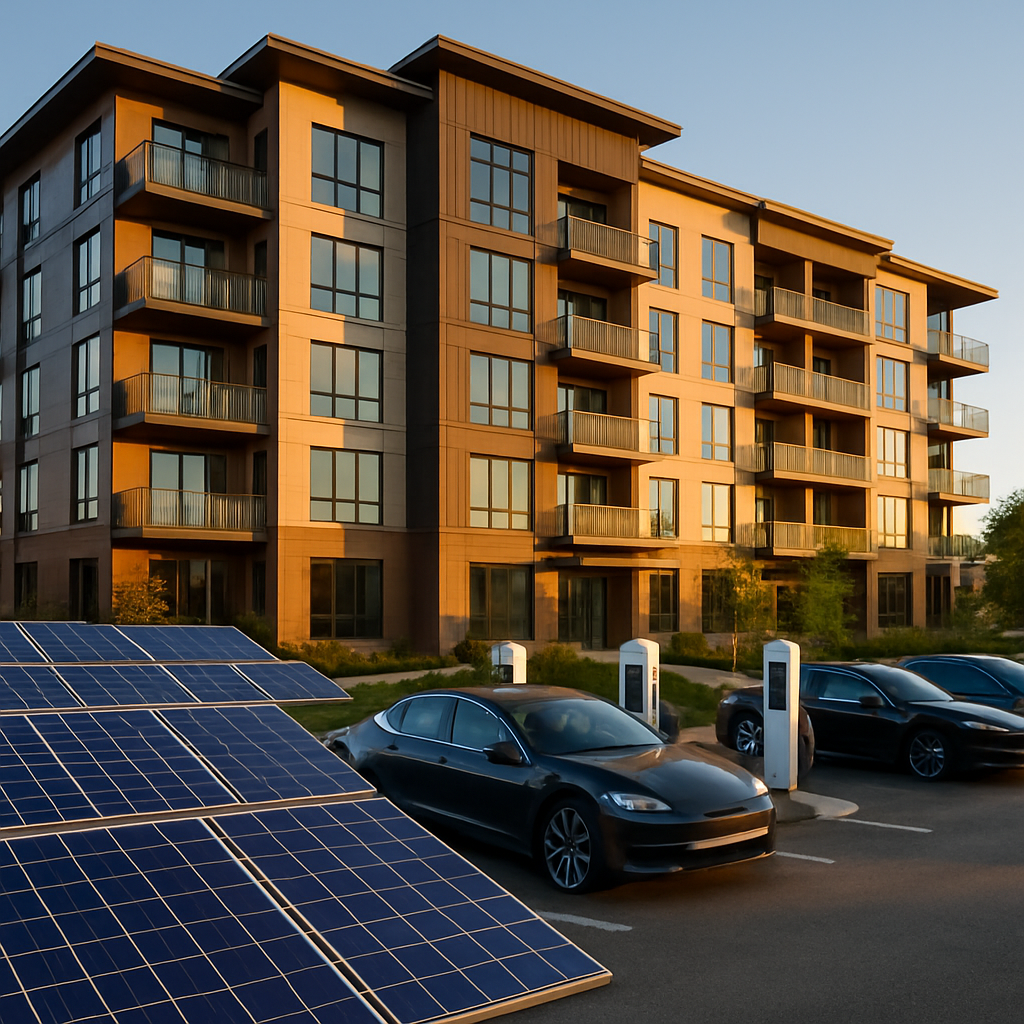
The valuation impact is significant. Even modest NOI improvements compound into higher property values. A $500 monthly improvement, roughly $6,000 annually, adds over $100,000 in asset value at a 6 percent cap rate. That math makes electrical infrastructure one of the most underleveraged value drivers available to you.
SOLAR AS A REVENUE ENGINE, NOT JUST A COST OFFSET
Rooftop and carport solar installations in Atlanta can realistically offset 40 to 80 percent of your common-area electricity costs, depending on roof space, system size, and consumption profile. That alone is a material expense reduction. But treating solar purely as a cost offset is thinking too small.
Through Georgia Power's net metering program, excess generation beyond your immediate needs is credited against future utility charges. Over a full calendar year, that surplus can meaningfully reduce or nearly eliminate your common-area electricity costs.
There is also a resident-facing opportunity many Atlanta property managers have yet to explore. Shared solar subscription programs allow residents to opt into the benefits of your property's solar generation for a monthly fee. Residents receive an electricity credit; you receive a recurring revenue stream from infrastructure you already installed. This model converts a capital investment into an ongoing income line while marketing a tangible, dollar-denominated benefit to prospective tenants.
From a leasing perspective, solar is increasingly visible to the renter profile Atlanta's competitive submarkets are attracting. Properties with solar command measurable rent premiums, and the presence of solar panels signals that your property is modern, forward-thinking, and well-managed.
EV CHARGING, THE AMENITY THAT PAYS YOU BACK
Electric vehicle adoption in metro Atlanta is accelerating faster than many property managers realize. Georgia consistently ranks among the top states for EV registrations, and the renter demographic most active in Buckhead, Midtown, and Inman Park is disproportionately represented among EV owners. If your property does not offer EV charging, you are already losing prospective tenants to competitors who do.
What makes EV charging particularly attractive is the range of low- and no-cost installation structures available. Revenue-sharing partnerships with established charging network operators let you install Level 2 chargers with minimal or zero upfront capital. The operator handles hardware, installation, maintenance, and payment processing. You receive a percentage of revenue every time a resident or visitor charges. In the right structure, EV charging infrastructure is cash-flow positive from day one.
If you prefer to own your charging infrastructure outright, charge-back billing systems let you meter consumption at each station and bill residents directly, a clean, recurring revenue line tied to usage. You are not subsidizing residents' transportation costs; they pay for the electricity they consume, plus a reasonable service margin.
Beyond direct revenue, EV chargers signal that your property is built for the way renters live today. That message resonates with the high-income, forward-looking residents driving premium rent growth across Atlanta's best submarkets.
BATTERY BACKUP, TURNING RESILIENCE INTO A RENT JUSTIFICATION
Atlanta's weather history makes the case for battery backup better than any marketing pitch. Severe storms, ice events, and hurricane remnants regularly knock out power across the metro for hours, sometimes days. For residents who work from home, rely on medical equipment, or simply cannot tolerate extended disruptions, power reliability is a genuine lifestyle concern.
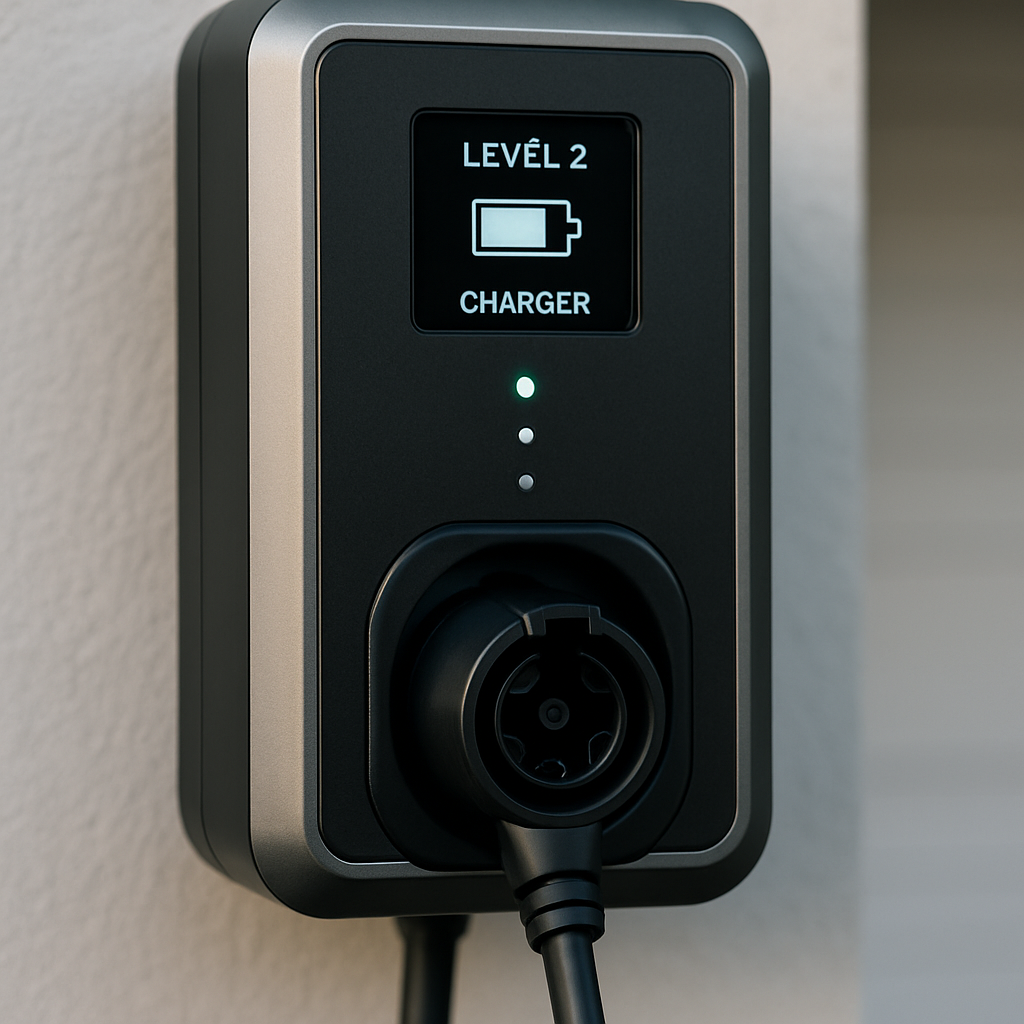
Building-wide battery backup keeps critical infrastructure operational during outages. Elevators, emergency lighting, security systems, lobby access controls, and common-area amenities stay online while surrounding neighborhoods go dark. Residents notice, especially the first time it protects them from a costly disruption.
Battery systems also work in tandem with solar to maximize financial performance. By storing excess generation during daylight hours and deploying it during peak demand, you reduce expensive grid draws and produce measurable reductions in your monthly utility charges.
Framing backup power as a lifestyle benefit unlocks its rent premium potential. When you tell prospective residents that your building stays powered when the grid goes down, you are not discussing electrical engineering, you are selling peace of mind, work-from-home reliability, and a fundamentally more stable living environment.
HOW TO STRUCTURE THE FINANCIAL CASE FOR YOUR PROPERTY
Start with a professional energy audit. A thorough baseline of your current consumption, infrastructure condition, and utility rate structure gives you the foundation for every financial model you build. Without it, you are estimating. With it, you are planning.
From that baseline, model each revenue and savings lever independently. Calculate the projected solar offset against your common-area electricity spend. Estimate EV charging revenue based on parking capacity and resident demographics. Project the peak-demand reduction benefit from battery storage. Then layer in incentives: the 30 percent federal Investment Tax Credit, Georgia-specific programs, and applicable accelerated depreciation benefits.
A simple NOI impact model clarifies the investment case quickly. Even $500 per month in new revenue adds $75,000 or more in asset value at a 6 percent cap rate. Third-party financing and power purchase agreement structures mean you can capture these benefits with little to no capital outlay, making this accessible even with a constrained capital budget.
ATTRACTING AND RETAINING THE AFFLUENT RENTER THROUGH GREEN INFRASTRUCTURE
Higher-income renters in Atlanta are not selecting apartments on square footage alone. They are evaluating the total living experience, and energy intelligence is increasingly part of that equation. Sustainability, technology integration, and resilience have moved from nice-to-have features to active leasing criteria for the resident profile driving rent growth in Atlanta's most competitive submarkets.
When you bundle solar, EV charging, and battery backup into a coherent "energy-smart living" amenity package, you create a story no traditional upgrade can replicate. A new fitness center is easy to copy. A fully integrated energy infrastructure is a durable competitive advantage.
These upgrades also reduce resident churn in ways that may not be immediately obvious. Tenants invested in your property's lifestyle, charging their EV at home, benefiting from a solar subscription, trusting the building to stay powered in a storm, are less likely to leave. Lower vacancy and higher rents both feed directly into improved NOI. Marketed correctly, your electrical infrastructure becomes a core part of your competitive leasing story.
FAQS
Q: Do I need to own the building to pursue these upgrades? A: Not always. Many financing structures work for long-term leaseholders, and some programs are available to operators with landlord consent. Review your lease terms and consult an energy advisor who understands commercial property arrangements.
Q: How long before these investments pay back? A: Solar typically achieves payback in four to seven years in Atlanta, depending on system size and available incentives. EV chargers structured through a revenue-sharing model can be cash-flow positive from day one.
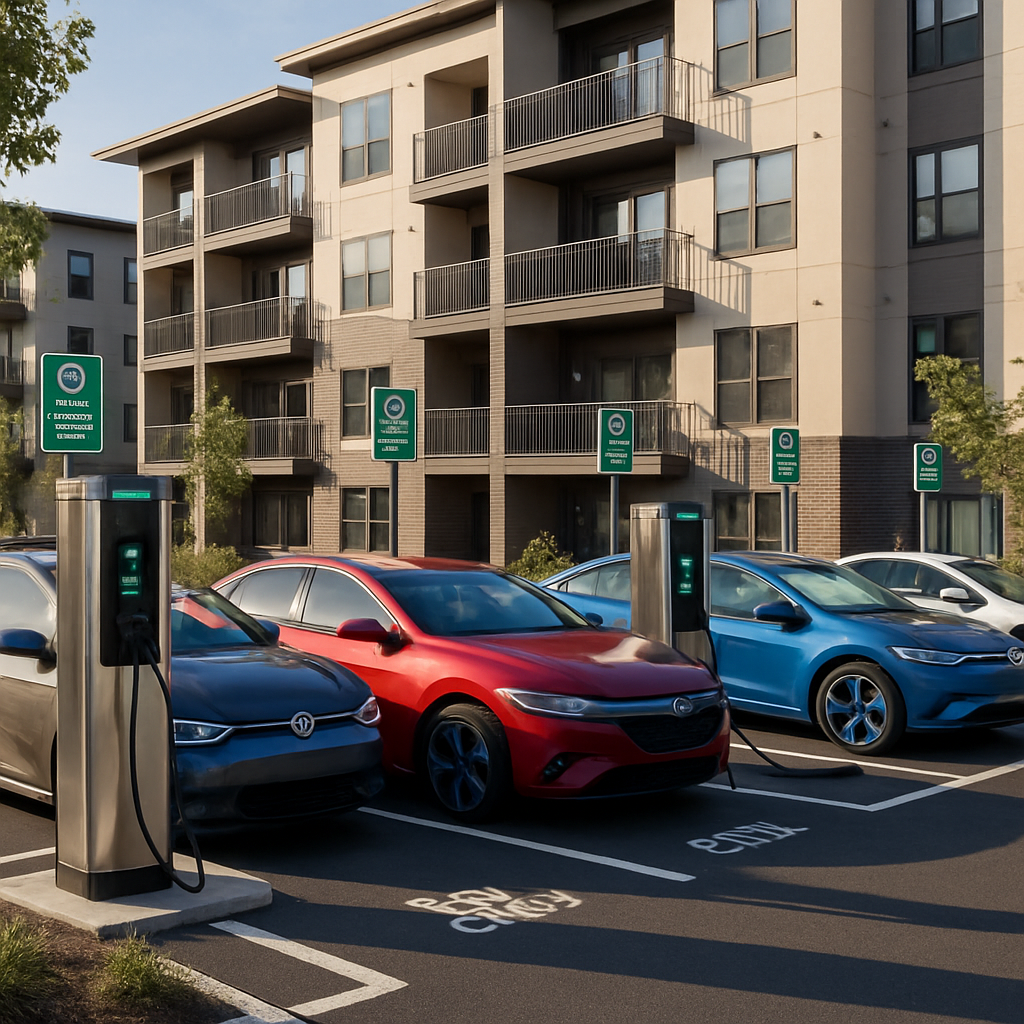
Q: Will these upgrades support higher rents? A: Yes. Studies consistently show that green-certified and amenity-rich properties command three to eight percent rent premiums in urban markets. In Atlanta's most active submarkets, that premium is increasingly visible in real leasing data.
CONCLUSION
Your electrical infrastructure is one of the most underutilized levers for NOI growth available to Atlanta property managers today. Solar, EV charging, and battery backup are ready to work harder for your property than ever before. Schedule a free property energy assessment and discover exactly how much revenue your building's infrastructure could be generating.
Sources & Further Reading
- BOMA International: Sustainability and Energy Efficiency Resources, BOMA International provides industry research, benchmarking data, and best practices for commercial property managers looking to optimize building energy systems, reduce operating costs, and implement revenue-generating infrastructure upgrades including EV charging and solar installations.
- Urban Land Institute: Electric Vehicle Charging Infrastructure Guide for Real Estate, This ULI industry report offers property owners and managers actionable guidance on deploying EV charging infrastructure as a revenue center, including financial models, case studies, and market trends relevant to commercial and multifamily properties in markets like Atlanta.
- Georgia Power Business Energy Solutions & Incentives, Georgia Power's official resource for commercial and industrial customers outlining energy efficiency programs, demand response incentives, and rate structures relevant to Atlanta property owners looking to reduce operating costs and generate revenue through solar and battery storage integration.
- City of Atlanta Office of Resilience: Clean Energy Atlanta, The City of Atlanta's official Clean Energy Atlanta plan and regulatory framework, detailing local renewable energy goals, EV infrastructure mandates, and incentive programs that Atlanta property managers can leverage to transform electrical infrastructure into a profit center.
- Georgia Environmental Finance Authority (GEFA): Clean Energy Programs, GEFA provides Georgia-specific financing programs, grants, and incentives for clean energy projects including solar and energy efficiency upgrades for commercial properties, making it a highly relevant local regulatory and funding resource for Atlanta property owners looking to monetize their electrical infrastructure.
Find a Licensed Contractor
Connect with pre-screened, licensed contractors in your area.
Submit Your Project
Find Local Contractors
Connect with licensed, verified contractors in your area for your next project.
Submit Your Project