

Bloomington, IN Electrical Contractor
If you live in Bloomington, IN, you already know your city offers a unique blend of old-world charm and modern energy. From the historic limestone homes in Elm Heights to the newer developments expanding across the east side, Bloomington’s housing stock is just as diverse as the students at Indiana University. As a homeowner, it is important to understand that many local homes come with electrical systems that face specific challenges. A large number of Bloomington homes date back to the early 20th century, featuring beautiful architecture but aging electrical systems that were never designed to support the power demands of modern living. Your home may look flawless on the outside, yet behind those plaster walls could be wiring that is nearly a century old. This is not just an inconvenience. It is an important safety and reliability issue that can affect your family and your home for years to come.
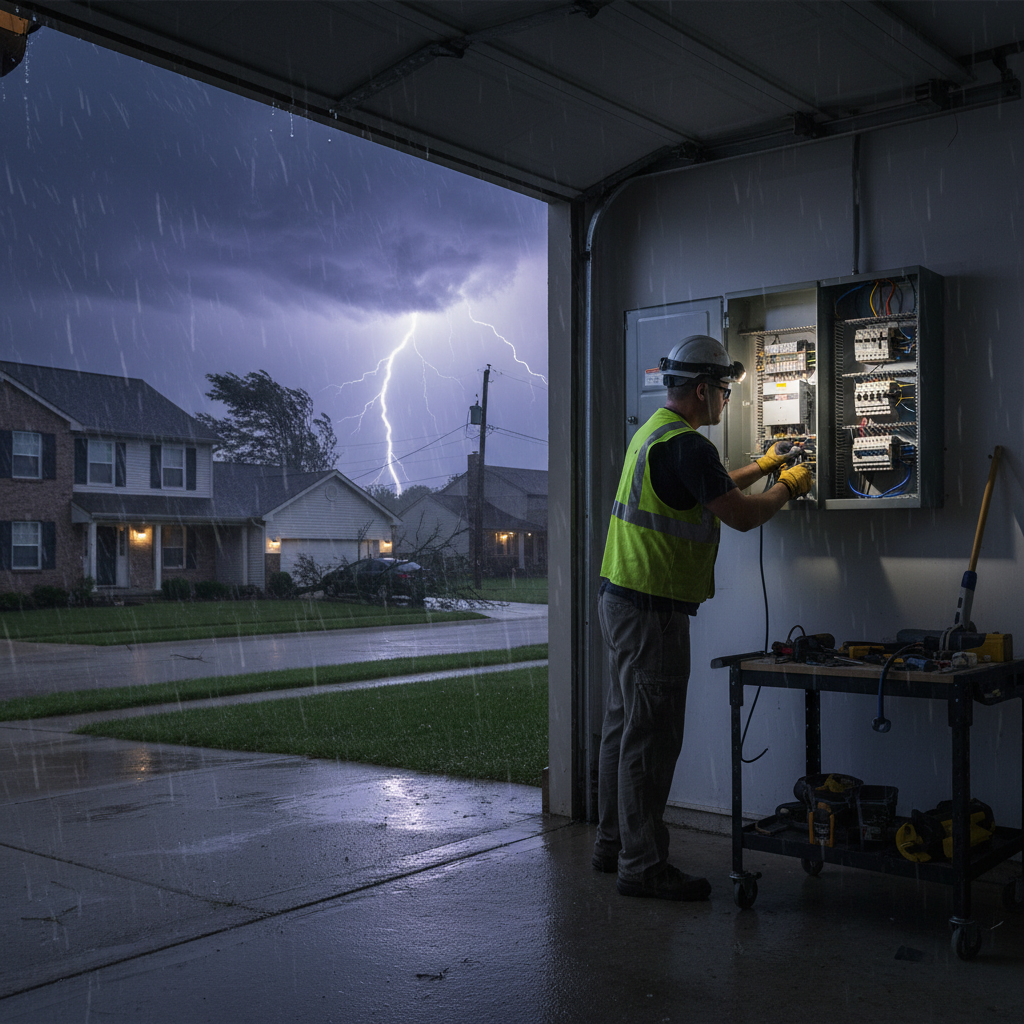
Our local weather plays a massive role in how your electrical system performs. Bloomington is famous for its humidity during the summer months and its unpredictable ice storms in the winter. This moisture can wreak havoc on outdoor fixtures and even lead to corrosion inside your main service panel if it was not sealed correctly. We also deal with those intense Midwestern thunderstorms that roll through Monroe County, bringing frequent power surges and lightning strikes.
These events can fry expensive electronics in a heartbeat.
Furthermore, our region sits on a thick layer of limestone. This rock is beautiful and provides the foundation for our most iconic buildings, but it makes grounding an electrical system much more difficult than in places with softer soil. Proper grounding is the primary defense against electrical fires and shocks, so having a contractor who understands how to work with our local geography is vital.
In recent years, we have seen some significant updates to the Indiana Electrical Code. These changes are designed to keep up with new technology, like electric vehicles and high-efficiency appliances, but they also mean that a simple repair today might require more extensive upgrades to meet current safety standards. If you are living in an older home near downtown or the Prospect Hill area, you might still have knob-and-tube or aluminum wiring. While these were standard at the time, they are now considered significant risks.
Common Electrical Projects in Bloomington, IN
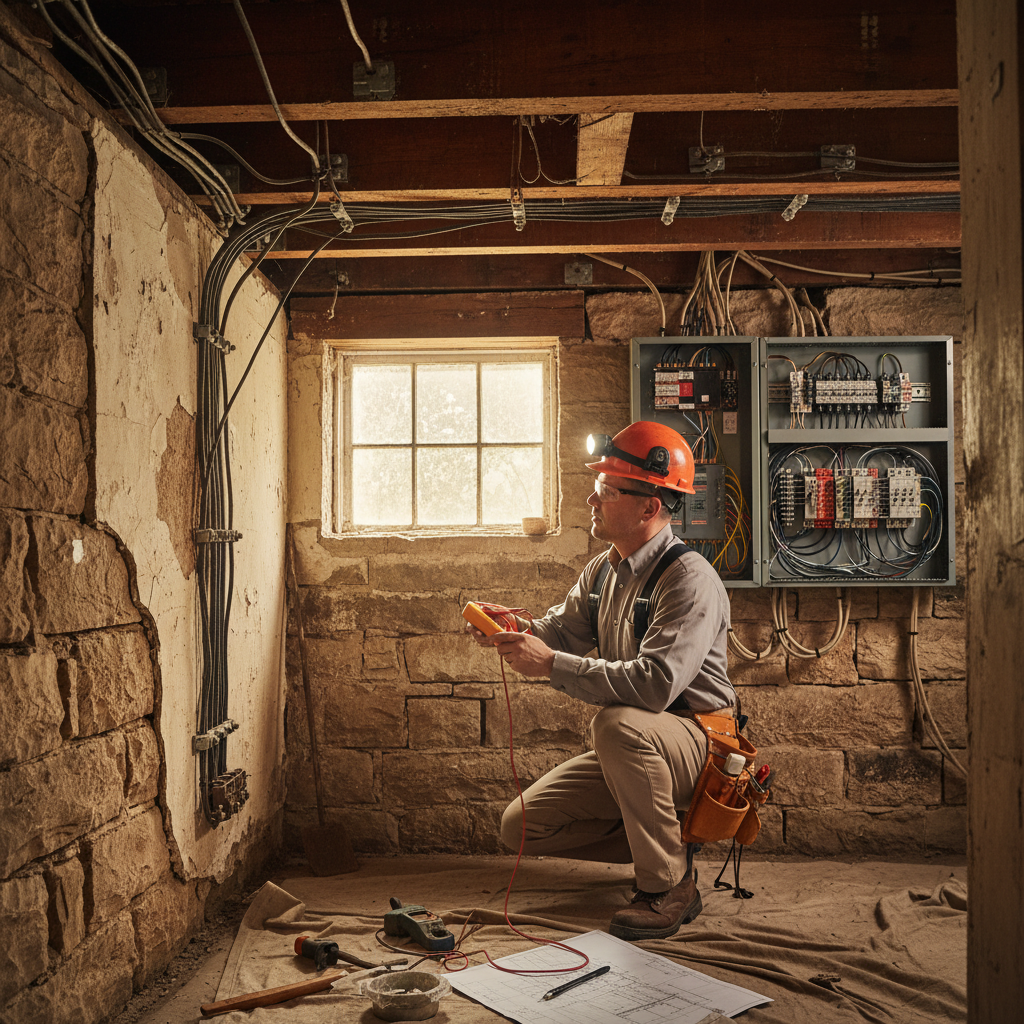
One of the most frequent calls I get for Bloomington electrical services involves remediating aging infrastructure. If you own one of those gorgeous 1920s bungalows or a mid-century ranch, there is a high probability that your wiring is reaching the end of its natural life. I often find knob-and-tube wiring tucked away in attics or crawlspaces. This type of wiring is problematic because it lacks a ground wire and the insulation becomes brittle over time. When you combine old insulation with modern blown-in attic insulation, you create a fire hazard because the wires cannot dissipate heat properly. Another common issue is aluminum wiring, which was popular in the late 1960s and 70s. Aluminum expands and contracts differently than copper, leading to loose connections and potential fires at outlets and switches. Upgrading these systems is a common project for homeowners who want to ensure their house remains a safe place to live for the next generation.
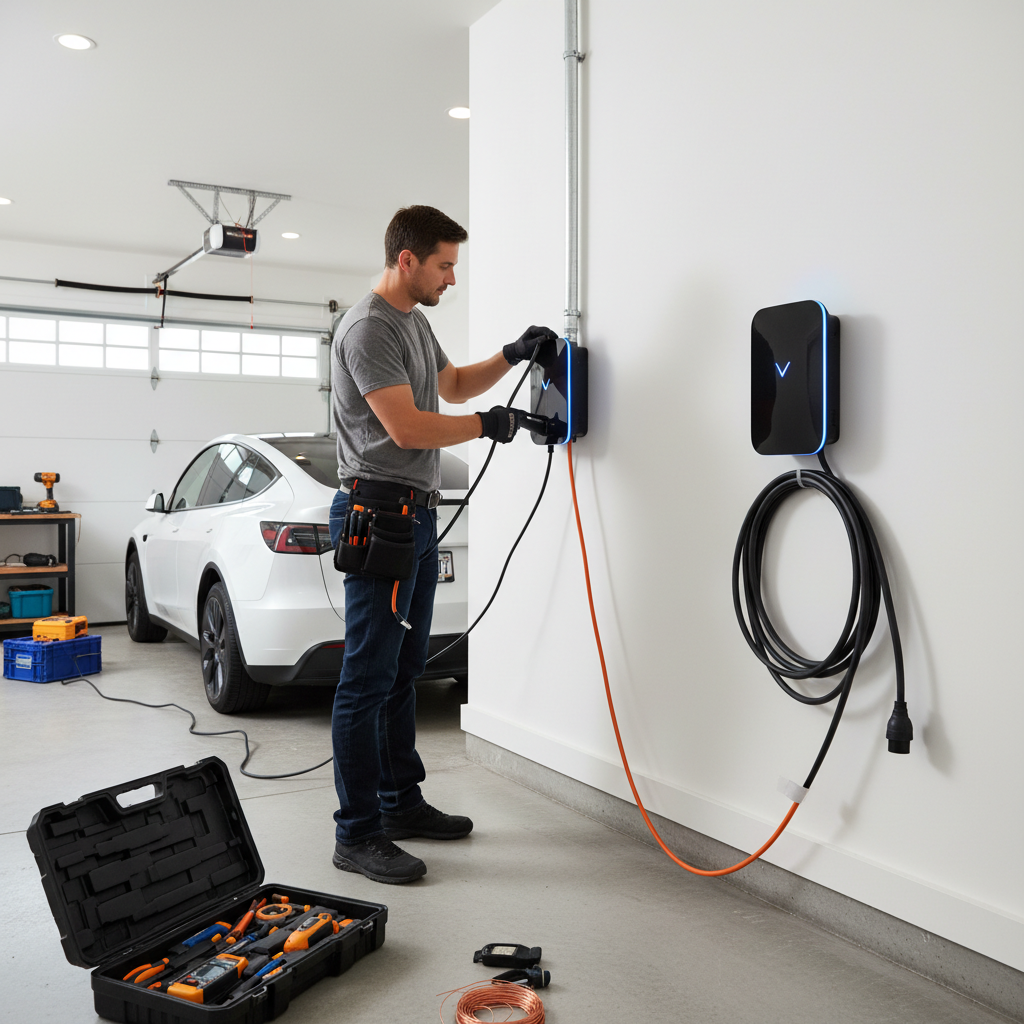
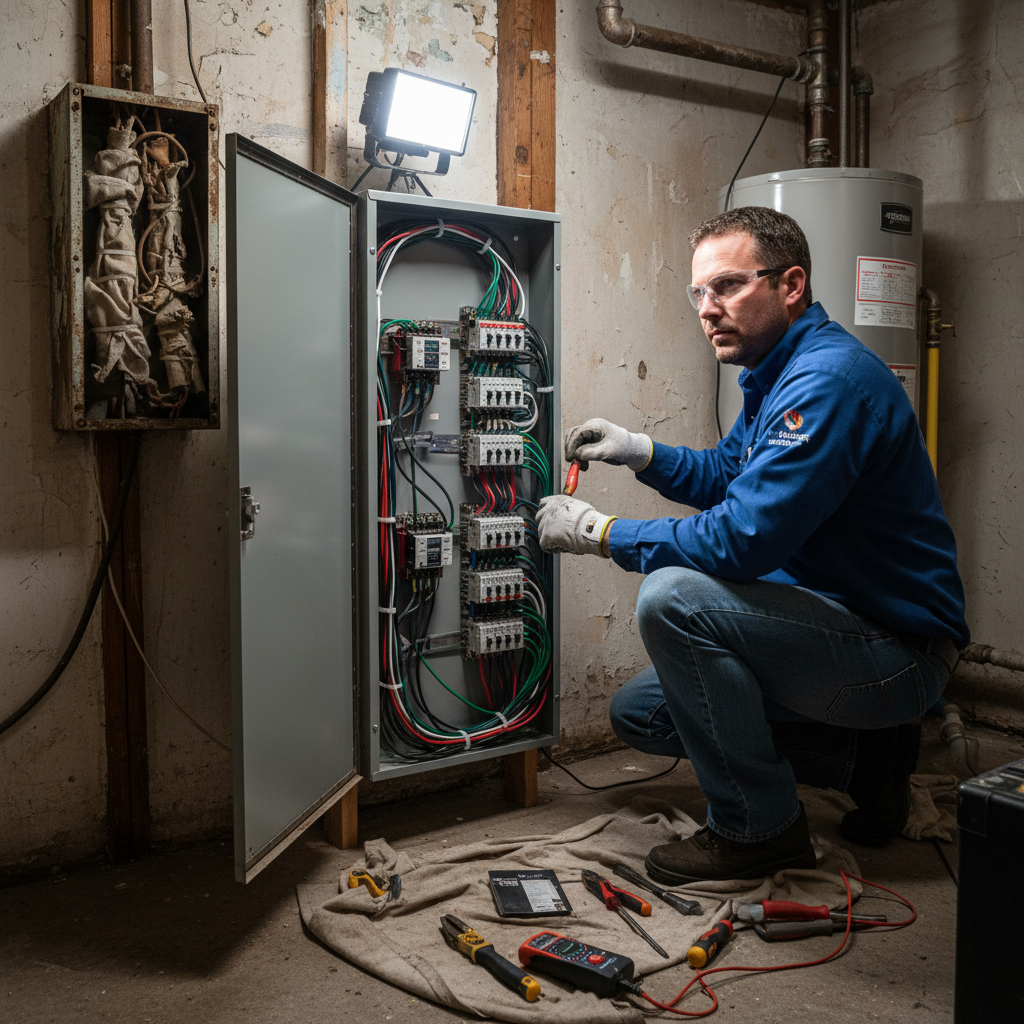
Modern power upgrades are also trending heavily across Monroe County. We are living in an era where everyone has a smartphone, a laptop, and perhaps an electric vehicle. Many older Bloomington homes have 60-amp or 100-amp service panels, which simply cannot keep up with a modern lifestyle. If your circuit breaker trips every time you run the microwave and the hair dryer at the same time, it is a sign your system is overloaded. Upgrading to a 200-amp service panel is a standard project that provides the headroom needed for modern appliances, high-end kitchen remodels, and the installation of Level 2 EV charging stations in the garage. As more residents transition to greener technology, these panel upgrades are becoming the foundation of a functional home. It is about making sure your house works for you, rather than you having to work around the limitations of your house.
Storm readiness and outdoor living are two other areas where local homeowners are investing. Because our grid can be sensitive to those heavy Indiana winds and ice, many people are opting for whole-home surge protection. This is a device installed at your main panel that acts as a gatekeeper, blocking massive voltage spikes before they can enter your home. Additionally, I see a lot of interest in backup generator transfer switches. When the power goes out during a winter freeze, having a safe way to hook up a portable generator can keep your furnace running and your pipes from freezing. On the lighter side of things, Bloomington residents love their outdoor spaces.
Contractor Buying Guide: Hiring Bloomington Electrical Services
When you are looking for an electrician in Bloomington, do not settle for the first name you find. Take the time to vet their experience with our local architecture and city permitting office to ensure your project goes smoothly.
Why Reviews Matter
Online reviews are a great starting point, but you have to look deeper than just the star rating. Look for feedback specifically from Bloomington, IN residents. You want to see if the contractor is punctual, especially during the chaos of IU graduation weekend or move-in days when traffic in town is a nightmare. Check if the reviews mention the contractor's ability to pass city inspections on the first try. A professional who has a good rapport with local inspectors will likely save you time and money. If a company has dozens of reviews praising their work on historic homes, they are probably a better fit for your downtown bungalow than a company that only does new construction in the suburbs. Personal recommendations from neighbors in your specific neighborhood can also be incredibly valuable because they likely share similar home construction issues.
Licensing for Bloomington Electrical Contractors
This is an area where many homeowners get confused. In the state of Indiana, there is no statewide license for electrical contractors. Instead, licensing is handled at the local level. This means you must verify that your contractor is specifically licensed and registered through the City of Bloomington or Monroe County. Just because someone says they are a licensed electrician does not mean they are authorized to pull permits or perform work within the city limits. Always ask to see their local registration card. Hiring an unlicensed worker might seem cheaper upfront, but it can lead to massive headaches if the city finds out, or worse, if an insurance claim is denied later because the work was not done by a registered professional. Verification is a simple step that protects your biggest investment.
Bonding
Bonding is another layer of protection that you should never overlook. A surety bond is essentially a guarantee that the contractor will follow the rules and complete the work as agreed. If a contractor walks away from a job or fails to pay for the permits they pulled, the bond can be used to compensate you. In Bloomington, registered contractors are typically required to have a bond on file with the local building department. This provides you with peace of mind knowing that there is a financial recourse if things go sideways. Never be afraid to ask for proof of bonding. A reputable professional will have this information ready to go and will appreciate that you are a savvy consumer who cares about the details of the project.
Insurance
Insurance is non-negotiable. You must ensure your contractor carries both General Liability insurance and Workers' Compensation insurance. General Liability protects your property if the electrician accidentally starts a fire or drills through a water pipe. Workers' Comp is even more important because it protects you from being held liable if a worker is injured while on your property. Without it, a slip and fall in your basement could turn into a lawsuit against your homeowner's insurance. I always tell my clients to ask the contractor's insurance agent to send a Certificate of Insurance (COI) directly to them. This prevents anyone from showing you an expired or forged document. It is a standard practice in the industry, and no professional will take offense to the request.
Warranty
A good contractor stands behind their work. When you receive a quote, check what kind of warranty is offered. At a minimum, you should expect a one-year warranty on labor. This means if an outlet stops working or a breaker keeps tripping six months after the job is done, the contractor will come back and fix it at no cost to you. This is separate from the manufacturer warranties on the parts themselves, such as the electrical panel or the EV charger. Some high-end contractors might offer extended warranties of three to five years. Clear communication about what is covered and for how long is a hallmark of a professional Bloomington electrical service. If a contractor is hesitant to put their warranty in writing, that is a signal that you should look elsewhere for your electrical needs.
Other Things to Check
Professionalism is often seen in the small details. Does the contractor show up in a branded vehicle, or are they driving an unmarked van? Do they wear a uniform or at least look presentable? While you don't need a tuxedoed electrician, a professional appearance often reflects a professional mindset. Communication is also key. Does the contractor return your calls promptly? Do they provide a clear, written estimate instead of a number scribbled on a napkin? You should also ask about their experience with the specific type of project you are planning. An electrician who specializes in commercial warehouses might not be the best choice for delicate wiring in a 19th-century Victorian home. Look for a specialist who understands the nuances of residential work.
Red Flags to Avoid When Hiring an Electrician in Bloomington
- The contractor asks you to pull the permit in your own name as a homeowner. This is a huge warning sign that they are not licensed or are trying to avoid responsibility for their work.
- They demand 100 percent of the payment before any work has started. A reasonable down payment is normal, but full payment upfront is a recipe for disaster.
- They only accept cash payments. This makes it much harder to track the transaction and often suggests they are not operating a legitimate business.
- They do not have a physical business address or a verifiable phone number.
- The contractor gets defensive when you ask for proof of insurance or licensing.
- They tell you that a permit is not necessary for a project that clearly involves new wiring or panel work.
- Their price is significantly lower than every other quote you received. If it seems too good to be true, they are likely cutting corners on safety or materials.
What a Good Electrical Contract Should Include
Never start a project without a written contract. A solid agreement protects both you and the electrician. It should start with a detailed scope of work that outlines exactly what will be done. For example, instead of saying replace outlets, it should say replace fifteen outlets in the living room and kitchen with white Decora-style receptacles. It must also include a specific materials list, detailing the brands and models of components like the service panel or light fixtures. The contract should outline a clear payment schedule, often broken down into a deposit, a payment after the rough-in inspection, and a final payment after the job is fully completed and signed off by the city. Finally, it should provide an estimated start and completion date, as well as a process for handling change orders if the scope of the project shifts once work begins.
Questions to Ask Before Hiring a Bloomington Electrician
- Are you currently registered and licensed to perform electrical work specifically within the Bloomington city limits?
- Can you provide a list of three recent residential references here in Monroe County?
- Will you be the one pulling the permits and coordinating the inspections with the City of Bloomington Planning and Transportation Department?
- Does your quote include the cost of all materials, labor, and permit fees?
- Will you be present at the home when the city inspector arrives for the final walkthrough?
- How do you handle unexpected issues, such as finding old wiring that was not visible during the initial estimate?
- What is your typical lead time from the moment I sign the contract to the day you start working?
- Do you offer emergency services if a major issue arises after the project is finished?
- Are your technicians background-checked and drug-tested before they enter my home?
Cost Considerations for Electrical Services in Bloomington, IN
When planning an electrical project in Bloomington, IN, it is important to understand the factors that drive the total cost. Labor is a primary component, and local rates are influenced by the competitive market here in a university town. Because there is a high demand for skilled trades, you might find that rates are slightly higher than in more rural parts of Indiana. The age and construction of your home also play a major role. If an electrician has to fish wires through solid limestone walls or old lath-and-plaster, the labor time will increase significantly compared to working with modern drywall and studs. Additionally, the proximity to supply houses can affect material costs, though Bloomington is well-served by local distributors, which helps keep shipping costs in check.
Based on local market data from May 2026, here are some typical price ranges you might encounter for common Bloomington electrical services:
Standard Service Call (first hour of troubleshooting): $95 – $175
Main Electrical Panel Upgrade: $1,800 – $4,000
EV Charger Installation (labor & basic materials): $600 – $1,500
Please keep in mind that these prices are estimates and will vary based on your specific situation, the scope of the project, and the contractor you choose. Always get multiple quotes to ensure you are getting a fair price for your specific needs.
Investing in your electrical system is not just about safety; it is also a smart financial move. Modernizing your wiring and increasing your service capacity can significantly boost the resale value of your home. In the competitive Bloomington real estate market, buyers are often wary of older homes with outdated panels or ungrounded outlets. Having a certified, up-to-date system can be a major selling point. If a large project feels financially daunting, many local contractors offer financing options. Some work with local credit unions, which often have favorable rates for home improvement loans. Others may offer national financing programs that allow you to spread the cost over several years. This makes it easier to prioritize safety today without draining your savings account all at once.
Permitting and Inspection Process for Bloomington Electrical Work
In Bloomington, IN, the safety of your electrical system is overseen by the City of Bloomington Planning and Transportation Department. They are the local authority responsible for issuing permits and performing inspections to ensure that all work meets the current safety standards. This process is not meant to be a hurdle; it is a vital safety net that protects you from substandard workmanship. Most significant electrical work, including panel upgrades, new circuits, and major renovations, requires a permit. If you are ever unsure if a permit is needed, it is always best to check with the department directly. You can reach the Planning and Transportation Department by phone at 812-349-3423. Their physical office is located at 401 N. Morton St., Suite 130, in the Showers Building.
The permitting process generally starts with the submission of an application. For many residential projects, your licensed contractor will handle this for you. They will submit a plan detailing the work to be performed. Once the permit is issued, work can begin. For most jobs, there are at least two inspection points:
- Rough-In Inspection: Occurs after the wires are pulled but before the walls are closed up with drywall or plaster. The inspector verifies that the wiring is properly secured and that all boxes are installed correctly.
- Final Inspection: Occurs once the project is finished, devices are installed, and the power is on. The inspector tests outlets, checks panel labeling, and ensures everything is functioning safely.
You can access the Bloomington Citizen Access Portal for electrical permits at https://bloomington.in.gov/planning/permits to track the status of your applications.
It is important to remember that as the homeowner, you are ultimately responsible for ensuring that work on your property is permitted. While a good contractor will manage the details, you should always ask for a copy of the final approved inspection report for your records. This document is important if you ever decide to sell your home, as home inspectors and title companies will often look for proof that major electrical work was done legally and to code. For more general information about city services and regulations, you can visit the official city website at https://bloomington.in.gov/. Staying informed and following the proper channels ensures that your home remains safe, legal, and valuable for years to come.
Local Utility Information: Duke Energy in Bloomington, IN
Duke Energy is the primary electric utility provider for the majority of residents in the Bloomington area. They manage the grid that brings power to your home and are responsible for the service lines that connect to your house. If you are planning a project that involves moving your meter base or upgrading your service entrance, your electrician will need to coordinate closely with Duke Energy to disconnect and reconnect the power. You can reach their customer service department at 1-800-521-2232 for account questions or to discuss service changes.
For more information on their services and localized programs, visit their official website at https://www.duke-energy.com. They are a major partner in the local infrastructure, and their requirements often dictate the specific hardware used for your service entrance.
Duke Energy also offers several programs that can help you save money while improving your home's efficiency. Their Smart Saver program provides information and potential rebates for energy-efficient upgrades, which can sometimes include smart thermostats or other electrical enhancements. If you are considering a major upgrade, such as a whole-home heat pump or high-efficiency lighting, it is worth checking their current rebate offerings. These incentives can help offset the initial cost of the project while reducing your monthly energy bills. Some contractors in Bloomington, IN are familiar with the rebate application process and can help you gather the necessary documentation to ensure you get every dollar you are entitled to. Taking advantage of these utility-sponsored programs is a great way to make your electrical project even more cost-effective.
Local Electrical Code Requirements in Bloomington, IN
All Bloomington electrical services must comply with the Indiana Electrical Code, currently based on the 2020 edition of the National Electrical Code (NEC), with specific Indiana amendments known as 675 IAC 17. These amendments tailor the national standards to the specific needs and legislative requirements of our state. The City of Bloomington Planning and Transportation Department is the local agency that enforces these codes. They ensure that every installation, from a simple light switch to a complex solar array, meets these rigorous safety standards. Staying current with these codes is a full-time job, which is why hiring a professional who participates in continuing education is so important.
One area of particular focus in Bloomington, IN involves Ground Fault Circuit Interrupter (GFCI) requirements. Because many Bloomington homes feature walk-out basements or are built near limestone structures that retain moisture, the code is very strict about where these safety outlets must be installed. Any outlet near a water source, in a garage, or in an unfinished basement must be GFCI protected to prevent accidental electrocution. We also see specific requirements for AFCI (Arc Fault Circuit Interrupter) protection in bedrooms and other living areas to prevent fires caused by damaged wiring or overheating appliances. Following these local code requirements is not about bureaucratic red tape; it is about using the best available science to keep your family safe from the inherent dangers of electricity.
Local Emergency Numbers for Electrical Issues in Bloomington
Duke Energy (Outages & Downed Lines)
1-800-343-3525 — Do not approach a downed power line. Report outages or electrical hazards related to the grid.
City of Bloomington Emergency Services (Non-Life-Threatening)
812-339-4477 — For localized utility issues affecting public safety.
Fire, Medical, or Shock Emergency
911 — If you see smoke, fire, or sparks inside your home, or if someone has been shocked, call 911 immediately to reach the Bloomington Fire Department and emergency medical services.
Frequently Asked Questions About Bloomington Electrical Services
Do I need a permit for a simple outlet replacement in Bloomington?
Generally, if you are simply replacing an existing outlet with a new one of the same type, a permit is not required. This is considered routine maintenance. However, if you are moving the outlet, adding a new outlet where one did not exist before, or upgrading a standard outlet to a GFCI outlet as part of a larger renovation, you should check with the city. The moment you start adding new wiring or changing the circuit configuration, a permit becomes necessary to ensure the work is safe and up to code.
Why do Bloomington inspectors require specific grounding for homes built on limestone?
Limestone is a poor conductor of electricity compared to moist soil. In many parts of Bloomington, the rock is very close to the surface, making it difficult to get a good ground connection using standard ground rods. Inspectors may require longer rods, multiple rods spaced further apart, or even a ground plate or concrete-encased electrode (often called a Ufer ground) to ensure that the electrical system has a safe path to the earth. This is a vital safety measure to prevent shocks and protect your electronics during a surge.
How long does a typical panel upgrade take in Monroe County?
On average, a residential panel upgrade takes about eight to twelve hours of on-site work. However, the entire process takes longer because of the coordination required. Your contractor has to pull the permit, schedule a time with Duke Energy to disconnect the power, perform the work, and then wait for the city inspector to approve the installation before Duke Energy will reconnect the service. Most homeowners should plan to be without power for most of a single day, but a well-organized contractor will make the transition as smooth as possible.
Can my Bloomington electrician help with Duke Energy rebate paperwork?
Yes, many experienced local electricians are familiar with the various rebate programs offered by Duke Energy. While the homeowner is usually the one who must officially submit the application, a good contractor will provide you with the specific model numbers, invoices, and technical details required to qualify. They can also advise you on which products, such as specific LED lighting or smart controls, are currently eligible for incentives, helping you maximize your savings on the project.
Are there specific electrical codes for student rental properties in Bloomington?
Absolutely. Bloomington has very strict property maintenance codes for rental units, especially those that house students. These properties are subject to regular inspections by the Housing and Neighborhood Development (HAND) department. Electrical requirements for rentals often include mandatory GFCI protection in kitchens and bathrooms, functioning smoke and carbon monoxide detectors on every level, and a service panel that is easily accessible to tenants. If you are a landlord, it is essential to work with an electrician who understands these specific rental standards to avoid fines and keep your tenants safe.
What is the average lead time for electrical inspections in the city?
In Bloomington, you can typically get an inspection scheduled within two to three business days, though this can vary depending on the time of year. Late spring and summer are the busiest seasons for construction, so wait times might be slightly longer. Most contractors will build this time into your project schedule. It is important not to rush the process; the inspection is there for your protection, and a few days of waiting is worth the assurance that your home's wiring is safe.
Does the city allow homeowners to perform their own electrical work?
The City of Bloomington does allow homeowners to perform their own electrical work on a home they personally occupy, but you are still required to pull a permit and pass all the same inspections that a professional contractor would. You will be held to the exact same standards as a licensed electrician. For anything beyond very simple tasks, I usually recommend hiring a professional. Electrical work is dangerous and mistakes can be hidden behind walls for years before they cause a fire. The peace of mind that comes with a professional installation is usually worth the cost.
How do I know if my older home near downtown Bloomington has knob-and-tube wiring?
You can often find evidence of knob-and-tube wiring by looking in your attic or unfinished basement. Look for white ceramic spools (knobs) that the wires wrap around and ceramic tubes that the wires pass through when they go through floor joists. The wires themselves are usually covered in a black cloth insulation. If you see these signs, or if you have old two-prong outlets throughout your house, you likely have at least some knob-and-tube wiring. A professional inspection is the best way to determine how much remains and what needs to be replaced.

What are the requirements for EV charger installation in residential garages in Bloomington?
Installing a Level 2 EV charger typically requires a dedicated 240-volt circuit, similar to what a clothes dryer or electric oven uses. In Bloomington, this project requires a permit. The inspector will check to ensure your existing electrical panel has enough capacity to handle the additional load. If your panel is already full, you might need a panel upgrade or a sub-panel. The code also has specific requirements for the height of the charger and the type of conduit used to protect the wiring, especially if it is installed in a garage where it might be bumped by a vehicle.
Connect With a Licensed Bloomington Electrical Contractor Today
Ready to upgrade your Bloomington, IN home with safe, reliable power? Finding a qualified, local professional is the most important step in any home improvement journey. Visit https://www.mylicensedcontractor.com to connect with a licensed electrical contractor in Bloomington who understands local codes and can ensure your project is done right the first time.
Nearby Cities in Indiana
Ready to Find a Licensed Contractor?
Connect with pre-screened, licensed contractors in your area.
Submit Your ProjectGet Matched Instantly
Tell us about your project and we'll connect you with licensed, verified contractors in your area.
Submit Your ProjectFind Contractors Near You
Get Matched Instantly
Tell us about your project and we'll connect you with licensed, verified contractors in your area.
Submit Your ProjectFind Contractors Near You