

Expert Bright, IN Electrician Services
Bright, Indiana, blends rural charm with suburban growth, creating a wide range of residential electrical needs. Older farmhouses along roads like Salt Fork Road often rely on outdated wiring that struggles to handle modern power demands. In newer communities like Hidden Valley Lake, homeowners typically maintain smart home systems, advanced HVAC equipment, and other high-tech electrical features. Each property requires an electrical setup that fits its age, layout, and daily usage.
Southeast Indiana weather also puts added stress on home electrical systems. Frequent thunderstorms, humidity, and power surges can damage outdoor components and sensitive electronics. Many rural homes in Bright also depend on private well systems that require dedicated circuits to operate reliably. Without proper panel capacity and load management, homeowners may experience flickering lights or tripped breakers during heavy usage.
As Dearborn County grows, electrical demands continue to increase. Remote work, EV chargers, and larger appliances require stronger, more efficient electrical infrastructure. Keeping your home safe and up to code often means working with a licensed electrician who understands the specific needs of Bright-area homes.
Common Electrical Projects in Bright
Aluminum wiring remediation remains a common project in Bright homes built during the late 1960s and early 1970s. Many builders used aluminum wiring during that period because of rising copper prices. Over time, aluminum connections can loosen, oxidize, and create serious fire risks. A licensed electrician can inspect the system, install approved connectors, or replace outdated wiring to improve safety and reliability.
Panel upgrades have also become increasingly common across the Bright and Harrison area. Many older homes still operate on 100-amp service, which often cannot support today’s electrical demands. Homeowners adding EV chargers, hot tubs, or upgraded HVAC systems frequently need a 200-amp service upgrade. These projects typically involve replacing the breaker panel, service mast, and meter base.
Storm-prep electrical upgrades are another priority in Southeast Indiana. Frequent spring and summer outages have increased demand for standby generators, transfer switches, and whole-home surge protection systems. Many homeowners also install outdoor LED security lighting and motion sensors to improve visibility and safety on larger rural or lakeside properties.
Contractor Buying Guide
When you are looking for the best electrical professional in Dearborn County, it is vital to select someone with a proven track record of safety and reliability in the local community. Selecting the right partner ensures your project stays on schedule and meets all local safety codes.
Why Reviews Matter
You should prioritize looking for feedback from your neighbors in the Bright and Lawrenceburg area. Local reviews are important because they reflect a contractor's familiarity with the regional terrain and their ability to arrive on time despite the winding rural roads. Look for mentions of how the electrician handled unexpected issues during the project. A contractor with a strong reputation in Dearborn County is more likely to value their standing in the community and provide higher quality service.
Licensing (Indiana-Specific)
It is important to understand that Indiana does not issue a statewide electrical license. Instead, licensing is handled at the local level. For your project in Bright, you must ensure your contractor is licensed and registered specifically with the Dearborn County Building Department. Working with an unlicensed individual puts you at significant legal and financial risk. Always ask to see their current county registration before any work begins on your property.
Bonding
A surety bond is a form of financial protection for you. It ensures that if the contractor fails to complete the work, fails to pay for necessary permits, or does not follow through on their contractual obligations, you have a way to recover your losses. You should verify that your electrician carries an active bond that is valid within the jurisdiction of Dearborn County. This step protects your investment and provides an extra layer of security during large-scale renovations.
Insurance
Never hire a contractor who cannot provide proof of insurance. You need to verify that they carry both General Liability insurance and Workers’ Compensation. General Liability protects your home if an accidental fire or structural damage occurs during the electrical work. Workers’ Compensation ensures that if a technician is injured while on your property, you are not held liable for their medical expenses or lost wages. This protection is non-negotiable for any professional service.
Warranty
A reputable electrician should stand behind their work with a formal warranty. While manufacturers provide warranties on parts like panels and breakers, the contractor should offer at least a one-year labor warranty. This ensures that if a connection fails or a circuit begins to trip shortly after the installation, the contractor will return to fix the issue at no additional cost to you. Clear warranty terms are the hallmark of a professional who is confident in their craftsmanship.

Other Things to Check
Check for professional affiliations with regional organizations. Membership in groups like the Greater Cincinnati or Northern Kentucky Electrical Association often indicates that a contractor is committed to staying current with industry standards and regional trends. You might also ask if they have specific certifications for specialized installations, such as EV charger brands or smart home integration systems. These extra credentials can give you additional confidence in their expertise.
Red Flags to Avoid
- The contractor asks you to pull the permit in your own name to save money.
- They only accept cash payments or demand the full amount upfront before starting.
- The electrician does not have a branded vehicle or professional identification.
- They provide a suspiciously low estimate that is far below other competitors.
- They refuse to provide a written contract or a detailed scope of work.
- The contractor claims that an inspection is not necessary for a major project.
What a Good Contract Should Include
A professional contract must be detailed and transparent. It should include a specific scope of work that lists exactly what will be done, along with an itemized list of materials to be used. Start and completion dates should be clearly defined to help you manage your schedule. Finally, a payment schedule should be established, linking payments to specific project milestones rather than just dates on a calendar. This structure keeps both parties accountable throughout the duration of the job.
Questions to Ask Before Hiring
- Are you currently registered to pull electrical permits in Dearborn County?
- Who will be the lead journeyman on-site for my specific project?
- Do you have experience working with the specific wiring in my era of home?
- Can you provide three local references from the Bright or Hidden Valley area?
- What is your policy for handling emergency calls if something goes wrong after hours?
- Will you handle all the coordination with Southeastern Indiana REMC or Duke Energy?
- How do you protect my floors and furniture while you are working inside my home?
- What is the expected timeline for completing this project from start to finish?
Cost Considerations
Understanding the costs associated with electrical work in Southeast Indiana helps you budget effectively for your home improvements. As of April 2026, most electricians in the Bright area charge a diagnostic or service call fee ranging from $75 to $150. This fee covers the time and travel required to assess your issue and provide an estimate. Small, standard tasks such as replacing a faulty outlet, installing a new light switch, or hanging a basic ceiling fan usually fall within the range of $150 to $250 per item, depending on the complexity of the existing wiring.
For larger capital improvements, the investment is more significant. A full electrical panel upgrade from 100-amp to 200-amp service typically costs between $2,500 and $4,500 in this region. This price usually includes the new panel, breakers, grounding system, and the coordination of the inspection process. Please note that these figures are estimates only. Your actual pricing will vary based on the specific condition of your home, the materials required, and the contractor you choose. Many local professionals offer third-party financing options for these major projects, allowing you to spread the cost over several months or years.
Investing in your electrical system can have a positive impact on your home’s resale value. In the competitive Harrison and Bright real estate market, a modernized electrical system is a major selling point. Buyers are often wary of older homes with fuse boxes or outdated panels. By upgrading your infrastructure, you not only make your home safer for your own family but also make it more attractive to future purchasers. This is especially true for homes that have been pre-wired for modern conveniences like electric vehicle chargers or whole-home backup power.
Permitting and Inspection Process in Bright
Official City Website: https://www.dearborncounty.in.gov/
Building Department / Permitting Office: (812) 537-8822
All electrical permitting and inspections for the Bright community are managed by the Dearborn County Building Department. This office ensures that all construction and renovation work meets the safety standards set by the state of Indiana. You should never bypass the permitting process. Doing so can lead to fines, issues with your homeowner’s insurance, and potential safety hazards that go unnoticed. A permit acts as a formal record that your home’s electrical work was performed by a professional and verified by a third-party expert.
The process begins with the submission of an application to the building department. For major renovations or new builds, you may need to provide a set of plans for review. You can reach the department by phone at (812) 537-8822. Their physical office is located in Lawrenceburg, but you can find many forms and fee schedules on the official governmental website for Dearborn County. For more specific details on the requirements for your project, you should visit the Dearborn County Building Department online permits section.
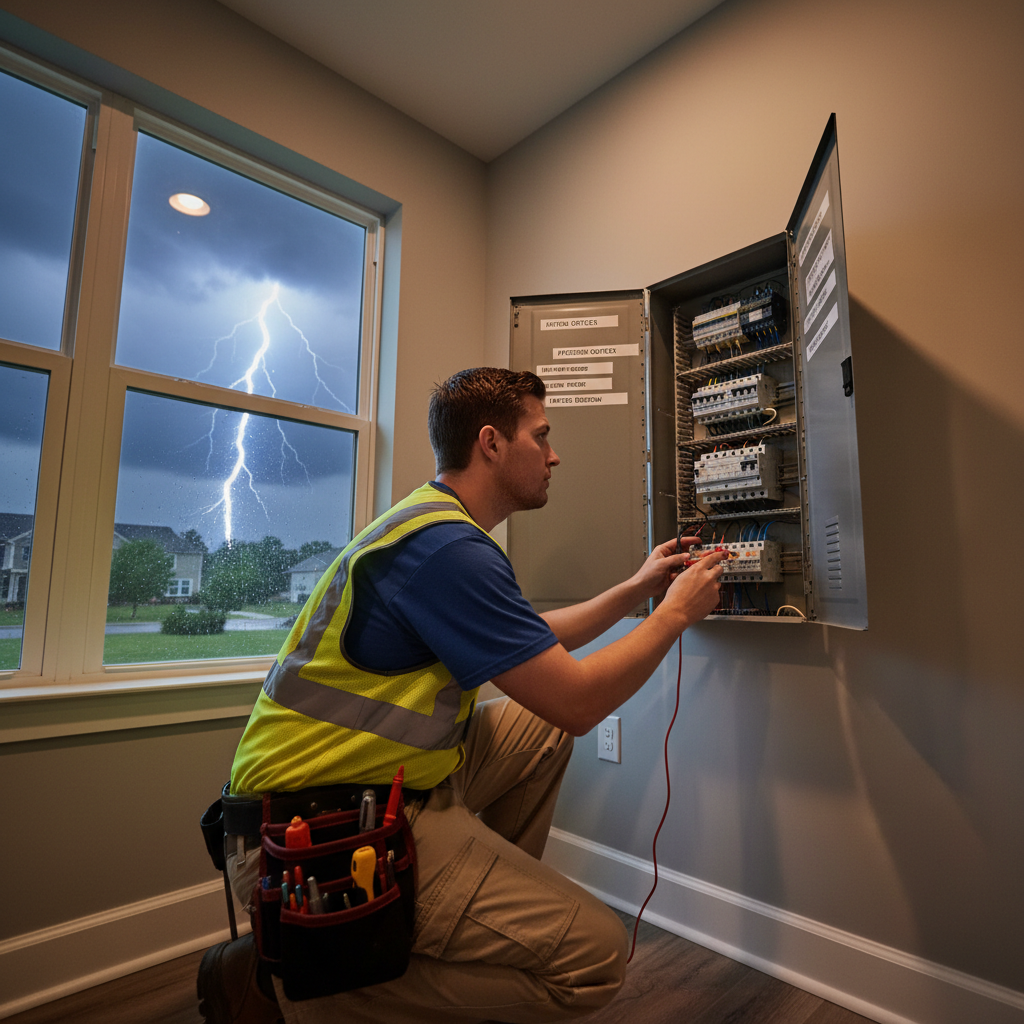
Once a permit is issued, the inspection process typically involves two main stages. The first is the rough-in inspection, which occurs after the wires have been pulled but before the walls are closed up with drywall. This allows the inspector to verify that the wiring is properly secured and routed. The final inspection takes place after the project is complete and the power is turned on. The inspector will check that all outlets are functioning correctly, GFCI protection is in place where required, and the panel is properly labeled. Following this process is the best way to ensure your home remains a safe environment for your family.
Local Utility Information
Duke Energy Indiana — Customer Service: 1-800-521-2232
Depending on your specific address in Bright, your electricity is likely provided by either Southeastern Indiana REMC or Duke Energy. These utilities are responsible for the power lines that lead to your property, while you are responsible for the equipment attached to your home. If you are served by the REMC, you are part of a member-owned cooperative. You can reach Southeastern Indiana REMC at (812) 689-4111 or visit their website at https://www.seiremc.com/. If you are in a Duke Energy service area, you can contact them at (800) 521-2232 or through their website at https://www.duke-energy.com/.
Both utilities offer programs that can help you save money on energy-efficient upgrades. For example, the Southeastern Indiana REMC participates in the "Power Moves" program, which provides rebates for items like smart thermostats, heat pump water heaters, and high-efficiency HVAC systems. Before you start a major electrical project, it is a good idea to check with your utility provider to see if any of your planned upgrades qualify for these financial incentives. Your electrician can often assist you with the technical documentation needed to secure these rebates.
Local Code Requirements
Indiana currently operates under the 2009 Indiana Electrical Code. This state code is largely based on the 2008 National Electrical Code (NEC), but it includes specific amendments unique to Indiana law. These regulations cover everything from the height of your service mast to the specific locations where ground-fault circuit interrupter (GFCI) outlets are mandatory. In Dearborn County, these rules are enforced to prevent electrical fires and electrocution hazards.
The Dearborn County Building Commissioner serves as the Authority Having Jurisdiction (AHJ) for the Bright area. This official has the final say on how the code is interpreted and applied to local projects. Because the code can be complex, especially with Indiana’s specific administrative amendments (675 IAC 17-1.8), it is essential to work with a contractor who stays updated on these requirements. Following the code is not just about passing an inspection; it is about ensuring the long-term reliability of your home’s electrical infrastructure.
Local Emergency Numbers
In the event of an electrical emergency, such as a fire or a downed power line, your first call should always be to 911. For power outages or issues with the utility lines serving your home in Bright, use the following contact information:
- Southeastern Indiana REMC Outage Line: (800) 737-4111
- Duke Energy Power Outage: (800) 343-3525
- Dearborn County Sheriff (Non-Emergency): (812) 537-3431
Find a Licensed Contractor
Ready to ensure your home’s electrical system is safe and up to code? Don't leave your family's safety to chance by hiring an unverified worker. You deserve the peace of mind that comes with knowing a professional is handling your wiring, panel, or lighting needs. To get started on your next project, you should search for and find a licensed electrical contractor on MyLicensedContractor.com. This resource helps you connect with qualified, local experts who understand the specific requirements of Bright and Dearborn County homes. Get matched with a pro today and take the first step toward a safer, more efficient home.
Call for Electrical Permit and Service Information in Bright, IN
Frequently Asked Questions
Do I need a permit to replace a ceiling fan in Bright?
If you are simply swapping an old fan for a new one using the existing wiring and outlet box, a permit is generally not required. However, if you are adding new wiring or a new support box where a fan did not previously exist, you must obtain a permit from the Dearborn County Building Department to ensure the installation is safe.
Does Dearborn County require GFCI outlets in garages?
Yes, according to the Indiana Electrical Code, all 125-volt, single-phase, 15- and 20-amp receptacles installed in garages must have ground-fault circuit interrupter protection. This is a vital safety requirement because garages often have damp floors and involve the use of power tools, which increases the risk of electrical shock.
Who is responsible for the line from the pole to my house?
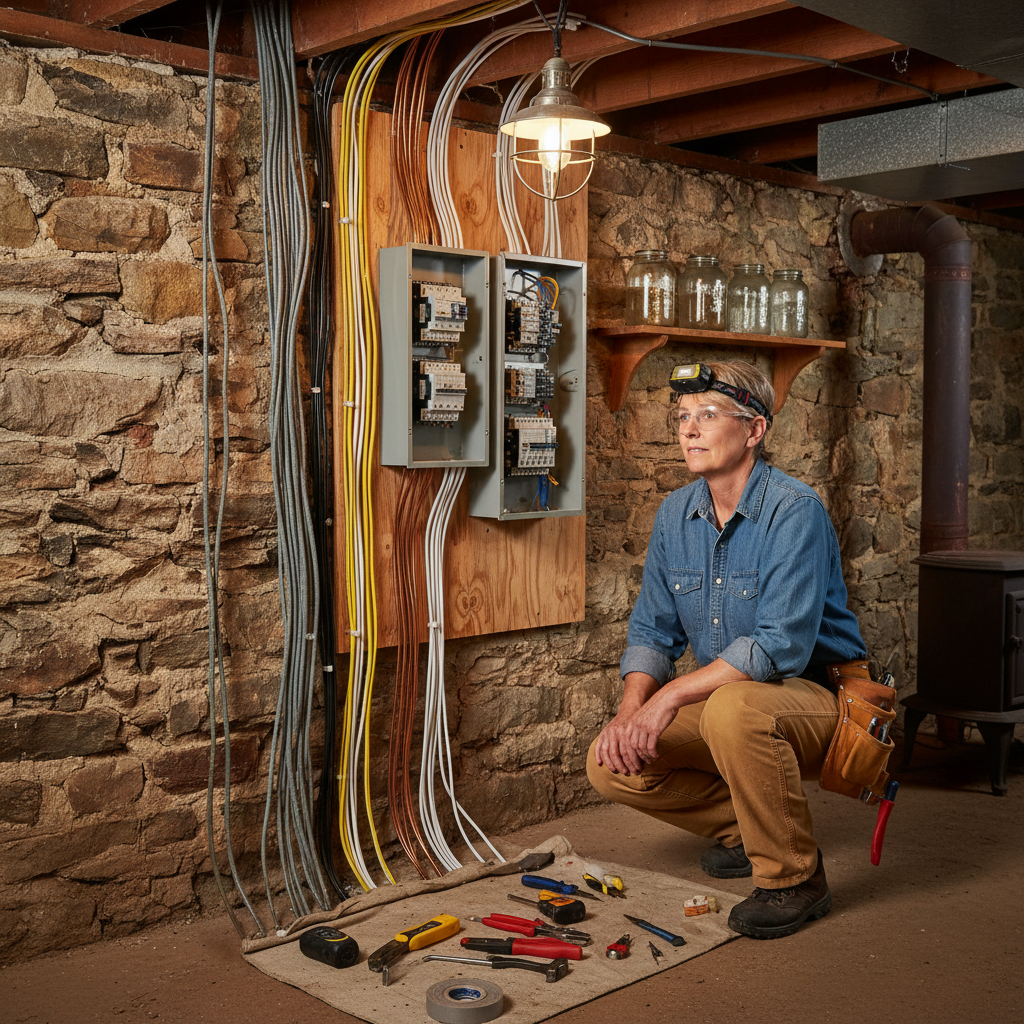
Typically, the utility company (Southeastern Indiana REMC or Duke Energy) owns and maintains the actual wire that runs from the utility pole to your home. However, as the homeowner, you are responsible for the service mast, the weather head, the meter base, and all the wiring that enters your house. If these components are damaged by a storm, you must hire an electrician to fix them before the utility will restore power.
How do I know if my Bright home has aluminum wiring?
If your home was built between 1965 and 1973, there is a high probability it contains aluminum branch circuit wiring. You can often check the jacket of the cables in your attic or basement for the word "Aluminum" or the initials "AL." However, the safest method is to have a licensed Bright electrician perform a thorough inspection of your electrical panel and outlet connections.
Can I do my own electrical work in Bright?
In Indiana, homeowners are often permitted to perform work on their primary residence if they obtain the proper permits and pass all required inspections. However, electrical work is inherently dangerous and complex. It is highly recommended that you hire a professional to ensure your work meets the 2009 Indiana Electrical Code and does not create a fire hazard for your family.
Why do my lights flicker during high winds in Bright?
Flickering lights during windstorms often indicate a loose neutral connection at your service mast or at the point where the utility wires connect to your home. This is a common issue in the windy, elevated areas of Dearborn County. You should have an electrician inspect your service entrance immediately, as a loose neutral can cause voltage fluctuations that damage your appliances.
What is the cost of a Dearborn County electrical permit?
Permit fees in Dearborn County vary based on the scope and size of the project. A simple residential repair might have a lower fee than a full home rewire or a new construction project. For the most current pricing and fee schedules, you should contact the Building Department directly at (812) 537-8822 before you begin your work.
Are smart home upgrades worth it for Bright homeowners?
Yes, smart home upgrades can be very beneficial, especially for residents in the more secluded areas of Dearborn County or for those with vacation properties at Hidden Valley Lake. Systems that allow for remote monitoring of lighting, temperature, and security provide an added layer of protection and can help you manage your energy costs more effectively.
How often should I have my electrical panel inspected?
It is a good practice to have your electrical system inspected every 10 years. If you live in an older farmhouse or a home that still uses a fuse box, you should consider more frequent inspections. Regular check-ups allow an electrician to identify loose connections, signs of overheating, or outdated components before they lead to a major failure or a fire.
Does Southeastern Indiana REMC offer surge protection?
The REMC often provides various member programs and information regarding home safety. While they may offer meter-base surge arresters through specific programs, you should consult with your private electrician about installing a comprehensive whole-home surge protection system. This ensures that all of your sensitive internal circuits are protected from both external strikes and internal surges.
Nearby Cities in Indiana
Ready to Find a Licensed Contractor?
Connect with pre-screened, licensed contractors in your area.
Submit Your ProjectGet Matched Instantly
Tell us about your project and we'll connect you with licensed, verified contractors in your area.
Submit Your ProjectFind Contractors Near You
Get Matched Instantly
Tell us about your project and we'll connect you with licensed, verified contractors in your area.
Submit Your ProjectFind Contractors Near You