Carbon Monoxide Safety: Detectors, Warning Signs, and When to Call a Pro
Key Takeaways
- You can't see or smell carbon monoxide, and many homes have several appliances that can produce it.
- The risk goes up in winter, when furnaces run for hours and homes stay closed up.
- This guide covers where CO comes from, the warning signs, how to set up detectors, and which pro to call for each problem.
Carbon monoxide (CO) is a gas that forms when fuel burns. Furnaces, water heaters, gas stoves, fireplaces, and generators all produce it. When these appliances work and vent the right way, the gas leaves your home. When something goes wrong, CO can build up indoors.
The CDC explains that carbon monoxide is an odorless, colorless gas that can cause sudden illness and death. A working detector is the only way to know it's there.
Where Carbon Monoxide Comes From in Your Home
| Source | What can go wrong | Who to call |
|---|---|---|
| Gas or oil furnace | Cracked heat exchanger, blocked flue, poor combustion | HVAC technician |
| Gas water heater | Loose or blocked vent pipe, back drafting | Plumber |
| Gas range or oven | Burner problems, use as a space heater | Appliance repair tech or gas line pro |
| Fireplace or wood stove | Blocked chimney, closed damper | Chimney professional |
| Attached garage | Car running inside the garage | None needed. Never warm up a car in the garage. |
| Portable generator | Running indoors or too close to the house | Electrician for a safe hookup |
Warning Signs of Carbon Monoxide
Symptoms in People
The most common symptoms of CO poisoning are headache, dizziness, weakness, upset stomach, vomiting, chest pain, and confusion. Many people mistake these symptoms for the flu.
Watch for a few clues. Several people in the house feel sick at the same time, pets seem sick too, or everyone feels better after leaving the house. People who are asleep can be poisoned before they ever notice symptoms, which is why detectors matter so much.
Signs Around Your Appliances
Some problems show up before an alarm goes off. Call a pro if you notice any of these:
- Soot or brown and yellow stains around a furnace, water heater, or fireplace
- A yellow or flickering burner flame instead of a steady blue flame
- A pilot light that keeps going out
- Heavy condensation on windows near a gas appliance
- A vent pipe that has come loose, rusted through, or sagged
What to Do If Your CO Alarm Goes Off
- Get everyone out of the house, including pets.
- Call 911 or your fire department from outside.
- Stay outside until emergency responders say it's safe to go back in.
- Call a pro to find and fix the source before you use the appliance again.
Don't stay inside to open windows or look for the source yourself. If anyone feels sick, get medical help right away.
How to Set Up Carbon Monoxide Detectors
Where to Put Them
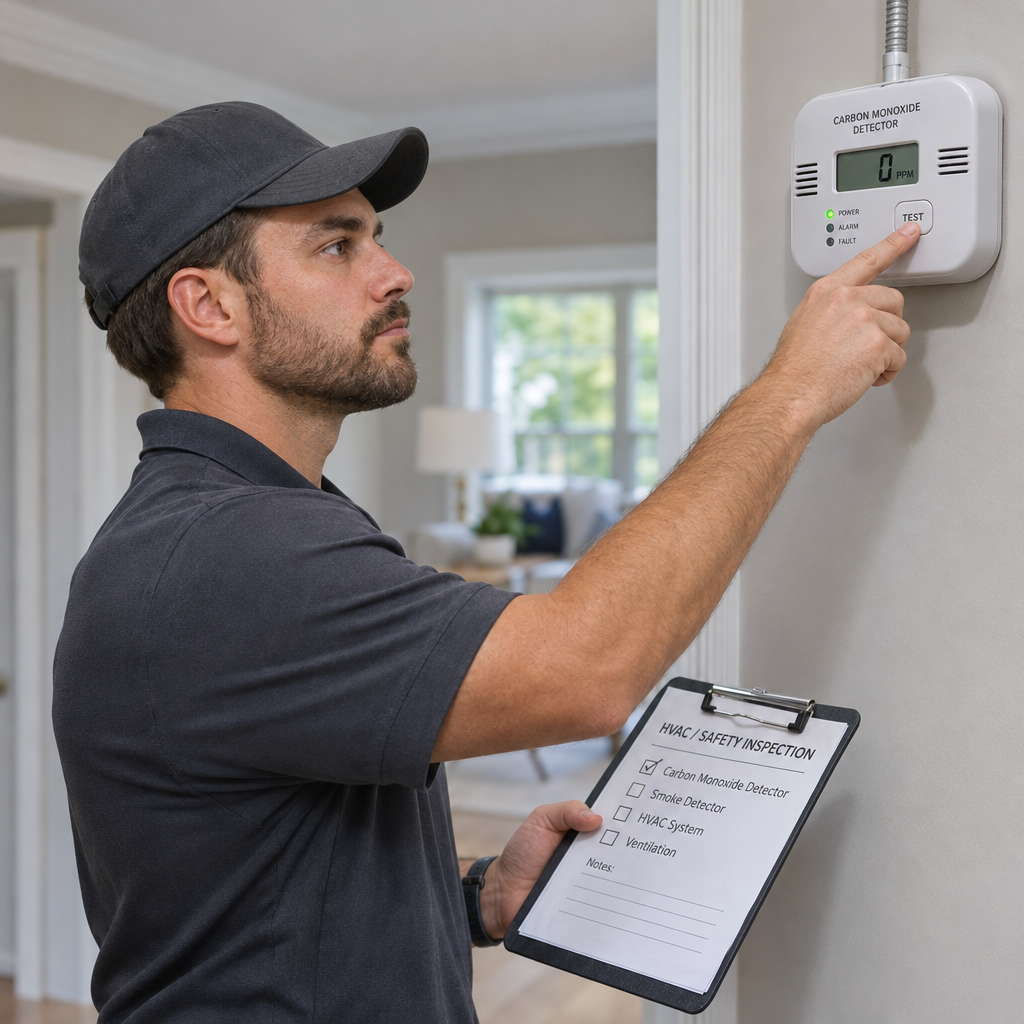
The U.S. Consumer Product Safety Commission recommends CO alarms on each level of the home and outside sleeping areas. The CPSC also advises against putting them in attics or basements unless someone sleeps there. Follow the manufacturer's instructions for height and placement.
How to Maintain Them
- Test each alarm once a month.
- Replace the batteries once a year.
- Replace the whole detector according to the manufacturer's instructions or every five years.
Battery, Plug-In, or Hardwired?
Battery and plug-in detectors are easy to install yourself. Hardwired detectors connect to your home's electrical system and usually have a battery backup. You can also interconnect hardwired alarms, so when one goes off, they all go off. An electrician can install hardwired or combination smoke and CO alarms and connect them throughout the house.
How to Prevent Carbon Monoxide Problems
- Schedule a heating tune-up before winter so a technician can check the furnace, the flue, and the burners.
- Keep vents and flues clear of snow, leaves, and bird nests.
- Have your chimney inspected before you use the fireplace each season.
- Never use a gas oven or stove to heat your home.
- Never run a car, generator, or gas-powered tool in a garage, even with the door open.
- Run portable generators outside and more than 20 feet from windows, doors, and vents.
When to Call a Pro
HVAC Technician
Call an HVAC technician for furnace inspections, soot around the furnace, or a burner flame that looks wrong. A cracked heat exchanger often means it's time to decide whether to repair or replace an aging furnace.
Plumber or Gas Line Pro
Call a plumber for water heater venting problems. Call a licensed gas line pro for gas appliance connections or if you smell gas. CO has no smell, but natural gas has an added odor. A rotten egg smell is one of the most common signs of a gas leak, and it needs immediate attention.
Electrician
Call an electrician to install hardwired or interconnected CO and smoke alarms, or to set up a safe transfer switch for a generator.
Get Matched With a Top HVAC Pro Near You
A yearly furnace inspection is one of the easiest ways to protect your family from carbon monoxide. On My Licensed Contractor, you describe your project once and get matched with the best 5% of HVAC pros in your area.
Submit your HVAC request on My Licensed Contractor.
FAQ
Where should I put a carbon monoxide detector?
Put a CO detector on each level of your home and outside each sleeping area. Follow the manufacturer's instructions for height and placement.
How often should I replace a carbon monoxide detector?
Follow the manufacturer's instructions, or replace it about every five years. Test it monthly and replace the batteries once a year.
What are the first signs of carbon monoxide poisoning?
Early symptoms include headache, dizziness, weakness, and an upset stomach. They often feel like the flu. If several people feel sick at home and better when they leave, CO could be the cause.
Can a furnace leak carbon monoxide?
Yes. A cracked heat exchanger, a blocked flue, or poor combustion can cause a furnace to release CO into your home. A yearly inspection can catch these problems early.
What should I do if my CO alarm goes off?
Get everyone outside and call 911 or your fire department. Stay out until responders say it's safe, then have a pro find and fix the source.
Do electric homes need carbon monoxide detectors?
If you have no fuel-burning appliances and no attached garage, your risk is lower. You still need a detector if you have a fireplace, an attached garage, or use a generator during outages. Your local code may also require them.
Find a Licensed Contractor
Connect with pre-screened, licensed contractors in your area.
Submit Your Project
Find Local Contractors
Connect with licensed, verified contractors in your area for your next project.
Submit Your Project