Is a Whole-Home Generator Worth It? Costs, Sizing, and Installation
Key Takeaways
- Winter storms can knock out power for hours or days, and an outage in cold weather affects your heat, your pipes, and your sump pump.
- A whole-home generator is a big purchase, and the right size and setup depend on your home and your needs.
- This guide covers how whole-home generators work, what they cost, how to size one, and what installation involves.
A power outage in summer is an inconvenience. A power outage in January can mean a cold house, frozen pipes, and a flooded basement if your sump pump stops. That's why many homeowners start to look at whole-home generators in the fall and winter.
This guide explains how these systems work, what you can expect to pay, and how to decide if one makes sense for your home.
What Is a Whole-Home Generator?
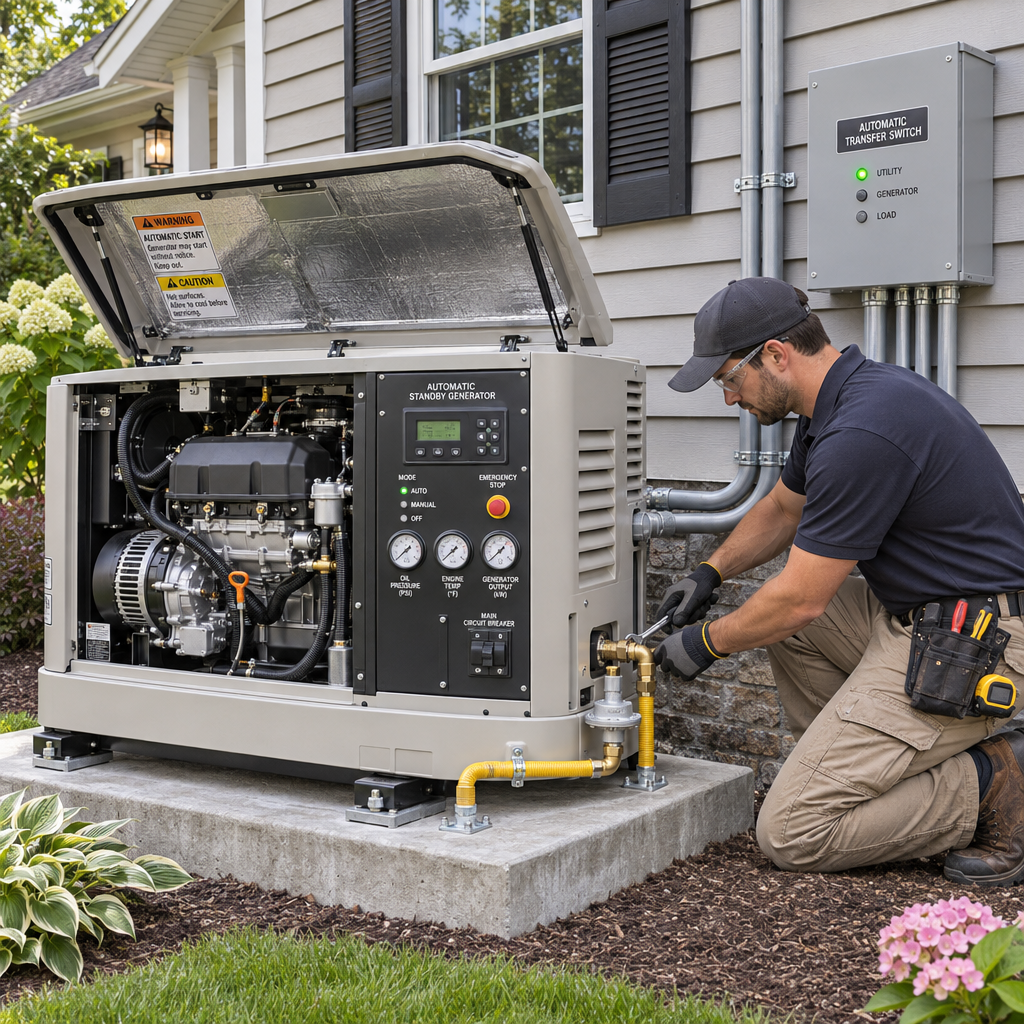
A whole-home generator, also called a standby generator, sits permanently outside your house on a concrete or composite pad. It runs on natural gas or propane, so you don't need to refuel it during an outage.
The generator connects to your electrical panel through an automatic transfer switch. When the power goes out, the transfer switch senses the outage and starts the generator within seconds. When utility power comes back, the switch moves your home back to the grid and shuts the generator off. You don't have to do anything.
Whole-Home Generator vs. Portable Generator
| Whole-home standby generator | Portable generator | |
|---|---|---|
| Startup | Automatic, within seconds | Manual. You set it up and start it. |
| Fuel | Natural gas or propane | Usually gasoline. You refuel it every several hours. |
| Power | Can run the whole house, including central air | Runs a few appliances or circuits |
| Installation | Professional installation with permits | None, unless you add a transfer switch |
| Cost | Several thousand to over $20,000 installed | Much lower upfront |
Portable generators carry more safety risks because people set them up during a stressful outage. The CDC advises homeowners to run portable generators outside, more than 20 feet from windows, doors, and vents, to avoid carbon monoxide poisoning. Never plug a portable generator into a wall outlet. An electrician can install a transfer switch or interlock so you can connect it safely.
How Much Does a Whole-Home Generator Cost?
Most whole-home generators cost about $7,000 to $25,000 installed. Many homeowners land somewhere in the middle of that range. The generator itself is only part of the price. Installation, the transfer switch, and the fuel connection make up the rest.
What Affects the Price
- Generator size: A larger generator costs more and can power more of your home.
- Transfer switch: A switch that covers your whole panel costs more than one that covers a few circuits.
- Fuel line: A short run from your gas meter costs less than a long run or a new propane tank.
- Electrical upgrades: An older or full panel may need an upgrade before the installation.
- Site work: The pad, trenching, and distance from the house all affect labor.
- Permits and inspections: Your city or county sets these fees.
If your panel is old or already at capacity, you may need an electrical panel replacement before the generator goes in. Ask about it when you get generator quotes.
Ongoing Costs
Plan for a yearly maintenance visit. The technician changes the oil, checks the battery, and tests the system. Most generators also run a short self-test each week or every other week, and that uses a small amount of fuel.
How to Size a Whole-Home Generator
Generator size is measured in kilowatts (kW). Many homes use a generator somewhere between 14 kW and 26 kW, but the right size depends on what you want to run during an outage.
Whole House or Essential Circuits?
You have two main options:
- Whole-house coverage: The generator powers everything, including central air and electric appliances. This option needs a larger generator.
- Essential circuits: The generator powers only what you choose, such as the furnace, refrigerator, sump pump, well pump, lights, and outlets in a few rooms. A smaller generator often handles this load.
Appliances to Include in Your Plan
| Appliance | Why it matters in an outage |
|---|---|
| Furnace or heat pump | Keeps the house warm and the pipes from freezing |
| Sump pump | Protects the basement from flooding |
| Well pump | Keeps water running in homes with a private well |
| Refrigerator and freezer | Keeps food from spoiling |
| Medical equipment | Keeps oxygen machines and other devices running |
| Central air conditioning | Needs a large generator. Matters most for summer outages. |
An electrician should do a load calculation before you buy. They look at the appliances you want to run and how much power each one needs when it starts up. A generator that's too small can overload. A generator that's too large costs more than you need to spend.
What to Expect During Installation
A standby generator installation usually involves an electrician and a plumber or gas fitter. Some companies handle both parts of the job.
- Site visit and quote: The installer does a load calculation, picks a location, and checks your panel and gas meter.
- Permits: The installer pulls electrical and gas permits so a local inspector can check the work.
- Pad and placement: The crew sets the pad. The manufacturer and local code set the minimum distance from windows, doors, vents, and property lines.
- Gas connection: A plumber or gas fitter runs a line from your meter or propane tank. Your gas utility may need to check that your meter can supply enough gas.
- Electrical work: The electrician installs the transfer switch and connects the generator to your panel.
- Inspection and startup: A local inspector approves the work, and the installer tests the system and shows you how it works.
The installation work often takes one to three days. The full process can take several weeks once you include permits, inspections, and equipment delivery.
Is a Whole-Home Generator Worth It?
A whole-home generator often makes sense if:
- Your area loses power several times a year or for long periods.
- You rely on a sump pump or well pump.
- Someone in your home uses medical equipment that needs power.
- You work from home and can't afford to lose power for days.
- You travel in winter and worry about the heat failing while you're gone.
A generator keeps your furnace running, which is one of the best ways to prevent frozen pipes during a long winter outage.
If outages are rare and short where you live, a portable generator with a professionally installed transfer switch may cover your needs for much less money.
Get Matched With a Top Electrician Near You
A whole-home generator needs a licensed electrician who can size the system, pull the permits, and connect it safely. On My Licensed Contractor, you describe your project once and get matched with the best 5% of electricians in your area.
Submit your generator installation request on My Licensed Contractor.
FAQ
How much does a whole-home generator cost?
Most whole-home generators cost about $7,000 to $25,000 installed. The size of the generator, the transfer switch, the gas line, and any electrical upgrades affect the final price.
What size generator do I need for my house?
Many homes use a generator between 14 kW and 26 kW. An electrician can do a load calculation to find the right size for the appliances you want to run.
How long does a whole-home generator last?
With yearly maintenance, a standby generator can last many years. Follow the manufacturer's maintenance schedule and keep up with the weekly self-tests.
Can a whole-home generator run on natural gas?
Yes. Most standby generators run on natural gas or propane. Natural gas comes from your utility line, so you don't need to refuel.
Do I need a permit to install a standby generator?
In most areas, yes. The installation usually needs electrical and gas permits and a final inspection. Your installer should pull the permits.
Can I install a whole-home generator myself?
A standby generator connects to your electrical panel and gas line. This work requires a licensed electrician and a qualified gas professional, along with permits and inspections.
Find a Licensed Contractor
Connect with pre-screened, licensed contractors in your area.
Submit Your Project
Find Local Contractors
Connect with licensed, verified contractors in your area for your next project.
Submit Your Project