How to Prevent Frozen Pipes (And What to Do If Yours Freeze)
Key Takeaways
- Cold winter temperatures can leave homeowners with frozen pipes, no water, and sometimes a burst line that floods a basement or ceiling.
- A single burst pipe can soak drywall, floors, and insulation within hours, and the repair bill usually costs far more than prevention would have.
- This guide covers which pipes are most at risk, how to protect them, how to thaw a frozen pipe safely, and when to call a plumber.
Why Frozen Pipes Cause So Much Damage
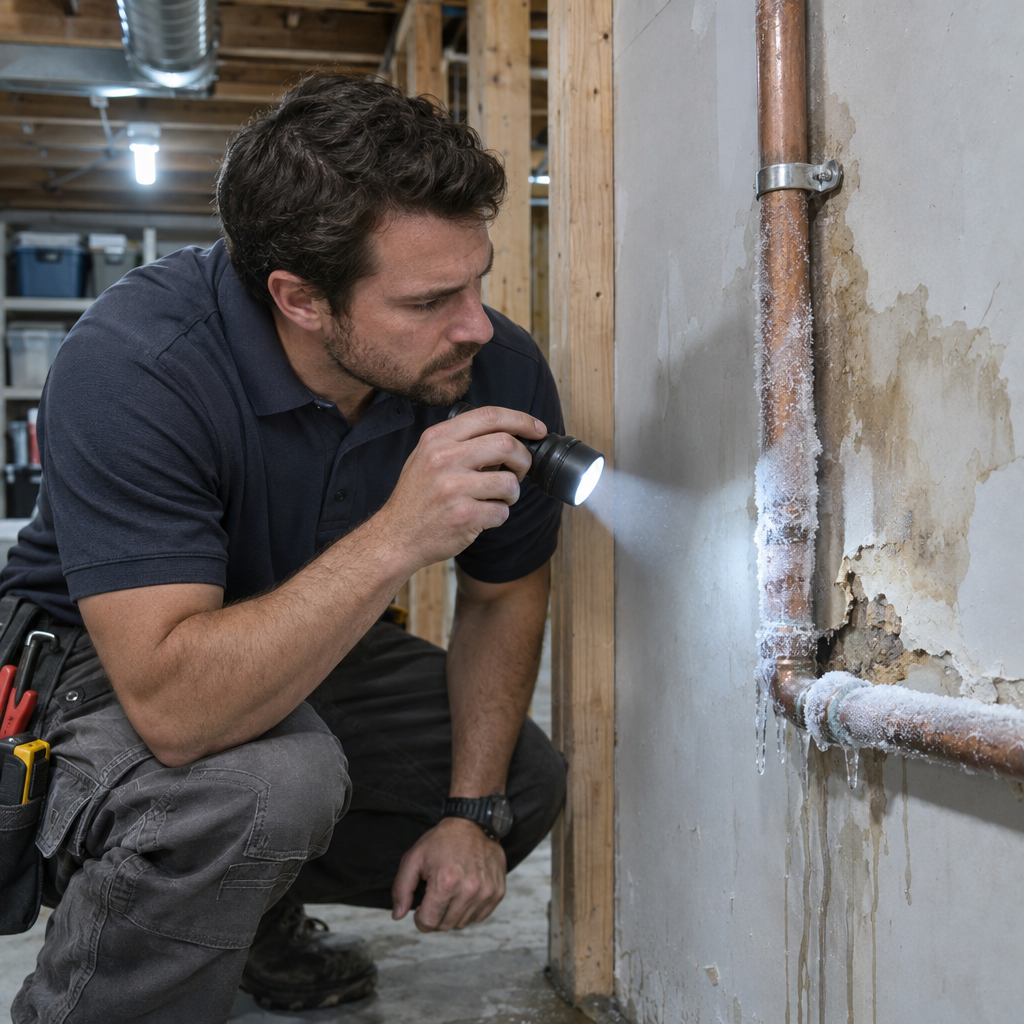
Frozen pipes can cause a lot of damage, especially if you don't notice the issue right away. Because water expands when it freezes, it can block the flow of water inside a pipe. Pressure builds up, and that pressure is what splits the pipe, and the split often happens away from the ice itself.
Many homeowners do not find out about a burst pipe until the ice melts. As soon as the pipe thaws, water pours out of the crack. If the pipe sits inside a wall or above a ceiling, the water can damage drywall and ceilings.
When Do Pipes Freeze?
Water freezes at 32°F, but pipes inside a home have some protection from the house itself. Texas A&M AgriLife Extension notes that pipes can freeze and burst when the outdoor temperature drops to about 20°F or lower.
Temperature is only part of the picture. These conditions raise the risk:
- The cold lasts for several hours or several days.
- Wind blows cold air through gaps in the foundation, siding, or rim joist.
- The pipe has no insulation or runs through an unheated space.
- The power goes out and the furnace stops.
If the forecast calls for temperatures in the teens or single digits, take action that day.
Which Pipes Are Most at Risk
- Outdoor spigots and the pipes that supply them
- Garden hoses that stay connected to a spigot
- Sprinkler system lines and pool supply lines
- Pipes in crawl spaces, unheated basements, attics, and garages
- Pipes inside exterior walls, especially on the north side of the house
- Kitchen and bathroom sink pipes in cabinets on exterior walls
- The water service line where it enters the house through the foundation
If you have ever had a pipe freeze in one spot, expect that spot to freeze again unless you change something.
How to Prevent Frozen Pipes Before Winter
Find your main water shut-off valve
Find the valve now, before you need it. In most homes, it sits where the water line enters the house, often in the basement, a crawl space, or a utility room. Make sure it turns and that everyone in the house knows where it is. If the valve is stuck or leaks, have a plumber replace it.
Disconnect hoses and shut off outdoor spigots
Remove garden hoses, drain them, and store them inside. If your outdoor spigots have a separate shut-off valve inside the house, close it, then open the outdoor spigot to let the water drain out. Add an insulated cover to each spigot. If you have an older spigot without an inside shut-off, ask a plumber about a frost-free sillcock.
Drain sprinkler and pool lines
Follow the installer's instructions to drain your irrigation system and any pool supply lines. Many homeowners hire a pro to blow out sprinkler lines with compressed air. Do not put antifreeze in these lines.
Insulate exposed pipes
Foam pipe sleeves cost little and take minutes to install. Cover pipes in crawl spaces, unheated basements, attics, and garages. For pipes that freeze often, a plumber or electrician can install UL-listed heat cable. Follow the manufacturer's instructions, and do not wrap heat cable over itself.
Seal air leaks near pipes
Cold air that leaks in through gaps often freezes a pipe that would otherwise stay warm. Seal gaps around the rim joist, crawl space vents, dryer vents, and the places where pipes and wires pass through exterior walls. Close crawl space vents for the winter if your home has them.
Protect pipes in the garage
If water lines run through your garage, keep the garage door closed in cold weather. Insulate the pipes, and seal gaps around the garage door if wind blows in.
What to Do During a Cold Snap
- Let faucets drip. Turn on a slow drip of cold water at faucets that sit on exterior walls. Moving water is less likely to freeze, and an open faucet relieves pressure if ice forms.
- Open cabinet doors under kitchen and bathroom sinks so warm air reaches the pipes. Move cleaning products out of reach of children and pets.
- Keep the thermostat at the same temperature day and night. A lower setting at night saves a little on your gas bill, but it raises the risk of a frozen pipe.
- Keep the garage door closed.
- Check the faucets in the coldest parts of the house in the morning. If the water flow slows, act right away.
If You Leave Home in Winter
A vacant house is at the highest risk. No one is there to notice a slow faucet or a furnace that quit.
- Keep the heat on and set it no lower than 55°F.
- Open sink cabinet doors before you leave.
- Ask a neighbor or friend to check the house every day or two during a cold snap.
- For a long trip, shut off the main water valve and open the faucets to drain the lines.
- Consider a smart water leak detector or a temperature sensor that sends an alert to your phone.
If you own a vacation home or a rental that sits empty in winter, ask a plumber about a full winterization.
Signs a Pipe Is Frozen
- Only a trickle of water comes out when you turn on a faucet, or no water comes out at all.
- A toilet does not refill after a flush.
- You see frost on an exposed pipe.
- A section of pipe looks swollen or bulges.
If one faucet has no water, check the others. If one pipe freezes, others may be frozen too.
How to Thaw a Frozen Pipe Safely
A frozen pipe has not burst yet in many cases. Quick, careful action can keep it that way. If you cannot find the frozen section, cannot reach it, or feel unsure, call a plumber. NC State Extension advises homeowners to shut off the water and call a plumber instead of thawing pipes themselves.
If you choose to thaw a pipe you can see and reach, follow these steps:
- Open the faucet that the pipe supplies. As the ice melts, water and steam need a place to go.
- Start at the faucet end and work back toward the frozen section.
- Apply gentle heat with a hair dryer, a heating pad, or towels soaked in hot water. A space heater can warm a small room, but keep it away from anything that can burn.
- Keep heating until full water pressure comes back.
- Check every other faucet in the house.
- Watch the pipe for drips or spraying water once it thaws.
Never use an open flame to thaw a pipe. A propane torch, kerosene heater, or charcoal stove can start a fire inside a wall and can fill the house with carbon monoxide. Keep electrical cords and hair dryers away from standing water.
What to Do If a Pipe Bursts
- Shut off the main water valve right away.
- If water is near outlets, light fixtures, or the electrical panel, shut off power to that area at the breaker if you can do it safely. If you have to stand in water to reach the panel, call the utility instead.
- Open a faucet to drain the water left in the lines.
- Call a licensed plumber.
- Take photos of the damage before you clean up, and call your insurance company.
- Remove standing water and move rugs, furniture, and boxes out of wet areas.
- Dry wet materials as fast as you can with fans and a dehumidifier. Wet drywall and insulation can grow mold within a day or two.
After the repair, watch the area for a few weeks. A pipe that froze once may have small cracks or loose fittings that leak slowly. Our guide to how to detect slow plumbing leaks explains the signs to look for.
DIY or Professional Repair From a Licensed Plumber?
| Situation | DIY or plumber? |
|---|---|
| Insulate exposed pipes in a basement or crawl space | DIY |
| Disconnect hoses and shut off outdoor spigots | DIY |
| Thaw a frozen pipe you can see and reach | DIY with care, or plumber |
| Frozen pipe inside a wall, ceiling, or floor | Plumber |
| Burst or cracked pipe | Plumber |
| Replace a stuck shut-off valve | Plumber |
| Install a frost-free sillcock | Plumber |
| Reroute pipes away from an exterior wall | Plumber |
| Frozen water service line | Plumber, and call your water utility |
Long-Term Fixes for Pipes That Keep Freezing
If the same pipe freezes every winter, a dripping faucet only treats the symptom. A plumber can fix the cause:
- Reroute the pipe away from an exterior wall or an unheated space.
- Add insulation to the wall cavity, crawl space, or rim joist.
- Replace an old spigot with a frost-free model.
- Install heat cable on pipes that cannot move.
- Replace damaged sections with PEX, which handles freezing better than rigid pipe.
If your home has older copper or galvanized pipes that crack or leak often, it may be time to look at a larger upgrade. Our article on replacing old copper pipes explains the options. When you choose a plumber, our tips on how to hire a plumber cover the questions to ask.
Get Matched With a Top Plumber Near You
A frozen or burst pipe is not the time to call five plumbers and wait for callbacks. My Licensed Contractor matches you with the best 5% of plumbers in your area. Tell us what is going on, whether you need pipes winterized before a cold snap or a burst pipe repaired today, and we connect you with a licensed plumber who can help.
Submit your plumbing request on My Licensed Contractor and get matched with a top-rated plumber near you.
Frequently Asked Questions
At what temperature do pipes freeze?
Pipes inside a home usually face a real risk when the outdoor temperature drops to about 20°F or lower, especially if the cold lasts for several hours. Pipes in unheated spaces or exterior walls can freeze at higher temperatures.
Should I let my faucets drip at night?
Yes, during a hard freeze. A slow drip of cold water at faucets on exterior walls keeps water moving and relieves pressure if ice starts to form.
What temperature should I keep my house to prevent frozen pipes?
Keep the thermostat at 55°F or higher, even when you are away. Keep the same setting day and night during a cold snap.
How long does it take for a pipe to freeze?
It depends on the temperature, wind, and insulation. An exposed pipe in an unheated crawl space can freeze within a few hours of hard cold. A pipe inside a heated part of the house may take much longer or never freeze.
Will a frozen pipe always burst?
No. Many frozen pipes thaw without damage. The longer a pipe stays frozen, the higher the chance of a crack, so thaw it or call a plumber as soon as you notice the problem.
Does homeowners insurance cover a burst pipe?
Many policies cover sudden damage from a burst pipe. Some policies exclude damage if the home was vacant or unheated. Read your policy and call your agent if you are unsure.
Find a Licensed Contractor
Connect with pre-screened, licensed contractors in your area.
Submit Your Project
Find Local Contractors
Connect with licensed, verified contractors in your area for your next project.
Submit Your Project