Why Home Service Contractors Need More Than One Lead Source
- Relying on one lead source can leave your business exposed when that channel slows down.
- A stronger pipeline comes from using a mix of lead sources that fit your trade, service area, and goals.
- Track booked jobs and profit, not just calls, clicks, or cost per lead.
You may have a lead source that works well for your business right now. Maybe most of your calls come from Google, referrals, Local Services Ads, a lead platform, or one dependable partner. Then the phone slows down.
Maybe your Google visibility changes. Maybe a paid channel gets more expensive. Maybe referrals dry up during a slow season. Or maybe a platform that once sent solid opportunities starts sending lower-quality leads.
That is the risk of relying too heavily on one source. A channel can be worth keeping and still become less effective over time.
For electricians, HVAC companies, plumbers, landscapers, pest-control companies, home security installers, roofers, remodelers, and other home service businesses, a more dependable pipeline comes from using several lead sources instead of betting everything on one. If one source slows down, the others can keep work coming in. Testing new channels also gives you a chance to find opportunities your competitors may not be using yet.
The goal is not to be everywhere at once. It is to build a practical mix of sources that brings in the kinds of jobs you want, in the areas you serve, at a cost that makes sense for your business.
The Risks of Relying on One Lead Source
Even a lead source that works well today may not perform at the same level next quarter. Every channel has its own risks, whether you rely on search rankings, paid ads, referrals, or a lead platform.
Search Rankings and Map Visibility Can Change
Google Maps and local search can bring in valuable service calls, especially for urgent jobs such as air conditioner repairs, burst pipes, electrical issues, pest problems, or broken garage doors. But local visibility is competitive, and no contractor fully controls it.
Google says local results are primarily based on relevance, distance, and prominence. A competitor with stronger reviews, more complete business information, a better match for the searcher’s location, or stronger local visibility may show up ahead of you for searches you used to win.
- Map-pack visibility can change based on where the homeowner is located when they search.
- Reviews, accurate business information, service relevance, and online prominence all affect local visibility.
- A competitor can improve their Google Business Profile, collect more reviews, or invest in local marketing and take some of the visibility you once had.
- You can follow best practices and still see calls rise and fall as conditions change in your market.
Your Google Business Profile is an important lead source, but it should not be your only source of new work. It is also worth making sure your profile, website, and service information give homeowners a clear reason to choose you when they do find your business. Many contractors lose opportunities because homeowners hesitate before hiring a contractor, especially when they cannot quickly find proof, service details, or a clear way to get in touch.
Paid Lead Costs and Availability Can Change
Google Local Services Ads, Google Search Ads, social ads, and third-party lead platforms can all help contractors reach homeowners who need service now. They can also become more expensive or less predictable as competition changes.
For example, Local Services Ads can display your business information, reviews, service area, and hours directly in search results. That visibility can be valuable for HVAC repair, plumbing, electrical, pest control, landscaping, home security, and other local services. But when more contractors compete for the same service area, lead costs can rise and volume can become less consistent.
Paid channels may also change because of:
- Higher competition in your service area.
- Seasonal demand for certain services.
- Changes in ad budgets, lead pricing, or platform rules.
- Verification requirements or category eligibility issues.
- A shift toward job types that do not match your ideal work.
Paid lead sources also stop producing when you stop spending. That does not make them a bad investment. It simply means they work best as part of a larger strategy.
And do not judge a paid channel by cost per lead alone. A low-cost lead that never answers the phone, only wants the cheapest price, or requests work you do not offer can waste more time than it is worth.
Referrals Are Valuable but Hard to Scale on Demand
Referrals are often among the best leads a home service business can receive. The homeowner already has some level of trust because a friend, family member, neighbor, real estate agent, or past customer recommended you.
Still, referrals are difficult to control. Customers do not need new HVAC systems, electrical panel upgrades, landscaping work, plumbing repairs, or home security installations every month. A happy customer may recommend you for a small repair but not know someone who needs a major replacement or renovation.
Referral volume can also slow down if:
- Your team takes too long to return calls or follow up on estimates.
- You do not consistently ask satisfied customers for reviews or referrals.
- Your service area expands beyond the neighborhoods where people already know your name.
- Your business enters a seasonal slowdown.
Keep building referrals. They are valuable. Just do not expect to turn them on and off whenever the schedule needs filling.
Marketplace and Platform Leads Can Be Shared or Inconsistent
Lead platforms can be useful for finding homeowners who are actively looking for help. They can also introduce you to new service areas, help fill open capacity, or create opportunities during slower times of year.
However, some platforms send the same request to several contractors. That puts you in a race to respond first, qualify the job, and make a strong impression before the homeowner has already booked someone else. Lead details may be incomplete, and some homeowners may simply be comparing prices.
Before investing in any platform, find out:
- Whether leads are shared or exclusive.
- How many contractors receive the same request.
- How quickly you need to respond.
- What project details are included with each lead.
- How the platform defines a valid lead.
- Whether refunds or credits are available for bad leads.
- Which ZIP codes, service types, and job sizes tend to perform best.
The point is not to avoid lead platforms. It is to treat them as one part of your lead mix and measure them by booked, profitable work.
Homeowners Do Not All Look for Contractors the Same Way
Using more than one lead source also means showing up where homeowners already look for help. Two homeowners with the same problem may take completely different paths to find a contractor.
A homeowner with a leaking water heater may search Google Maps for “plumber near me.” Someone with a failed air conditioner may click a Local Services Ad. A homeowner planning a panel upgrade may ask friends for electrician recommendations. Someone comparing quotes for landscaping, pest control, roofing, or a home security system may use an online platform because it feels faster than calling several companies one by one.
Homeowners may also find your business after seeing a wrapped truck, yard sign, mailer, local sponsorship, or project in their neighborhood. Others will search your company name, read reviews, visit your service pages, and look for examples of completed work before they decide to call.
Search behavior is changing, too. AI summaries and zero-click results can answer some questions before a person ever visits a website. That does not mean websites and local SEO no longer matter. Your website is still one of the best places to explain services, show proof of your work, collect calls and form submissions, and help homeowners feel comfortable hiring you.
It does mean your business benefits from being visible in more than one place: your Google Business Profile, reviews, paid listings, referral networks, local content, direct outreach, and homeowner lead platforms.
What a Healthy Lead Mix Looks Like
A healthy lead mix does not mean signing up for every platform or spending money on every type of advertising. It means using a few channels that serve different purposes.
| Lead source | What it does | Examples | What to track |
|---|---|---|---|
| Owned channels | Builds long-term visibility and trust | Website, service pages, Google Business Profile, reviews, email list, CRM | Organic calls, form submissions, rankings, review growth, repeat bookings |
| Paid demand capture | Reaches homeowners who need help now | Google Search Ads, Local Services Ads, retargeting | Qualified leads, booking rate, cost per booked job, revenue |
| Referrals and reputation | Turns past work and trust into new jobs | Customer referrals, reviews, real estate agents, property managers, trade partners | Referral volume, close rate, average job value |
| Lead platforms | Adds homeowner opportunities and helps test new areas | Exclusive lead programs, quote platforms, contractor marketplaces | Contact rate, lead quality, booking rate, gross profit |
| Customer reactivation | Creates work from homeowners who already know your company | Maintenance reminders, email, text, memberships, seasonal offers | Repeat-job rate, booked maintenance, revenue per customer |
| Local awareness | Keeps your company familiar in target areas | Community partnerships, yard signs, direct mail, local events, vehicle branding | Branded searches, tracked calls, traffic, new customers |
Owned Channels Create Long-Term Control
Your website, service pages, Google Business Profile, review process, project photos, and customer list are owned assets. You have more control over them than you do over an ad platform or marketplace.
They take time to build, but they help reduce the need to pay for every lead forever. A plumber can publish detailed service pages for water heater replacement, sewer-line repair, and emergency plumbing. An electrician can create clear pages for panel upgrades, EV chargers, lighting, and troubleshooting. An HVAC company can build pages around AC repair, heating installation, maintenance, and indoor air quality.
Helpful content also gives homeowners answers before they call. For example, a homeowner researching a water heater may benefit from a detailed water heater replacement guide before deciding what type of professional they need or whether the project is urgent.
Paid Channels Capture Urgent Demand
Paid channels can help you reach homeowners when they are ready to call. This is especially useful for urgent services, including plumbing leaks, electrical failures, broken air conditioners, pest problems, emergency roofing issues, or security-system repairs.
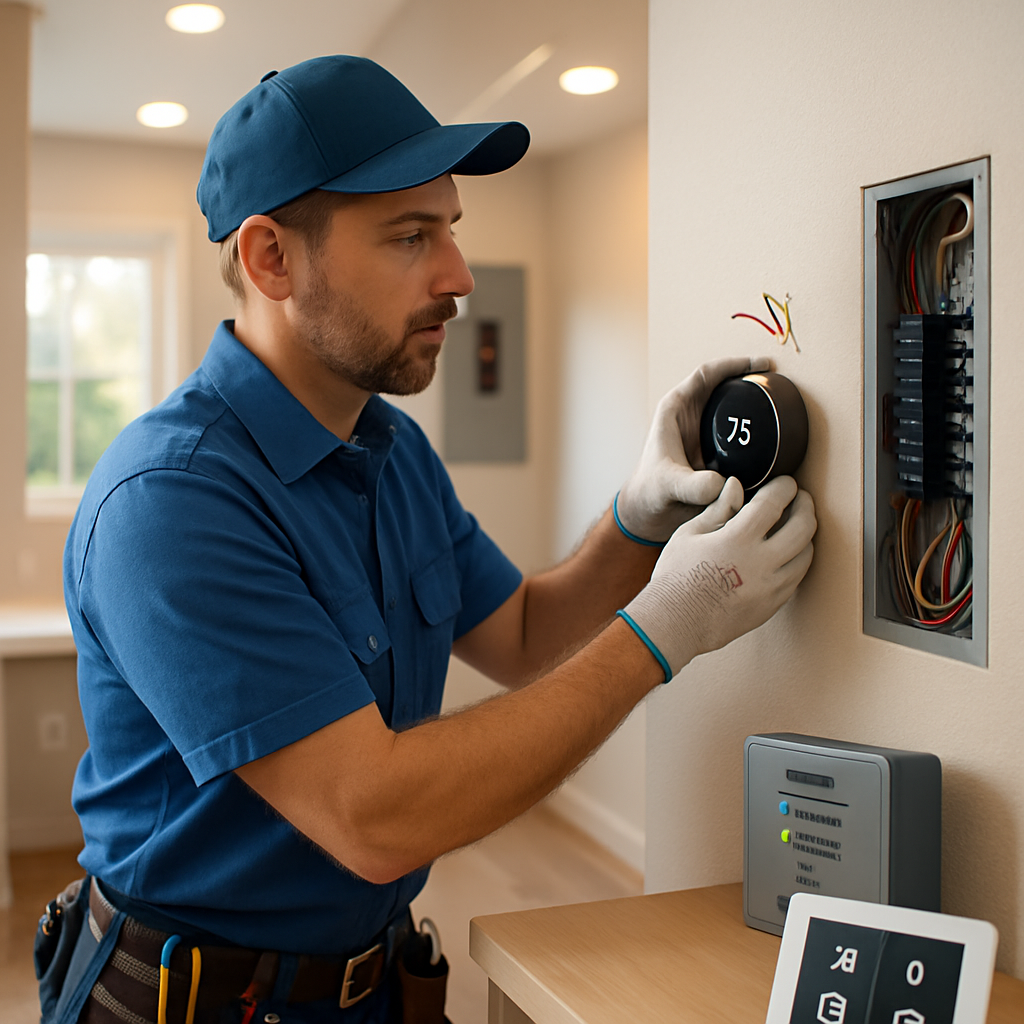
Google Local Services Ads, Search Ads, and retargeting can work well when they are tied to:
- A clear list of services you want to promote.
- Defined ZIP codes, cities, or neighborhoods.
- A fast call-answering and follow-up process.
- Accurate call, form, and booking tracking.
- Landing pages that match what the ad promises.
If an ad promotes same-day electrical service but sends visitors to a generic homepage with no clear phone number, service details, or availability, you may pay for traffic that never becomes a job.
Reviews and Referrals Turn Past Work Into Future Work
Every completed job can help create the next one. Ask satisfied customers for a review, make it easy for them to leave it, and respond professionally to both positive and negative feedback.
Save before-and-after photos when appropriate. Keep relationships with complementary trades, real estate agents, property managers, and local business owners who may encounter homeowners with needs that fit your services.
For example, a landscaper may build relationships with real estate professionals preparing homes for sale. A plumber may receive referrals from restoration companies. An electrician may partner with remodelers. A home security installer may connect with smart-home, low-voltage, and home-improvement professionals.
Lead Platforms Can Fill Specific Gaps
Lead platforms can give contractors another way to reach homeowners who are ready to request quotes or schedule service. They may be especially useful when you want to test a new service area, add work during a slow season, or generate more opportunities for a specific service line.
For example, a pest control company may test leads in a nearby ZIP code during peak season. A landscaping company may look for spring cleanup or hardscaping requests. An HVAC contractor may want more tune-up appointments during a shoulder season. A home security installer may test demand for camera, alarm, and smart-lock installation.
Track the quality of those opportunities closely. More inquiries do not always mean more revenue. The right platform should send requests that fit your trade, service area, schedule, and target job size.
Do Not Add Channels Randomly
More lead sources do not automatically solve a lead problem. Adding too many channels at once can stretch your budget, confuse your tracking, and overwhelm an office team that is already slow to answer calls or follow up on estimates.
Start With the Jobs You Want More Of
Before testing a new channel, define the work you actually want.
- Which services have the best margins?
- Do you want more repair work, maintenance, replacements, installations, or larger projects?
- Are you focused on residential work, commercial work, or both?
- Which cities, ZIP codes, or neighborhoods are most profitable to serve?
- Do you have open capacity now, or are you planning for a future season?
- What job sizes are worth your team’s time?
An HVAC company trying to fill maintenance appointments during spring or fall may test email reminders, tune-up offers, and platform leads for nearby ZIP codes. A plumber looking for larger repipe or water-heater jobs may focus on service-page content, search ads, and partnerships with remodelers. A landscaper trying to book more hardscaping work may invest in project photos, referrals, and local ads instead of broad, low-intent lawn-care leads.
Fix Conversion Leaks Before Buying More Leads
Before spending more on lead generation, look at what happens after a homeowner contacts you. Missed calls, slow response times, outdated service details, forms that go nowhere, delayed estimates, and inconsistent follow-up can waste leads from every channel.
If your team cannot respond quickly and follow up consistently, more leads may simply mean more missed opportunities. The same is true when reviews are weak, your Google Business Profile is outdated, or homeowners cannot quickly understand what you do and where you work.
Contractors should also pay attention to the difference between lead volume and lead quality. More leads do not always mean more revenue. Read more about why qualified leads matter more than lead volume when evaluating new marketing channels.
Test One Channel at a Time
A simple testing process makes it easier to see what is actually working.
- Choose one new channel based on a specific goal, such as more HVAC tune-ups, electrical panel upgrades, pest control jobs, or landscaping projects.
- Set a test budget and time frame before you begin.
- Define the service area, job types, and lead quality you want.
- Track every lead from first contact through booked job.
- Review the results based on booked revenue and gross profit, not lead count alone.
- Keep, improve, pause, or expand the channel based on the results.
How to Measure Whether a Lead Source Is Working
Cost per lead is an early metric, not the final answer. A low-cost lead is only useful if it becomes a job your company wants and can complete profitably.
Track each lead source through the full process:
- Total leads received.
- Contact rate.
- Response time.
- Qualified-lead rate.
- Appointment or estimate rate.
- Booking rate.
- Close rate.
- Cost per qualified lead.
- Cost per booked job.
- Average job value.
- Gross profit by lead source.
- Cancellation rate.
- Repeat-business potential.
- Time required from your office and sales team.
For example, a channel that produces 20 inexpensive leads but only one small job may be worse than a channel that produces five higher-cost leads and two profitable system replacements. The better source is the one that delivers more gross profit after you account for marketing costs, sales time, labor, materials, and overhead.
Build a Lead Mix Around Your Capacity
Your marketing plan should match what your team can actually handle. Do not promote a service you cannot schedule promptly. Do not send every new lead to one overloaded technician or an office manager who is already handling calls, estimates, billing, and dispatch.
Shift your effort toward the work you need most at a given time. During a slow HVAC season, you may want more maintenance appointments or replacement estimates. During a busy landscaping season, you may focus on high-margin projects instead of every small request. An electrician may prioritize panel upgrades, generator work, EV chargers, or commercial jobs based on crew availability.
Focus on profitable service areas, too. It is easy to chase every nearby city, but long drive times, low job values, and poor-fit leads can hurt profitability. The best lead source is one that helps your company book the right jobs in the right locations at the right time.
The Goal Is a More Predictable Pipeline
You do not need to replace the lead source that is working for you today. You need backup when it slows down.
Keep your referral process strong. Continue investing in your Google Business Profile, reviews, website, and local visibility. Use paid ads when you need to capture immediate demand. Reactivate past customers with maintenance reminders, email, or text. Test carefully selected platforms that can bring in additional homeowner opportunities.
When your business has several sources working together, one quiet channel does not have to mean a quiet month.
Try My Licensed Contractor as a New Lead Channel
My Licensed Contractor gives home service and building-trades businesses another way to reach homeowners who are looking for help with projects, repairs, installations, and maintenance. Electricians, HVAC companies, plumbers, landscapers, pest control providers, home security installers, roofers, and other licensed contractors can use the platform as an additional source of homeowner leads.
You can claim a free My Licensed Contractor profile and begin testing the platform as part of your lead-generation mix. A free profile gives homeowners another place to find your business and submit requests for the services you provide.
If the channel performs well for your company, you can choose to upgrade for priority or exclusive leads in the ZIP codes and service categories that matter most to you. That gives you a way to start small, measure the quality of the leads, and decide whether expanding your coverage makes sense.
Claim your free profile today and see whether My Licensed Contractor can become a reliable new source of leads for your business.
Frequently Asked Questions
How many lead sources should a contractor use?
There is no perfect number, but many home service contractors benefit from a mix of three to five channels that serve different purposes. That may include owned channels such as your website and Google Business Profile, referrals and reviews, one paid channel, customer reactivation, and a lead platform. Start with what fits your goals and capacity, then add new sources one at a time.
Should I stop using referrals if I diversify?
No. Referrals are often among the highest-trust and lowest-cost leads a contractor can receive. Diversifying means adding other dependable sources so a slow referral month does not become a slow revenue month. Keep your referral process strong while testing other channels.
Why is a low cost per lead not enough to judge a channel?
A cheap lead only helps if it turns into a booked, profitable job. Some leads never answer the phone, only compare prices, fall outside your service area, or request work you do not want. Track booking rate, close rate, average job value, and gross profit to understand which channels truly make your business money.
How long should I test a new lead channel?
Set a defined test period and budget that give you enough time to collect useful data. Track each lead from the first call or form submission through the booked job. Once you understand the cost per booked job, lead quality, close rate, and profit, you can decide whether to keep, improve, pause, or expand the channel.
Can My Licensed Contractor send leads for my trade?
My Licensed Contractor is designed to connect homeowners with licensed home service and building-trades professionals. Contractors can claim a free profile and use the platform as another lead source. If the platform is a good fit for your business, you can explore priority or exclusive lead options for selected service areas and ZIP codes.
Find a Licensed Contractor
Connect with pre-screened, licensed contractors in your area.
Submit Your Project
Find Local Contractors
Connect with licensed, verified contractors in your area for your next project.
Submit Your Project