

Licensed Electricians in Madison, IN for Historic Homes and Modern Upgrades
Key Takeaways
- Older Madison homes often need panel, wiring, and outlet updates to keep up with modern electrical demand safely.
- Many electrical projects in Madison, Jefferson County, and across Indiana require permits, and some work may also involve coordination with Duke Energy or CenterPoint Energy.
- My Licensed Contractor helps homeowners enter project details and get matched with a vetted and licensed electrician through My Licensed Contractor.
| Topic | Contact / Link |
|---|---|
| Building Department | Madison Building Department |
| Planning / Preservation / Design Office | Planning, Preservation & Design Office, 101 W Main St, Madison, IN 47250, Phone: (812) 265-8324 |
| Electrical Permit Application | Apply for a Permit |
| Utility | Duke Energy, Phone: 800-777-9898 |
| Other Area Utility | CenterPoint Energy, Phone: 800-777-2060 |
Electrical problems in Madison homes tend to show up first in the older neighborhoods, where houses built decades ago are still running on their original wiring, fuse boxes, or panels that were never meant to handle a modern household's electrical load. Whether you're in a historic property near the riverfront or a mid-century home further inland, the gap between what your home was built for and what you need today can create real safety concerns.
Many Madison homeowners want to preserve the character of their homes while still updating the systems inside. That balance is possible, but it requires an electrician who understands how to work with older structures without compromising what makes them worth keeping.
If you're dealing with an electrical issue or planning an upgrade, My Licensed Contractor lets you enter your project details and get matched with a vetted, licensed electrician in Madison who can handle the work properly through My Licensed Contractor.
Common Electrical Problems in Madison Homes
Some electrical problems are easy to spot, and some stay hidden until something goes wrong. The following are among the most common issues that come up in Madison homes, particularly in houses that haven't had significant electrical work done in the last twenty or thirty years.
Flickering Lights and Tripping Breakers
Lights that flicker when you turn on a large appliance usually point to a circuit that's being asked to carry more load than it was designed for. When a breaker trips every time you run the microwave or the dryer, that's the panel telling you the circuit is overloaded. These are solvable problems, but they tend to get worse over time if you just reset the breaker and move on.
Dead Outlets, Warm Switches, and Buzzing Sounds
An outlet that stops working, a light switch that feels warm to the touch, or a buzzing sound coming from an outlet or panel are all signs that something in the wiring or connections needs attention. Warm switches and buzzing sounds in particular can point to loose wiring or connections that are arcing, which is a fire risk.
GFCI Trips and Connected Outlets
In many older homes, multiple outlets are wired to a single GFCI outlet, usually the one in a bathroom or kitchen. When that GFCI trips, every outlet connected to it goes dead too. Homeowners often don't realize this is why outlets in other rooms have stopped working. Pressing the reset button on the GFCI usually restores power, but if it keeps tripping, that's a sign of a wiring problem that needs to be looked at.
Why These Issues Are More Common in Older Homes
In a home built in the 1940s, 1950s, or 1960s, the wiring was designed for a fraction of the appliances and devices most households use now. A newer home with modern wiring and a properly sized panel is less likely to have these problems because the system was built around today's electrical demands. The symptoms listed above are often how you find out that an older system has reached its limit.
Older Systems and Unsafe DIY Work
Madison has a significant number of homes with electrical systems that were never updated from their original installation. Some of these systems are simply outdated, and some are genuinely unsafe. It helps to know what you might be dealing with before you call an electrician.

Fuse Boxes and Knob-and-Tube Wiring
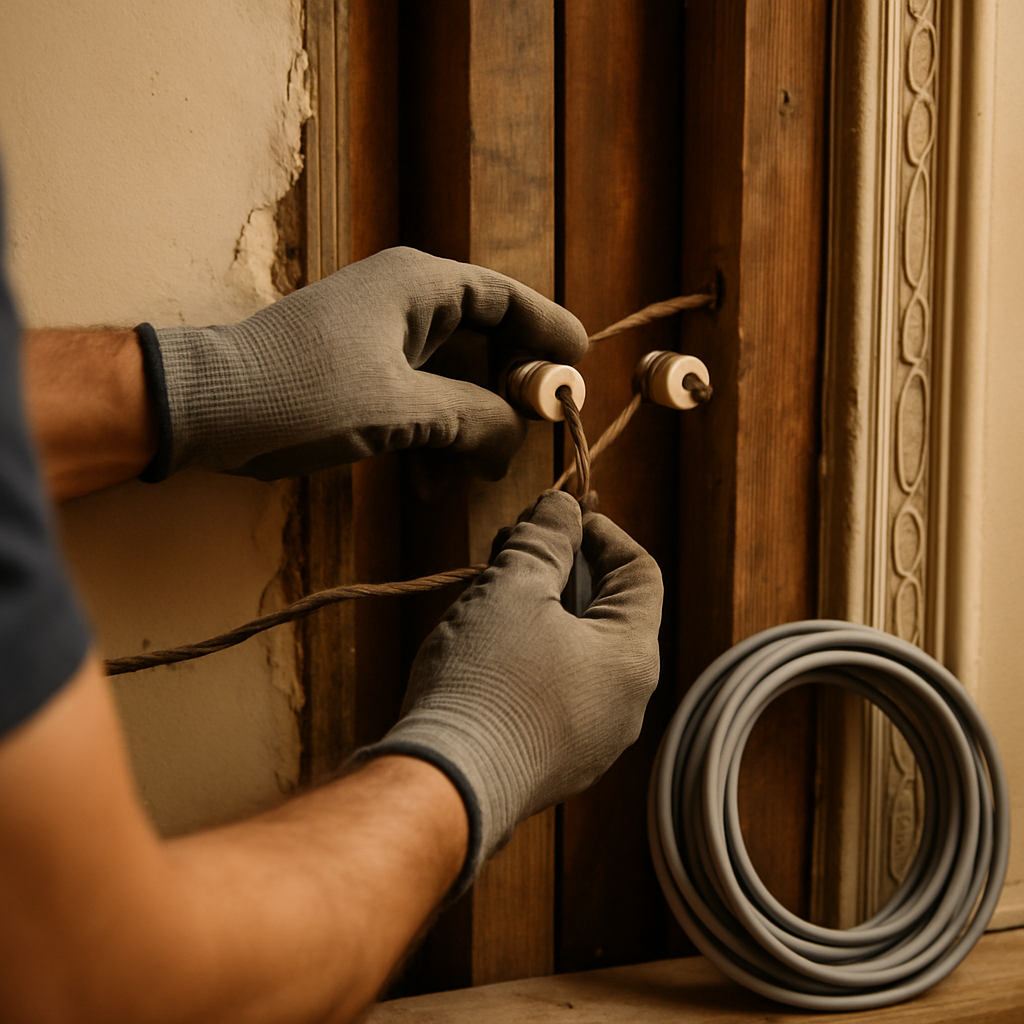
Homes built before the 1950s may still have knob-and-tube wiring, which runs through the walls without a ground wire and with no protection against moisture or contact with insulation. Fuse boxes, which were standard before circuit breakers became common, are not necessarily dangerous on their own, but they're often a sign that the rest of the electrical system is equally old. Both of these systems can still function, but they're difficult to insure and can't be expanded safely to handle modern loads.
Aluminum Wiring
Some homes built in the late 1960s and into the 1970s were wired with aluminum instead of copper. Aluminum wiring expands and contracts more than copper, which can loosen connections over time. Those loose connections are a fire risk, especially at outlets and switches. If your home was built during that period and hasn't been inspected recently, it's worth having an electrician check whether the connections are still secure or whether the wiring needs to be addressed.
Unpermitted DIY Fixes and Past Remodels
A lot of older Madison homes have had work done over the years by previous owners, and not all of it was permitted or done to code. A bathroom addition, a finished basement, or a garage conversion might look fine from the outside but could have wiring that was done incorrectly or that hasn't been inspected. When you hire an electrician to do new work, they may find problems left behind by earlier projects. That's not a reason to avoid calling one. It's a reason to get a full evaluation before adding more to a system that may already have issues underneath.
The Risk of Patching Without Evaluating
It's tempting to fix only what's visibly broken, but older electrical systems often have problems that aren't obvious until something else fails. Replacing one breaker or patching one outlet without looking at the broader system can leave you in a situation where the fix didn't address the actual cause. A licensed electrician can assess the full system and tell you what needs immediate attention versus what can wait.
Repairs and Upgrades That Fit Madison Homes
Whether you're dealing with a specific problem or planning ahead for a renovation, there are several common upgrades that come up regularly for homes in Madison. The sections below cover the ones that come up most often.
Panel Upgrades from 100 to 200 Amps
Many older Madison homes came with 100-amp service, which was adequate when the home was built but falls short for households running central air conditioning, electric dryers, and multiple devices at once. Upgrading to a 200-amp panel gives you more capacity and more space to add circuits as needed. This is one of the more common upgrades in this area because so many homes were built before high-draw appliances became standard.
Dedicated Circuits for Specific Rooms and Equipment
Kitchens, laundry rooms, home offices, and workshops all benefit from dedicated circuits. A dedicated circuit means one breaker is assigned to that specific outlet or appliance, so running the washing machine doesn't affect anything else in the house. If you've finished a basement or converted a space for a different use, adding dedicated circuits for that area is usually part of doing the job right.
Outlet and Wiring Upgrades
Two-prong outlets in older homes can be replaced with grounded three-prong outlets, which is safer and more practical. GFCI outlets are required by code in bathrooms, kitchens, and any area near water, and older homes often don't have them in all the right locations. If you're planning any renovation work, it's a good time to bring the wiring in affected areas up to current code while the walls are open.
EV Charger Installation
More Madison homeowners are adding home EV charging stations. A Level 2 charger requires a 240-volt dedicated circuit, which most older homes don't already have in the garage. An electrician can assess whether your current panel has capacity for the additional load or whether you need a panel upgrade first. Indiana utility customers may be able to access rebates through their utility provider for EV charger installation, so it's worth checking with your utility before scheduling the work.
Whole-Home Surge Protection
Power surges can damage appliances and electronics, and they don't only happen during storms. Surges can occur when large appliances cycle on and off inside your home. A whole-home surge protector installs at your panel and protects everything connected to the system, which is a practical addition if you have newer appliances or electronics you want to protect.
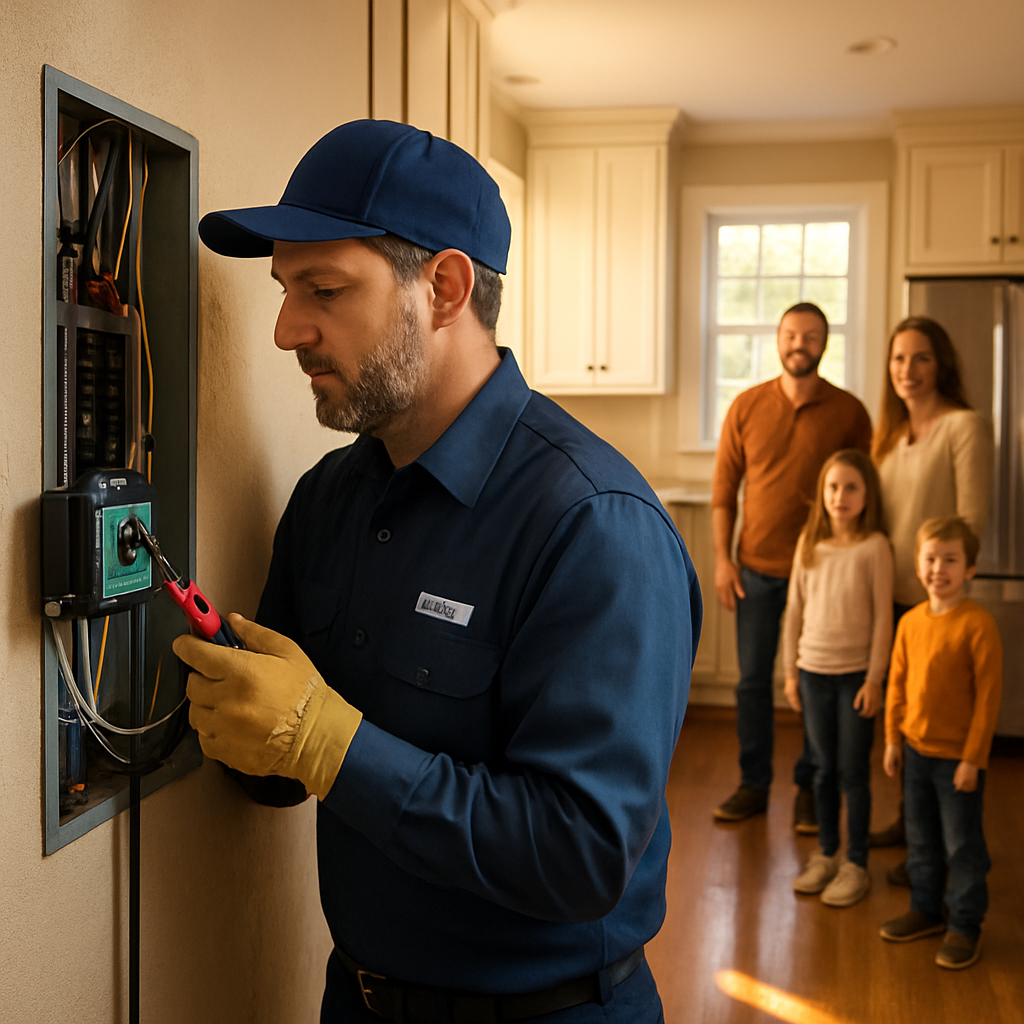
Generator Hookups
Power outages in Madison can come from storms, and a generator transfer switch allows you to run a generator safely without backfeeding into the utility lines. This is a safety requirement. An electrician can install a transfer switch or a subpanel that lets you power specific circuits from a generator when the main power is out.
Permits, Historic Properties, and Utility Coordination
Most electrical work in Madison requires a permit from the city, including panel upgrades, new circuit installation, service changes, and any work that affects the structure of the wiring. Permits exist so that an inspector can verify the work was done correctly before it's closed up behind walls. The electrician will usually pull the permit, but some homeowners like to start the process early if they're planning a renovation, coordinating multiple trades, or want to understand the city requirements before work begins.
For Madison homes in historic districts or properties that may need preservation review, it can help to check with the Planning, Preservation & Design Office before starting exterior or visible changes. Some projects may need additional approval if they affect character-defining features. That is especially important when electrical work involves exterior fixtures, service equipment, or other changes that could alter the look of a historic home.
Some projects also require coordination with the utility, especially if the meter, service entrance, or disconnect/reconnect is involved. That can apply to panel replacements, service upgrades, generator-related work, and certain remodeling projects. A licensed electrician can usually handle that coordination, which helps keep the project moving.
If you're dealing with a full power outage in Madison, that is usually a utility issue and should be reported to Duke Energy at 800-777-9898 or to CenterPoint Energy at 800-777-2060 where applicable. If only part of the home has lost power, the issue is more likely inside the house — such as a tripped breaker, a failed outlet, or a wiring problem — and that is where an electrician comes in.
What to Expect When You Hire an Electrician
Before any work starts, the electrician should walk through what they found during their assessment and explain what they're recommending and why. A panel upgrade, for example, involves disconnecting the main power to the home, replacing the panel and breakers, and having the work inspected. You should know roughly how long that will take and what access to your home they'll need.
For smaller jobs like outlet replacements or adding a circuit, the work can often be done in a few hours. More involved projects, like rewiring a section of the home or running new circuits through finished walls, take longer and may require opening up drywall or plaster in some areas. A good electrician will give you a clear picture of what's involved before the work begins so there are no surprises.
Licensing matters because it tells you the electrician has met Indiana's requirements for electrical work. You can verify an electrician's license through the Indiana Professional Licensing Agency before you hire. A vetted electrician through My Licensed Contractor has already been checked, which removes some of the uncertainty from the process.
If you're ready to get started, My Licensed Contractor can help homeowners enter project details and get matched with a vetted and licensed electrician in Madison, IN. The platform makes it simple to move from planning to action without sorting through unverified listings through My Licensed Contractor.
Frequently Asked Questions
How do I know if my home needs a panel upgrade in Madison, IN?
If your breakers trip regularly when you run appliances, if you have a fuse box instead of a circuit breaker panel, or if your panel is rated for 100 amps and you're adding high-draw appliances, those are signs that a panel upgrade is worth considering. An electrician can assess your current panel and tell you whether it's adequate for your Madison home.
Is knob-and-tube wiring dangerous in a Madison home?
Knob-and-tube wiring isn't automatically dangerous if it's in good condition and hasn't been modified, but it lacks a ground wire and can't be buried in insulation safely. Many insurers won't cover homes with active knob-and-tube wiring, or they charge higher rates. If you have it in your Madison property, getting an inspection is a reasonable first step.
Do I need a permit for outlet replacement in Madison, Jefferson County, and Indiana?
Simple outlet replacements typically don't require a permit, but adding new outlets, upgrading to GFCI outlets where they didn't exist before, or any work that involves running new wiring usually does. Your electrician can tell you what permits apply to your specific project before the work starts.
Can an electrician work in my historic Madison home without damaging the walls?
Yes, though it depends on how much work is involved. Running new circuits through plaster walls requires some access points, but an experienced electrician working in older Madison homes knows how to minimize damage and work through existing access routes where possible. You should discuss this directly during the initial assessment.
What does a Level 2 EV charger installation involve in Madison, IN?
A Level 2 charger requires a 240-volt dedicated circuit, which an electrician runs from your panel to the location of the charger, typically in a garage. If your panel doesn't have capacity for an additional 240-volt circuit, you may need a panel upgrade first. The installation itself is usually completed in a few hours once the electrical capacity is confirmed.
How do I verify that an electrician is licensed in Indiana?
You can check license status through the Indiana Professional Licensing Agency's online lookup tool. A licensed electrician in Indiana holds a valid state electrical contractor license, and you can confirm this before hiring. Electricians matched through My Licensed Contractor have already been vetted for licensing.
What should I do if only part of my Madison home loses power?
If only part of the house is without power, the problem is often a tripped breaker, a tripped GFCI, or a wiring issue inside the home. That is different from a whole-home outage and usually means you should call an electrician rather than the utility.
Who should I contact for a full power outage in Madison?
If your entire home or neighborhood is without power, that is usually a utility outage. In Madison, contact Duke Energy at 800-777-9898 or CenterPoint Energy at 800-777-2060 if that is your provider.
Do historic district homes in Madison need extra approval for electrical work?
Some visible or exterior changes may need additional review if your home is in a designated historic area. The Planning, Preservation & Design Office can help clarify whether your project needs preservation review before the permit is submitted.
Can My Licensed Contractor help me find the right electrician for my Madison project?
Yes. My Licensed Contractor helps homeowners enter project details and get matched with a vetted and licensed electrician for repairs, upgrades, and utility-coordinated work in Madison, IN and Jefferson County. Start by submitting your project through My Licensed Contractor.
Whether you're planning a repair, a panel upgrade, or a larger remodel, My Licensed Contractor can help you get matched with a vetted and licensed electrician who understands Madison, Jefferson County, and Indiana electrical requirements. Enter your project details through My Licensed Contractor to get started.
Nearby Cities in Indiana
Ready to Find a Licensed Contractor?
Connect with pre-screened, licensed contractors in your area.
Submit Your ProjectGet Matched Instantly
Tell us about your project and we'll connect you with licensed, verified contractors in your area.
Submit Your ProjectFind Contractors Near You
Get Matched Instantly
Tell us about your project and we'll connect you with licensed, verified contractors in your area.
Submit Your ProjectFind Contractors Near You