

Your Portland IN Guide to Electrical Inspections, Repairs and More
Key Takeaways
- My Licensed Contractor connects Portland homeowners, landlords, rural-property owners, and small-business owners with qualified electricians for repairs, upgrades, inspections, and installations.
- Breaker trips, buzzing panels, flickering lights, dead outlets, burning smells, hot switches, and partial power loss can signal electrical problems that need professional diagnosis.
- Electrical work in Portland often includes older-home upgrades, detached garages and outbuildings, sump-pump circuits, workshops, agricultural or rural-property needs, backup-power connections, and modern appliance loads.
- Panel replacement is only one possible solution; an electrician may recommend a targeted repair, dedicated circuit, subpanel, rewiring, surge protection, or service upgrade after evaluating the full system.
- The City of Portland Building & Zoning Department and Jay County Building & Planning resources help oversee local permitting and inspections. Confirm requirements for the specific property address and project scope before work begins.
Local Permit & Utility Resources
| Organization | What It Helps With | Contact |
|---|---|---|
| City of Portland Building & Zoning Department | City and County building and zoning permits, plan review, inspections, project questions, and permit-fee information |
City of Portland Building & Zoning Department 118 S. Meridian St., Suite E, Portland, IN 47371 260-726-6904 |
| Jay County Building & Planning | County-level building and zoning guidance, inspections, and planning resources for projects under Jay County jurisdiction |
Jay County Building & Planning 118 S. Meridian St., Suite E, Portland, IN 47371 260-726-6904 |
| Indiana Michigan Power | Electric-service questions, outages, service coordination, and utility requirements for customers in its service territory |
Indiana Michigan Power Customer service: 800-311-4634 |
| Jay County REMC | Electric-service, outage, meter, and service-upgrade questions for properties served by the cooperative |
Jay County REMC 260-726-7121 or 800-835-7362 |
Permit requirements, inspection procedures, utility service territories, project fees, and service-entrance requirements can vary by property address and work scope. Confirm current requirements directly with the appropriate local department and serving utility before starting an electrical project.
Electrical Repairs, Upgrades & Installations in Portland, IN
Portland, Indiana and the surrounding Jay County area include established in-town homes, rental properties, rural residences, farms, detached garages, workshops, outbuildings, and small businesses. These properties can have very different electrical needs. An older home with original wiring may need a safety evaluation or new circuits, while a rural property may need properly planned service for a detached building, pump, workshop, grain-handling equipment, or backup generator.
Many Portland homes were built decades ago, when household electrical demand was much lower. A modern home may run a refrigerator, microwave, dishwasher, coffee maker, central air conditioner, computer equipment, chargers, televisions, sump pump, laundry appliances, and other electronics at the same time. Older circuits and panels may not have been designed to support that level of demand.
Whether you are troubleshooting a tripping breaker, planning an EV charger, replacing an aging electrical panel, wiring a detached garage, or preparing for a renovation, electrical work should start with diagnosis and planning. A qualified electrician can evaluate the condition of the system, identify the cause of a problem, and recommend an appropriate repair or upgrade.
My Licensed Contractor connects Portland homeowners, landlords, rural-property owners, and local businesses with qualified electricians for repairs, safety inspections, rewiring, panel work, dedicated circuits, generators, lighting, EV chargers, and other electrical projects.
Book a contractor online when you are ready to discuss your project. If you have smoke, active sparking, an electrical fire, or another immediate danger, call 911 first. For burning smells, hot outlets, repeated breaker trips, or other urgent electrical concerns, seek professional electrical help promptly rather than waiting for a routine appointment.
Common Electrical Problems in Portland Homes
Electrical issues can begin with a small symptom, such as an outlet that stops working or a light that flickers when an appliance starts. The visible symptom is not always the underlying cause. A professional electrician can trace the issue to the circuit, outlet, switch, panel, wiring connection, appliance, or service equipment and recommend a solution based on the actual condition of the system.
Breakers That Trip Repeatedly
A breaker that trips once after an unusual electrical load may be doing exactly what it is designed to do. A breaker that trips repeatedly under normal use is different. It may indicate an overloaded circuit, a damaged appliance, a failing breaker, a loose connection, a short circuit, or a ground fault.
Older Portland homes often have fewer circuits than modern households need. Kitchens, laundry areas, garages, home offices, and basement spaces can become overloaded when multiple appliances and devices share the same branch circuit. An electrician can determine whether the best solution is a repair, a new dedicated circuit, a breaker replacement, a subpanel, or a panel-capacity evaluation.
Flickering or Dimming Lights
Flickering lights can be caused by a loose bulb, a failing fixture, a dimmer compatibility issue, a loose connection, a circuit problem, or a service-capacity concern. If lights dim when the air conditioner starts, the sump pump cycles, a microwave runs, or workshop equipment turns on, the home may need a circuit or load evaluation.
Flickering that affects multiple rooms, occurs without an obvious trigger, or happens alongside breaker trips, buzzing, warm outlets, or partial power loss should be professionally evaluated. An electrician can determine whether the issue is isolated to a fixture or tied to a larger wiring, panel, or service problem.
Dead Outlets and Non-Functional Switches
A dead outlet may be connected to a tripped GFCI outlet elsewhere on the circuit. It can also indicate a damaged receptacle, loose wiring connection, failed switch, broken conductor, or a problem farther along the circuit. Switches that do not respond consistently, feel warm, make unusual sounds, or show discoloration should be inspected promptly.
Do not assume that replacing an outlet cover or plugging into another receptacle solves the issue. A qualified electrician can identify whether the problem is limited to one device or affects the circuit more broadly.
Burning Smells, Hot Outlets, and Warm Switch Plates
A burning odor near an outlet, electrical panel, switch, fixture, or appliance can indicate overheating, damaged wiring, or a loose connection. Hot outlets, melted plastic, discoloration, charring, scorch marks, and warm switch plates are also warning signs that should not be ignored.
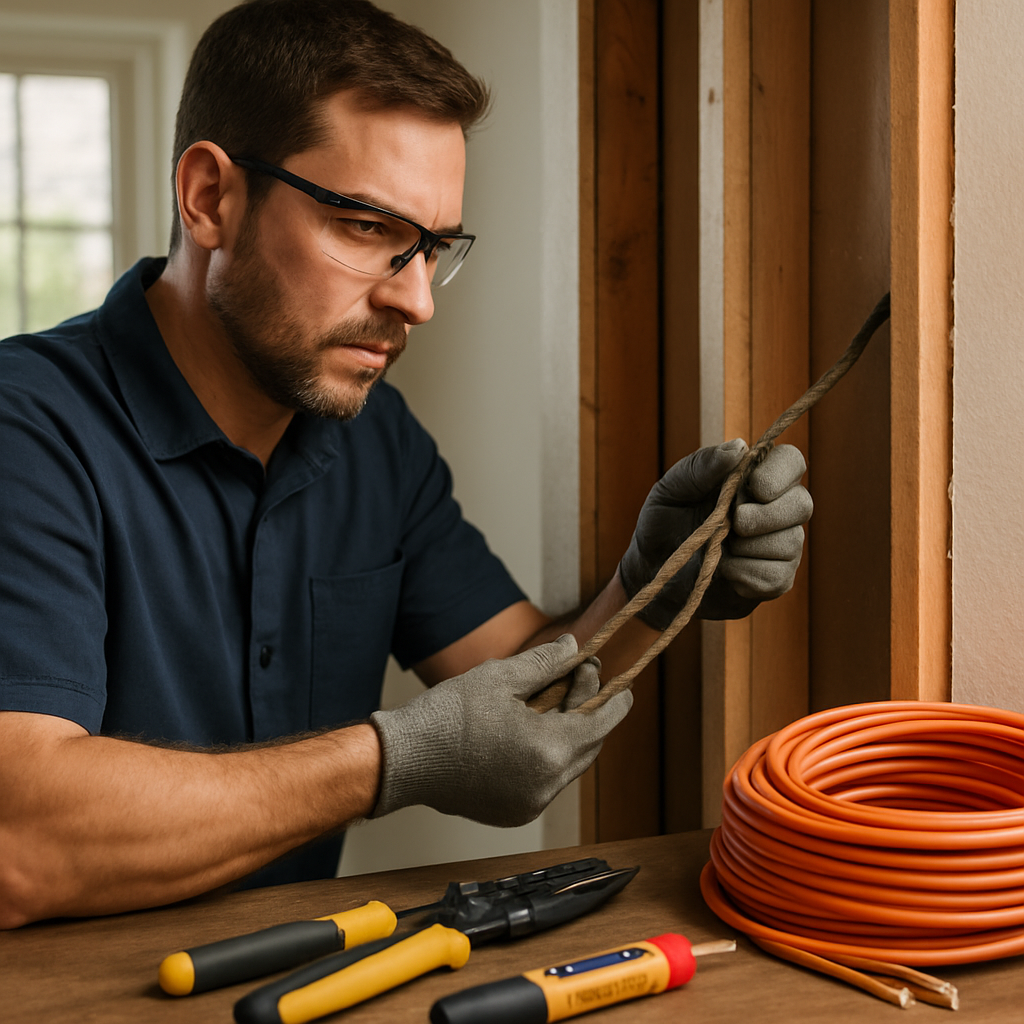
Stop using the affected outlet, switch, appliance, or circuit. If it is safe to do so, turn off the affected breaker without touching hot, damaged, or sparking equipment. Call 911 for fire, smoke, active sparking, or immediate danger. Otherwise, contact an emergency electrician as soon as possible.
For more guidance on problems that deserve urgent professional attention, read 7 signs you need same-day home repair help.
Partial Power Loss
If one area of your home loses power while other areas remain energized, the problem may be a failed breaker, loose wiring connection, damaged circuit, panel issue, or service-related condition. A partial power loss can be especially concerning if it affects multiple rooms, major appliances, or equipment such as a sump pump, refrigerator, well pump, or HVAC system.
Contact your utility if the issue appears related to a neighborhood outage, damaged service line, or meter-side problem. For a home-specific electrical failure, contact a qualified electrician to inspect the panel, circuits, and accessible connections.
Electrical Upgrades for Older Portland Homes
Older homes can be comfortable, valuable properties, but their electrical systems may need upgrades to support modern appliances, safety protections, and daily power demand. A professional evaluation can help homeowners distinguish between a minor repair, a targeted wiring upgrade, a new dedicated circuit, a panel replacement, and a full service upgrade.
Fuse Boxes and Outdated Electrical Panels
Some older homes still have fuse-based electrical equipment or breaker panels with limited capacity, crowded circuits, damaged components, corrosion, poor labeling, or little space for additional breakers. Fuses and older panels are not automatically unsafe because of age alone, but they should be evaluated when the home has recurring electrical symptoms, limited capacity, or plans for major upgrades.
Replacing an outdated panel can improve circuit organization, add space for new breakers, support surge protection, and make future upgrades easier. In some cases, the electrician may also recommend a service upgrade, new meter equipment, grounding improvements, or utility coordination.
When to Request a Panel or Service-Capacity Evaluation
- Breakers trip regularly or fail to stay reset
- The panel feels warm, makes unusual noises, shows corrosion, or appears damaged
- Your home has a fuse box or limited breaker space
- You are adding an EV charger, electric range, heat pump, mini-split, hot tub, workshop, or major appliance
- You are remodeling a kitchen, finishing a basement, building an addition, or converting a garage
- Your home has 60-amp or 100-amp service that may not support planned electrical demand
- An electrician identifies equipment with known reliability concerns or unsafe modifications
A 200-amp service can be appropriate for many modern homes, but not every Portland property needs one. An electrician should perform a load calculation that considers existing appliances, heating and cooling equipment, household demand, detached structures, future improvements, and any planned electrical equipment.
For more project-planning information, read panel replacements: when to upgrade, what it costs, and what to expect and electrical upgrades for homeowners and small businesses.
Knob-and-Tube Wiring
Knob-and-tube wiring is an older ungrounded wiring method that may still be found in some historic homes. It was not designed for the electrical loads, insulation practices, grounded appliances, and safety protections used in modern homes. An electrician can evaluate accessible wiring and explain whether the property needs targeted upgrades, a phased replacement plan, or full rewiring.
Aluminum Branch-Circuit Wiring
Aluminum branch-circuit wiring was used in some homes built during the late 1960s and 1970s. Aluminum wiring is not automatically unsafe, but it requires devices, connectors, and installation methods rated for that use. Loose or improperly modified aluminum connections can overheat over time.
An electrician can inspect accessible connections, evaluate outlets and switches, and recommend appropriate repairs or remediation based on the home’s wiring condition.
Whole-Home and Partial Rewiring
Whole-home rewiring may be appropriate when wiring is aging, damaged, improperly modified, ungrounded, or unable to support modern household use. In other homes, a partial upgrade may be enough. An electrician may recommend replacing damaged wiring, upgrading certain circuits, adding grounded outlets, improving GFCI or AFCI protection, or installing dedicated circuits for specific equipment.
Electrical work can create serious fire and shock hazards when completed without appropriate skills, tools, materials, permits, and inspections. Before attempting work yourself, review what electrical jobs homeowners can actually DIY.
Electrical Work for Farms, Garages, Workshops & Outbuildings
Portland and the surrounding Jay County area include homes with detached garages, workshops, pole buildings, barns, storage structures, agricultural operations, and other outbuildings. These projects need thoughtful electrical planning because the distance from the main service, equipment demand, moisture exposure, vehicle traffic, and future expansion can all affect the design.
Detached Garage and Workshop Wiring
A detached garage or workshop may need lighting, GFCI-protected outlets, garage-door opener power, welding equipment circuits, compressor circuits, tool circuits, heating or ventilation circuits, EV charger readiness, or a subpanel for multiple branch circuits.
Permanent wiring is safer and more practical than relying on extension cords for workshop tools, equipment, lighting, or seasonal use. An electrician can evaluate the intended use of the structure and plan the feeder, circuit capacity, outlet locations, grounding, lighting, and future expansion needs.
Barns, Pole Buildings, and Agricultural Structures
Electrical work on rural and agricultural properties may involve lighting, weather-protected receptacles, pumps, motors, equipment circuits, subpanels, outdoor disconnects, trenching, and underground feeders. The appropriate design depends on the building’s use, load requirements, environment, equipment type, and utility service.
Grain equipment, irrigation pumps, ventilation equipment, motors, compressors, and other agricultural loads may need dedicated circuits and properly sized wiring. Electrical equipment exposed to moisture, dust, animals, vehicles, or outdoor conditions should be selected and installed for that environment.
Sump Pumps, Well Pumps, and Essential Equipment
Sump pumps and well pumps can be critical during severe weather and heavy rainfall. A dedicated circuit can help reduce the risk that a separate appliance or overloaded receptacle disrupts operation. Depending on the property, homeowners may also consider alarms, battery backup, surge protection, or generator planning for essential equipment.
After a flood, water intrusion event, or electrical equipment exposure to moisture, schedule an inspection before relying on the affected circuits or equipment again.
Exterior Lighting and Outdoor Power
Outdoor electrical projects can include driveway lighting, pathway lighting, deck and patio outlets, exterior GFCI receptacles, security lighting, landscape lighting, outdoor kitchens, hot tubs, and seasonal lighting. Weather-rated materials, proper covers, suitable wiring methods, and correctly installed GFCI protection all matter for a safe, durable installation.
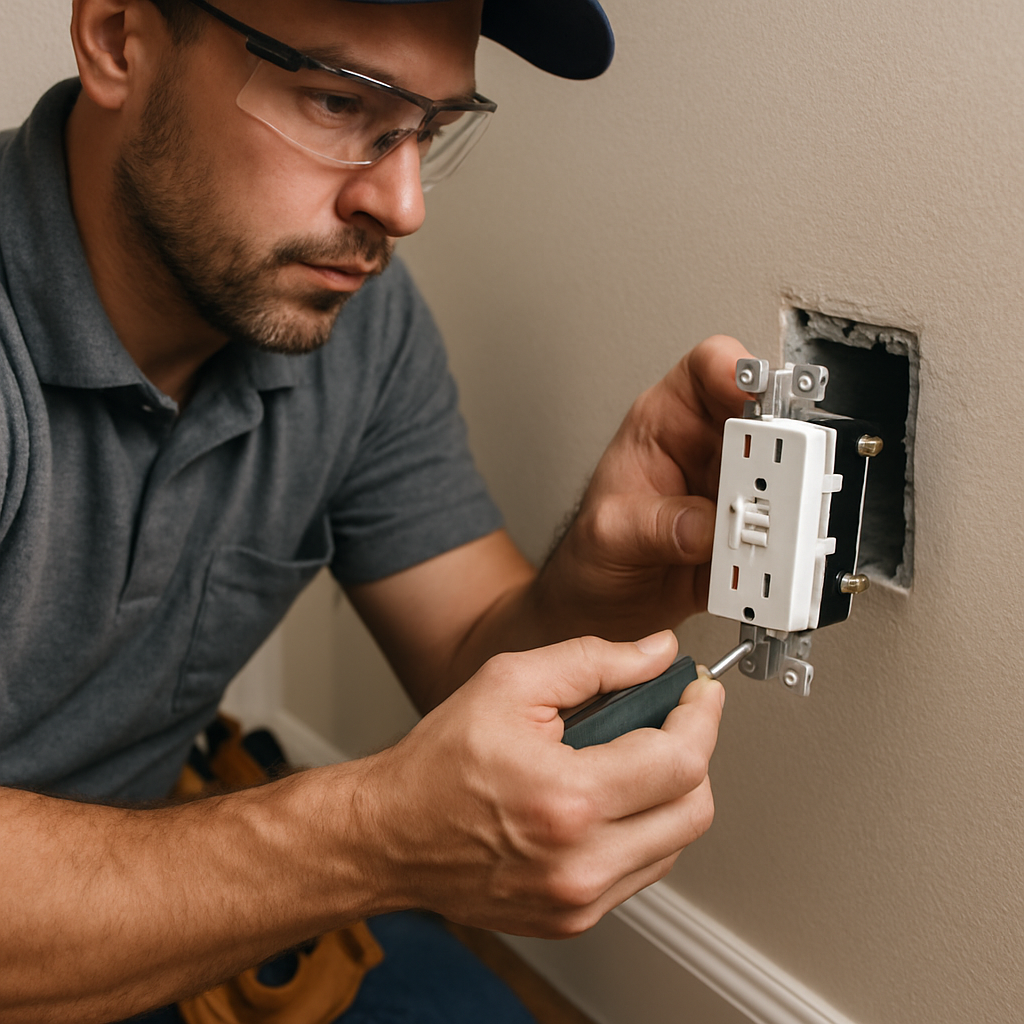
Backup Power and Generator Connections
Storms, ice, high winds, and equipment failures can interrupt power to Portland homes and rural properties. A properly designed backup-power setup can help support selected critical loads during an outage, including a sump pump, refrigerator, freezer, lighting, internet equipment, phone chargers, medical equipment, and some heating or cooling equipment.
Transfer Switches and Interlock Kits
Never connect a portable generator directly to household wiring through an outlet. This dangerous practice can back-feed electricity into utility lines, create a serious hazard for utility workers and neighbors, damage electrical equipment, and damage the generator when utility power returns.
A qualified electrician can install an appropriate transfer switch or approved interlock arrangement when suitable for the panel and project. The system can be planned around the circuits and equipment that matter most during an outage.
Portable and Standby Generator Options
- Manual transfer switches for portable generators
- Interlock kits where appropriate for the panel and installation
- Automatic transfer switches for standby generators
- Dedicated circuits for selected critical loads
- Whole-home surge protection and grounding improvements
- Battery backup planning for selected circuits or equipment
HVAC equipment can be a significant electrical load, so homeowners planning backup power may also benefit from reading when to call for emergency AC service and these monthly HVAC maintenance tips for Indiana homeowners.
Electrical Safety Inspections
An electrical safety inspection provides a detailed look at the condition of a home’s accessible electrical system. It is different from a general home inspection because it focuses specifically on panels, circuits, visible wiring, outlets, switches, grounding, safety protection, and signs of electrical wear or damage.
When to Consider an Electrical Inspection
- Before buying an older home in Portland or Jay County
- After purchasing a property with an unknown renovation or electrical history
- Before remodeling a kitchen, bathroom, basement, garage, or addition
- Before installing an EV charger, hot tub, generator connection, heat pump, or major electrical appliance
- After storm damage, flooding, lightning, water intrusion, or a suspected electrical event
- When breakers trip repeatedly, lights flicker, outlets feel warm, or GFCIs will not reset
- Before renting an older property to a new tenant or after a lengthy vacancy
What an Electrician May Check
- Electrical panel condition, circuit labels, breakers, and visible wiring
- Outlet, switch, fixture, and GFCI operation
- Grounding and bonding systems
- Signs of overheating, corrosion, water damage, loose connections, or amateur modifications
- Exterior outlets, detached structures, and garage wiring
- GFCI and AFCI protection where applicable
- Surge-protection opportunities
- Panel capacity and future-upgrade needs
Not every inspection finding requires an immediate major project. A qualified electrician can help you distinguish between urgent hazards, recommended upgrades, and items that can be monitored or planned for later.
For a broader property-care plan, use this room-by-room and system-by-system home maintenance checklist.
Electrical Upgrades for Portland Small Businesses
Small businesses in Portland may need electrical work that goes beyond typical residential service. Retail spaces, offices, workshops, storage buildings, restaurants, and light commercial properties can need capacity upgrades, equipment circuits, lighting improvements, tenant build-out work, outlet additions, data-equipment support, or backup-power planning.
Common Commercial Electrical Projects
- Commercial panel and service-capacity upgrades
- LED lighting upgrades and lighting controls
- New circuits for equipment, refrigeration, point-of-sale systems, server rooms, and data equipment
- Outlet, switch, and fixture additions or relocations
- Tenant improvements and commercial build-outs
- Parking lot, exterior, security, and emergency lighting
- Commercial EV charging infrastructure
- Generator and backup-power planning
Commercial projects may require plan review, permits, inspections, utility coordination, and a contractor with experience in the relevant scope of work. A qualified electrician can help identify the system requirements and plan the project around the business’s operations.
EV Charger Installation in Portland
A professionally installed Level 2 EV charger can make at-home charging faster and more convenient. Most Level 2 chargers require a dedicated 240-volt circuit, so the installation should begin with an inspection of the electrical panel, available capacity, charger location, wiring route, garage or driveway layout, and permit requirements.
What an EV Charger Installation May Require
- A review of electrical service size and available panel capacity
- A load calculation based on present and planned electrical demand
- A dedicated 240-volt circuit with properly sized wiring and breaker protection
- Charging-location planning for a garage, driveway, carport, or detached building
- A possible subpanel, panel replacement, service upgrade, or load-management solution
- Permit and inspection coordination when required
Not every EV charger requires a 200-amp service upgrade. Some homes can support a charger with their existing service after a load calculation. Other homes may need additional breaker space, a subpanel, capacity management, or a larger service upgrade before the charger can be installed safely.
Permits and Inspections for Electrical Work in Portland
Electrical projects should be planned with permit and inspection requirements in mind. The City of Portland Building & Zoning Department states that it issues City and County building and zoning permits, handles plan review, and performs inspections. The City directs property owners and contractors to contact the department for current permit forms, fees, and project requirements.
Many projects can require permits or inspections, including panel replacements, service upgrades, new circuits, rewiring, electrical work in additions, detached-garage wiring, outbuilding electrical work, generator connections, and major renovation projects. Requirements depend on the property address, jurisdiction, scope, and the type of work involved.
What to Confirm Before Work Begins
- Whether a permit is required for the project
- Whether the property is under City of Portland or Jay County jurisdiction
- Who will apply for the permit and schedule inspections
- Whether utility coordination is necessary
- Whether the scope includes repair work, a new circuit, subpanel, panel replacement, or service upgrade
- What materials, labor, permit fees, restoration, inspections, and exclusions are included in the quote
Skipping required permits can create problems during a home sale, refinancing process, insurance claim, inspection, or later renovation. For a deeper overview of the process, review permits and contractors: how to make sure your home project is done right.
How to Choose an Electrician in Portland, IN
Electrical work affects fire safety, shock protection, equipment reliability, property documentation, and possible insurance considerations. When comparing electricians, look beyond the final price. A detailed written scope helps you understand what the contractor is recommending and whether important work has been excluded.
Questions to Ask Before Hiring
- Will you diagnose the underlying issue before recommending a repair or replacement?
- Do you have the credentials, registration, and insurance appropriate for this project and jurisdiction?
- Will you coordinate permits and inspections if they are required?
- Does the estimate identify materials, labor, equipment, exclusions, and expected timeline?
- Will you perform a load calculation before recommending a panel or service upgrade?
- What warranty applies to labor and materials?
- How will hidden conditions or unexpected repairs be documented and priced?
- Will utility coordination be needed for the work?
Red Flags to Watch For
- Pressure to begin work without a written estimate or scope
- Advice to skip permits when they are required
- An unusually low price without material, labor, or equipment details
- Vague answers about wire sizing, capacity, breaker selection, safety protection, or inspections
- Refusal to provide proof of insurance or applicable credentials
- Requests for full payment before work begins
- Temporary repairs offered for recurring hazards without identifying the underlying cause
Before comparing bids, read this homeowner’s guide to requesting contractor quotes and comparing bids. You may also want to review how unlicensed electricians can affect insurance claims and whether hiring an unlicensed electrician can affect an insurance claim.
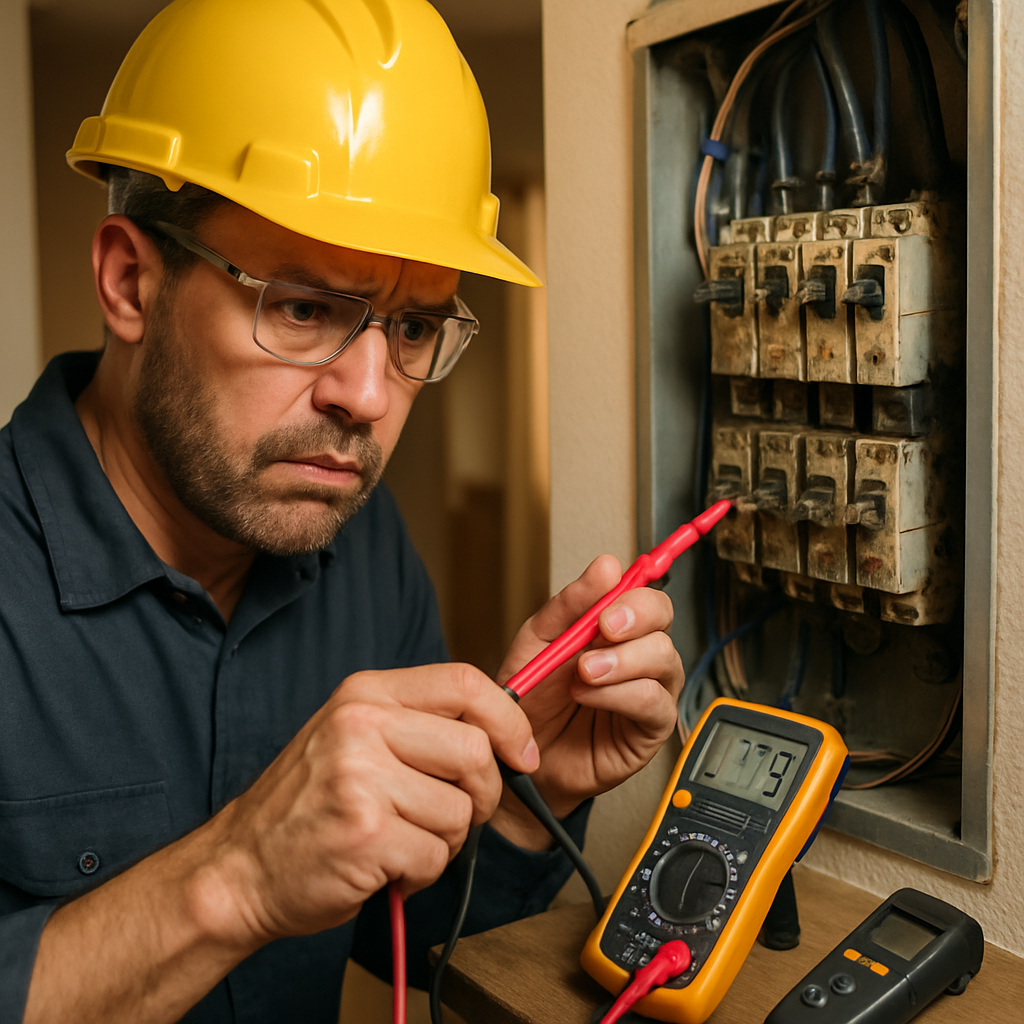
Find an Electrician Through My Licensed Contractor
My Licensed Contractor helps Portland homeowners, landlords, rural-property owners, farmers, and small-business owners connect with qualified electricians for electrical repairs, inspections, panel replacements, service upgrades, rewiring, generator connections, outbuilding wiring, lighting, dedicated circuits, and EV charger installations.
Whether your project involves a single damaged outlet, a sump-pump circuit, a garage or workshop upgrade, a panel evaluation, or a large renovation, start by describing the project and comparing clear scopes of work from qualified contractors.
Book a contractor online to begin, or visit My Licensed Contractor to find a qualified electrician for your Portland project.
If you notice a burning smell, smoke, active sparking, scorch marks, a hot panel, a hot outlet, or sudden partial power loss, do not wait for a standard appointment. Seek urgent electrical help, and call 911 first if there is an active fire or immediate danger.
Frequently Asked Questions
How do I know if my home needs an electrical panel upgrade?
A panel upgrade may be worth discussing if your home has a 60-amp or 100-amp service, a fuse box, recurring breaker trips, heat or corrosion at the panel, no available breaker space, or plans for high-demand equipment such as central air conditioning, electric heat, an EV charger, hot tub, workshop, or major appliance. An electrician can inspect the system and perform a load calculation to determine whether repair, a panel replacement, a subpanel, new circuits, or a service upgrade is appropriate.
Do I need a permit for electrical work in Portland, IN?
Permit requirements depend on the property address, jurisdiction, and work scope. The City of Portland Building & Zoning Department provides City and County permit, inspection, and plan-review guidance. Panel replacements, service upgrades, new circuits, rewiring, addition work, generator connections, and outbuilding wiring may require permits or inspections. Confirm current requirements before work begins.
Is it safe to use a portable generator without a transfer switch?
No. A portable generator should never be connected directly to household wiring through an outlet. This can back-feed electricity into utility lines, create a serious risk for utility workers and neighbors, damage equipment, and harm the generator when utility power returns. A qualified electrician can install an appropriate transfer switch or approved interlock arrangement.
What is GFCI protection and where is it used?
GFCI stands for ground-fault circuit interrupter. GFCI devices can shut off power when they detect a difference in electrical current that may indicate electricity is flowing through an unintended path. They are commonly used in kitchens, bathrooms, garages, basements, laundry spaces, exterior locations, and other areas where moisture can increase shock risk.
How long does it take to replace an electrical panel?
Timing depends on the panel condition, service size, complexity of the wiring, whether a service upgrade is involved, permit and inspection scheduling, utility coordination, and unexpected conditions found during the work. A straightforward panel replacement may be completed in a day, but larger service upgrades or projects involving meter equipment, new circuits, and utility work can take longer.
Can I add an outlet myself without a permit?
Electrical work carries shock, fire, and code-compliance risks. Some homeowner work may be allowed depending on the project and local rules, but permit-required work still needs to meet applicable requirements and pass inspection. Confirm what is allowed with the relevant local department before beginning any electrical project.
What should I do if I smell something burning near an outlet or switch?
Stop using the outlet or switch immediately. If it is safe, turn off the related breaker without touching damaged or hot equipment. Call 911 if there is smoke, an active fire, or immediate danger. Otherwise, contact an emergency electrician promptly. A burning odor can indicate overheating, damaged wiring, or a loose connection that needs urgent attention.
Do rural properties in Jay County have different electrical requirements?
The same broad electrical safety and code principles apply, but rural projects may involve additional planning for utility service, meter equipment, outbuildings, underground feeders, pumps, motors, agricultural loads, trenching, and weather-exposed equipment. The serving utility may also have requirements for service entrance equipment and meter coordination. An electrician can help evaluate the project and coordinate with the appropriate utility when necessary.
Nearby Cities in Indiana
Ready to Find a Licensed Contractor?
Connect with pre-screened, licensed contractors in your area.
Submit Your ProjectGet Matched Instantly
Tell us about your project and we'll connect you with licensed, verified contractors in your area.
Submit Your ProjectFind Contractors Near You
Get Matched Instantly
Tell us about your project and we'll connect you with licensed, verified contractors in your area.
Submit Your ProjectFind Contractors Near You