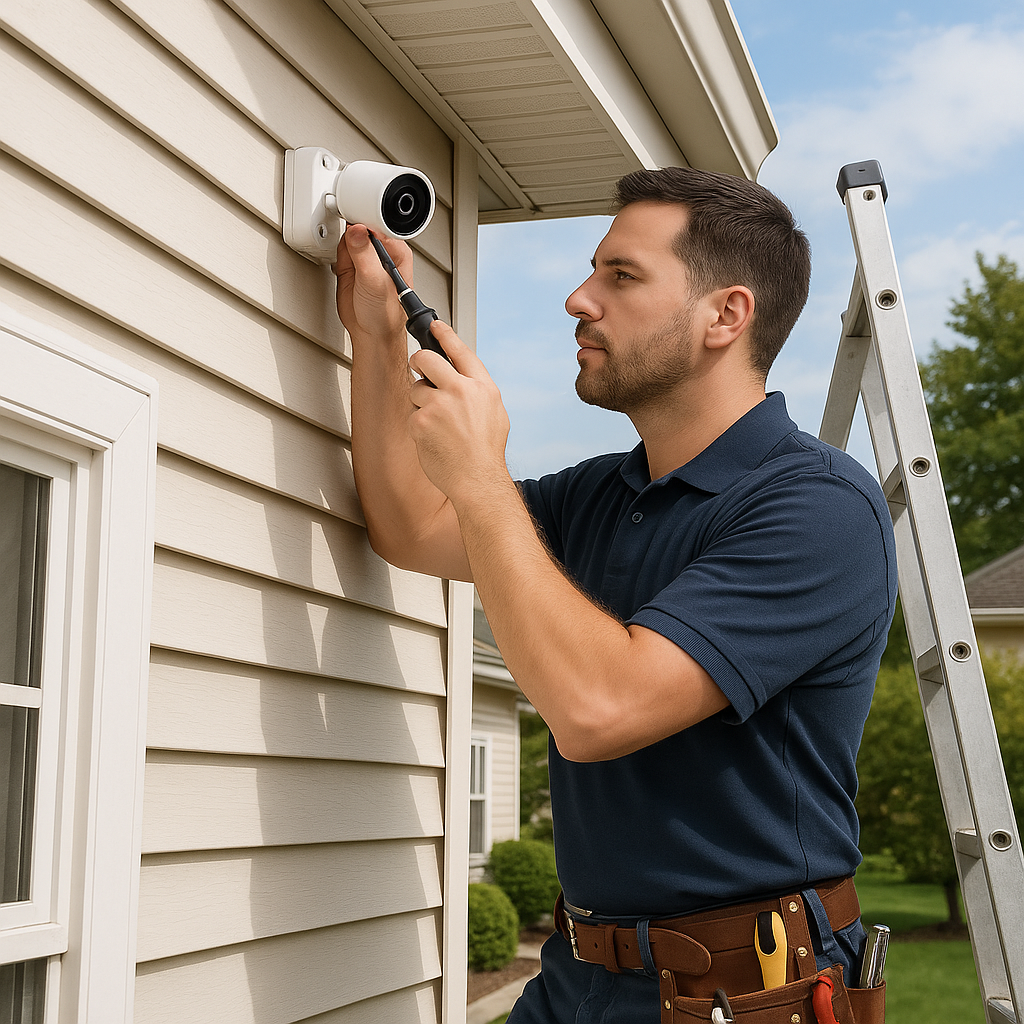
Home Security Installation: 9 Projects That Make Your Home Safer
Key Takeaways
- Start with strong doors, Grade 1 deadbolts, and good lighting. Cameras and alarms work best on top of that base.
- Hardwired cameras, new outdoor lights, and interconnected smoke and CO alarms usually need a licensed installer.
- Plan your security around how an intruder would approach your home, starting with doors and dark ground-floor windows.
Home security means more than a camera on the front porch. A safe home combines physical barriers that slow an intruder down, lighting that takes away hiding spots, and alerts that tell you when something is wrong. It also covers threats from inside the home, like fire and carbon monoxide.
This guide walks through nine installations that make a real difference. For each one, you will learn what it does, where it goes, and whether you should hire a professional. If you have not chosen a system yet, start with our article on what homeowners should know before buying a home security system.
Start With How an Intruder Sees Your Home
Before you buy any equipment, walk around your property during the day and again at night. Look at it the way a stranger would.
Ask yourself a few questions:
- Which doors and windows can someone reach without a neighbor seeing them?
- Where are the dark corners after sunset?
- Do shrubs or fences give someone a place to hide near a door or window?
- Can a person see valuables through your windows from the street?
- Does the garage have a door into the house?
Most break-ins happen through a door or a ground-floor window. Your answers tell you where to focus first. A camera over a well-lit front porch does little if the back door has a weak lock and sits in total darkness.
1. Reinforced Door Frames and Strike Plates
Many front doors look solid but fail at the frame. A burglar kicks the door, the short screws in the strike plate pull out of the soft wood jamb, and the door swings open.
A reinforcement kit fixes this weak point. It adds a heavy metal strike plate and long screws that reach into the wall framing behind the jamb. Some kits also add a metal plate around the lock and a strip along the hinge side of the frame.
This install costs much less than a camera system, and it physically stops a common type of break-in. A handy homeowner can install a basic strike plate. A full frame reinforcement kit on an older or warped door often goes better with a carpenter or door contractor.
2. Grade 1 Deadbolts
The American National Standards Institute rates deadbolts by grade. Grade 1 locks pass the toughest tests for strength and durability. Grade 3 locks meet the lowest standard. Many builder-grade homes come with Grade 3 hardware.
Upgrade every exterior door to a Grade 1 or Grade 2 deadbolt with a full one-inch throw. That includes the back door, the side door, and the door from the garage into the house. Homeowners often forget that last one.
3. Smart Locks and Keypad Entry
Smart locks let you lock and unlock the door from your phone, see who came and went, and give temporary codes to dog walkers or cleaners. You never need to hide a key under the mat again.
Look for a smart lock that meets the same strength grade as a good standard deadbolt. Some models only replace the interior side of the lock and keep your existing deadbolt. Others replace the whole unit.
Most smart locks run on batteries and install with a screwdriver. Hardwired models, or locks that tie into a full security system, often need a professional. Our post on why professional installation matters for smart thermostats covers many of the same points about connected devices.
4. Motion-Sensor Floodlights
Good outdoor lighting is one of the simplest ways to make a home less appealing to intruders. Motion-sensor floodlights turn on when someone approaches. That sudden light startles people and gives cameras a clear image.
Place motion lights over these areas:
- The back door and any side doors
- The driveway and garage
- Dark corners of the yard near windows
- Paths between the house and a detached garage or shed
If you need new outdoor fixtures where no wiring exists, hire a licensed electrician. Outdoor circuits need weatherproof boxes and GFCI protection. Our guide to lighting upgrades for your home goes deeper on fixture choices.
5. Video Doorbells
A video doorbell shows you who is at the front door, even when you are not home. It records package deliveries, visitors, and anyone who tries the handle. Many people now use video doorbells to deal with package theft.
Wired video doorbells connect to your existing doorbell wiring and do not need battery changes. If your home has an old doorbell transformer, it may not supply enough power. An electrician can swap the transformer in a short visit.
6. Outdoor and Indoor Security Cameras
Cameras serve two purposes. They discourage some intruders, and they record evidence if something does happen.
For outdoor cameras, cover every entry point and the driveway. Mount cameras high enough that someone cannot easily knock them down, usually eight to ten feet off the ground. Point them so they catch faces at the door, not only the tops of heads.
Hardwired cameras, including Power over Ethernet (PoE) systems, are more reliable than battery or Wi-Fi models. They do not need recharging, and the network cable carries both power and video. They also take more work to install. A licensed low-voltage installer or electrician can run cable through the attic and walls and keep it out of sight.
Indoor cameras can watch the main living areas and the inside of entry doors. Place them with privacy in mind. Most families avoid bedrooms and bathrooms.
7. Door and Window Sensors With a Monitored Alarm
An alarm system uses contact sensors on doors and windows, plus motion sensors inside the home. When someone opens a door while the system is armed, the alarm sounds. A monitored system also alerts a monitoring center, which can contact you and send help.
Where to place sensors:
- Every exterior door, including the garage entry door
- Ground-floor windows and basement windows
- Sliding glass doors
- A motion sensor in the main hallway or living room that an intruder would cross
Wireless sensors are easy to add later. Hardwired systems often make sense in new construction or during a remodel, when the walls are open.
8. Hardwired Smoke and Carbon Monoxide Alarms
Security also means protection from fire and carbon monoxide. Hardwired, interconnected smoke alarms all sound at once when one detects smoke. That gives everyone in the home more time to get out, even if the fire starts on another floor.
The U.S. Consumer Product Safety Commission recommends smoke alarms and CO alarms on every level of the home. It also recommends smoke alarms inside each bedroom and outside sleeping areas, and CO alarms outside sleeping areas. Test them every month.
An electrician should install hardwired alarms or add new ones to an existing interconnected system. Many monitored security systems can also connect to smoke and CO alarms, so the monitoring center hears about a fire even when nobody is home.
9. Window Security Film and Secondary Locks
Ground-floor windows and glass panels next to doors are common entry points. Security film is a clear layer that holds broken glass together. It does not make the window unbreakable, but it slows an intruder down and makes noise.
Secondary locks add another layer. Sliding doors benefit from a bar in the track or a pin lock through the frame. Double-hung windows can use pin locks or sash stops that let the window open a few inches for air but no farther.
Protect Your Network Too
Smart locks, cameras, and video doorbells all connect to your home network. If someone gains access to your Wi-Fi, they may gain access to your devices.
A few simple steps help:
- Change the default password on every device and on your router
- Turn on two-factor authentication for your security apps
- Keep device firmware and apps updated
- Use a strong Wi-Fi password and WPA3 or WPA2 encryption
The Federal Trade Commission explains how to secure your home Wi-Fi network in plain terms.
Example Security Plans for Common Homes
Every home is different, but these examples show how the pieces fit together.
A Starter Plan for a Single-Story Home
- Grade 1 deadbolts and reinforced strike plates on all exterior doors
- Motion floodlights at the back door and driveway
- A wired video doorbell at the front door
- Interconnected smoke alarms and CO alarms
A Full Plan for a Two-Story Home With an Attached Garage
- Reinforced frames and a smart lock on the front door
- A deadbolt on the door between the garage and the house
- Hardwired PoE cameras covering every entry point and the driveway
- Door and window sensors with professional monitoring
- Motion lights around the perimeter
- Smoke and CO alarms tied into the monitoring system
A Plan for Renters or Homeowners on a Tight Budget
- Battery-powered video doorbell
- Wireless door and window sensors with a self-monitored app
- Solar motion lights in dark areas
- A security bar for the sliding door
When to Hire a Professional Installer
You can install some security products yourself. Battery-powered cameras, wireless sensors, and plug-in lights work well for many homeowners. Other jobs call for a licensed professional:
- New outdoor light fixtures or outlets
- Hardwired cameras, alarms, or doorbells
- Interconnected smoke alarms
- Doorbell transformer upgrades
- Door frame repairs on older or damaged doors
Many states and cities require a license for electrical work and for low-voltage alarm installation. A licensed installer also knows how to place equipment so it works and passes inspection.
Get Matched With a Vetted Security Installer
The right security plan depends on your home, your budget, and the way your family lives. A local professional can walk your property, point out weak spots, and install the equipment the right way.
My Licensed Contractor matches homeowners with vetted local contractors for security installation, lighting, and electrical work. Only the best contractors make it onto the platform. Submitting a project request is quick and easy.
Submit your home security project request on My Licensed Contractor
Home Security Installation FAQ
What Is the Most Important Security Upgrade for a Home?
Start with strong doors and locks. A Grade 1 deadbolt and a reinforced strike plate stop many forced entries. Cameras and alarms work best after you fix those basics.
Are Wired Security Cameras Better Than Wireless Ones?
Wired cameras do not need battery changes and keep recording when Wi-Fi drops. Wireless cameras are easier to install and move. Many homeowners use wired cameras for entry points and wireless ones for extra coverage.
Do I Need an Electrician to Install a Video Doorbell?
Not always. If your existing doorbell wiring and transformer supply enough power, many homeowners can install one. An electrician should handle new wiring or a transformer upgrade.
Does a Security System Lower My Homeowners Insurance?
Many insurers offer a discount for monitored alarm systems, and some also discount monitored smoke and CO alarms. Ask your insurance agent what your policy offers before you buy.
Where Should I Put Motion Lights?
Put them over every door, along the driveway, and in dark areas near windows. Aim them so they light the approach to the house without shining into a neighbor's windows.
How Long Does a Professional Security Installation Take?
A basic wireless system can go in within a few hours. A hardwired camera and alarm system for a full home can take one to several days, depending on the size of the house and attic access.
Find a Licensed Contractor
Connect with pre-screened, licensed contractors in your area.
Submit Your Project
Find Local Contractors
Connect with licensed, verified contractors in your area for your next project.
Submit Your Project